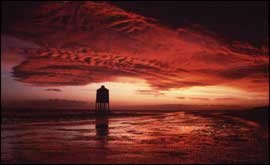
This huge body of water is 45 km across in the west but narrows to less than 10 km by the time it reaches Clevedon.
It's influence is more than just tidal.
It is what makes the weather in this part of the country unique. But why? Air moves faster over the sea than over the land because there is less friction. 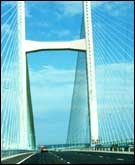 | | Barriers protect vehicles from gusts on the Severn Bridge |
The wind is also funnelled between Exmoor, on one side, and the Welsh Mountains on the other. When the winds are between southwest and westnorthwest, it can be very windy, not just on the Second Severn Crossing where they erected wind barriers - but across much of the West Country, from Gloucester across to Bath. Mist and drizzle The Bristol Channel is a pretty big source of moisture, so those winds can often bring mist and drizzle. The channel’s influence probably spreads even further afield when it comes to temperatures. If you’ve ever swum at Weston-super-Mare or Burnham-on-Sea you probably think it is pretty chilly most of the time. In the late spring water temperatures are as low as 9 or 10 Celsius. When the wind blows from the northwest in March and April it can be quite chilly across much of the region, even when other parts of southern England are quite warm. By the same token sea temperatures of 15 or 16 Celsius in the late autumn can help to keep us frost-free. So whether we’re talking rain, temperature or wind, the Bristol Channel often holds the key to the West’s weather. |