This attempt to strike a mortal blow at the heart of German's industrial heartland has gone down in history as the Dam Busters raid and endures today as a symbol of daring and courage. Only 11 years after the event it was immortalize in a film which was to tell the story not only of the raid but of scientist Barnes Wallis' attempts to develop the 'bouncing bomb.' 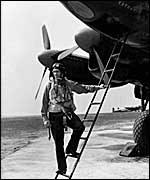 | | Nineteen Lancaster bombers set off for the Ruhr but eight did not return |
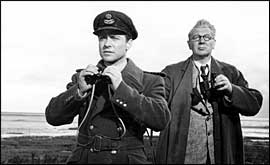
The air crews were to spend hours rehearsing over Yorkshire's Derwent Reservoir, flying low above the water at previosly unattempted heights. Eight of the 19 Lancaster bombers that set out from RAF Scampton, near Woodhall Spa in Lincolnshire, on May 17th, 1943, were never to return. In Germany 1300 civilians were killed including 500 slave labourers from the Ukraine. The raid was to be a powerful boost to morale at home. The German factories were soon back in production but it is possible that effort was diverted from elsewhere to rebuild the dams. On May 14th a newly restored print of The Dam Busters will be screened at the National Museum of Photography, Film and Television in the prescence of its star Richard Todd and wartime airman and official historian of the 617 Squadron, Squadron Leader Edward Wass. Tony Earnshaw, the Museum's chief programmer, will be on the chair. Asked why the Museum continues to show films set in World War Two he says it is not to celebrate war but heroism.
| 







 Music listings