| 13 November 2014 |

| |
| BBC Homepage | | |
| |||
| Contact Us | | |
FilmsYou are in: Bradford and West Yorkshire > Entertainment > Films > All aboard the KWVR with The Railway Children! All aboard the KWVR with The Railway Children!The Three Chimneys? Mr Perks' Cottage? If you recognise these names then, the chances are, you know something about the Railway Children. What you may not know is how the 1970 film helped to put the Keighley and Worth Valley Railway on the map... 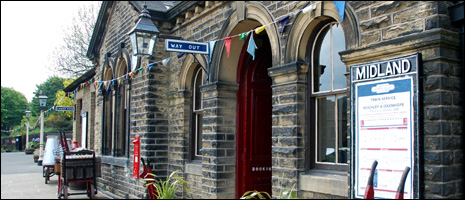 Oakworth Station: The "jewel in the KWVR's crown" First, of course, there was the book, written by Edith Nesbit and published in 1905. It tells the story of a family who are forced to move to a house near a railway line when their father is arrested on suspicion of selling state secrets. The author isn't too specific about the whereabouts of the railway line. Some people have said it's in Yorkshire but as a child Edith spent time in Kent, sometimes playing by a nearby railway line. Where exactly is the Old Gentleman, played in the 1970 film, likely to be travelling to as he passes by on the train? A children's favourite, it's not surprising that there were at least three TV adaptations of the novel before the film was even thought of, but it's with the 1968 BBC series that the Keighley and Worth Valley Railway (KWVR) becomes part of the story. 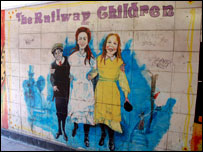 The film, honoured in a Bradford subway... Even before the KWVR had officially opened to the public a BBC TV director had been given a trip on the railway and it wasn't long before a TV version of the story was being filmed along the line. Watching the serial, when it was televised at tea time on seven consecutive Sundays starting on May 12th, 1968, was actor Lionel Jeffries. The rest, as they say, is history! Jeffries purchased the film rights to the book, wrote the screenplay and directed the film which opened in time for the 1970 Christmas holiday. The late Bob Cryer, former MP for both Bradford South and Keighley, acted as railway consultant to the filmmakers and he's left a very personal account of the railway's involvement in the filming. This, together with other people's reminiscences and details of the locomotives and coaches used in the film, is included in a booklet, The Making of the Railway Children, compiled by the KWVR's Jim Shipley. Bob appears in the film as a train guard as does former KWVR chairman Graham Mitchell who even gets to say a line!
The BBC is not responsible for the content of external websites 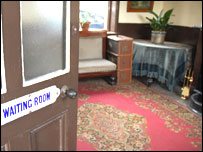 A bygone age? The Ladies Waiting Room at Oakworth Starring in the film, as she had in the 1968 TV series, was Jenny Agutter as Bobbie. But she wasn't the only star to transfer from the small to big screen version of the Railway Children. The same can definitely be said of Oakworth Station. KWVR volunteer Roger France says: "Everyone identifies this station quite rightly with the Railway Children film. Perks' cottage is just up the road there, you've got the crossing gates that he operated and so much of the film took place here and people come to see that." Looking around Oakworth Station today, it's not so difficult to imagine that you've travelled back in time to the heyday of the railways. There's even a portrait of Queen Victoria over the mantelpiece! Roger adds: "We keep this in Edwardian condition because basically this is how we found it. The station's never had electricity, it's all gas lit and coal fires. When we took over the railway in the early 1960s, the last day's takings were still in the safe so it really is a time capsule and because of the filming that's taken place here, particularly the Railway Children, we've kept it in this Edwardian condition and it's being used over and over again for different productions...If you can imagine you are here on a dark winter's evening on your own with the gas lights hissing and the coal fire, and the wind howling outside, you can really get the atmosphere of the old railway."
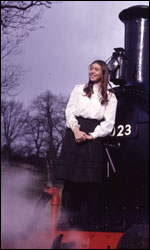 Jenny Agutter as Bobby Jenny Agutter has never forgotten her time on the Keighley and Worth Valley Railway. Talking to this website in 2005 she said: "When we first made The Railway Children for television we used the Worth Valley railway line and I loved it. There's just something about the towns and the countryside which is so beautiful I just seem to be brought back again and again." Today Jenny is a frequent visitor to Bradford's National Media Museum and has been honoured by the city's University. Almost forty years on the film regularly appears in lists of family favourites and it's said that when people think of the Railway Children the images they have in their minds are more than likely to have come from the 1970 film version. Screenonline, the British Film Institute's online database, says: "This adaptation of E. Nesbit's story is regarded as its definitive telling, its popular memory greater than that of her novel." It's even been described as a cult film and one person who would definitely agree that the film deserves the title is Pete Coleman who, since 1998, has run a website dedicated to both book and film. Pete thinks any cult appeal may be due to the film's "nostalgia for the simplicity of one's own childhood." He tells us this is certainly how he feels about the story: "It tugged at my heartstrings! The story reminds me of my own childhood in some respects, complete with the railway and all. I liked the simple honesty and naivety of the children in the book. It's a rite of passage thing for Bobbie's character too." 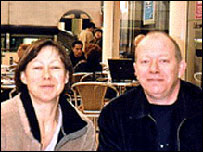 Fan Pete Coleman with star Jenny Agutter Pete tells us he was invited to take part in the most recent filming of the book, a TV adaptation in 1999, by Jenny Agutter who this time was playing the children's mother. This version does not feature the KWVR but the first thing you see when you look at Pete's Railway Children website are links to some musical sketches he's composed, inspired by the 1970 film. He tells us these "were created whilst keeping images in mind from my fantastic Railway Children Centenary visit to the KWVR in 2006." If, like Pete, you are interested in The Railway Children then it's not that difficult to find many of the locations used in the film. The Three Chimneys is Bents House, just up the hill from Oxenhope Station. Two of Haworth's most well known buildings, the Parsonage and the Tourist Information Centre, stand in for the doctor's house and the butcher's shop. The best way, though, to follow in the steps of The Railway Children is to take one of the 'Railway Children Walks', described in a very handy leaflet published by Bradford Council.
The BBC is not responsible for the content of external websites 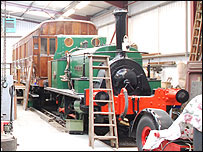 This locomotive starred in publicity for the film! Pete Coleman is in no doubt that West Yorkshire's heritage railway played an important part in the film's success: "Firstly, I believe that the KWVR had all the necessary scenery at the time...Secondly the superb natural beauty of the line fitted the atmosphere of the story very well indeed and last, but certainly not least, the staff of the KWVR led by Bob Cryer, were all firmly behind the project from the start and their enthusiasm and dedication clearly shows through the film". As for the railway itself, the film's popularity has meant that the KWVR has been seen as a tourist railway from its very early days. Looking back at the opening of the film in Keighley in 1970, where it played to packed houses, Bob Cryer wrote: "The film provided a real stimulus for our Railway. Nothing was left to chance and leaflets spelling out the location and services of the line were distributed wherever The Railway Children played and Society members could gain access. Our Railway has been associated with this, by now, perennial cinema and television favourite ever since..." 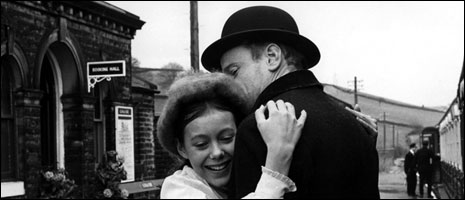 'Bobby' reunited with her father at Oakworth, 1968 It has to be said, then, that Bobbie and the other Railway Children did their bit to help put the Keighley and Worth Valley Railway Line well and truly on the map! last updated: 10/06/2009 at 16:24 SEE ALSOYou are in: Bradford and West Yorkshire > Entertainment > Films > All aboard the KWVR with The Railway Children!   External Links
The BBC is not responsible for the content of external websites |
| | About the BBC | Help | Terms of Use | Privacy & Cookies Policy |