| 24 September 2014 |

| |
| BBC Homepage | | |
| |||
| Contact Us | | |
Born in BradfordYou are in: Bradford and West Yorkshire > People > Born in Bradford > 10,000 Bradford babies, 10,000 Bradford lives! 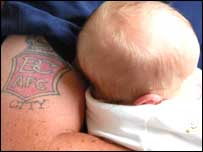 10,000 Bradford babies, 10,000 Bradford lives!Hidden away in a quiet Victorian house behind Bradford Royal Infirmary is the home of a ground-breaking new project which aims to improve the health of Bradford's children, and much more. Born in Bradford is one of the most ambitious studies of children's health ever to be undertaken, not only in this country but indeed the world. Its findings could go some way to improving life for us all as we've been finding out. 10000 babies, some of whom are being born in the city right now, will be studied from the womb right through to adulthood. Professor John Wright, Director of Research at the hospital and the man behind the study, explains: "The idea of following children as they grow up and seeing the differences from where they are all very similar as babies...It's probably the most effective form of medical research but you need to do it with a huge number of babies because the outcomes that we are looking at, such as childhood illness, tend to be rare." 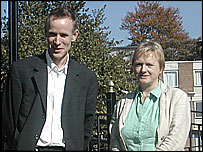 Professor John Wright and Dr Pauline Raynor And it's not just the babies who join up but also the parents: "We are going to follow the babies up through their childhood and look at what exposures they have had in the womb, diet, housing, air pollution and also at their mums and dads." John says it's the complex interactions between all these things which affect our health: "By describing them we can try and unpick the ones that are important and we can modify these factors to prevent future illness. Bradford is a great place to do that because we have some of the highest rates of illness in the country, highest rates of childhood death, disability, diabetes and obesity - a lot of conditions that really are important to future generations. If we are going to work out how to stop these we need to do that in a place where there are a lot of cases... "What we know from medical research to date seems to suggest that this phase in the womb and early childhood, the first and second year of life, will be very critical for what happens when we are 40, 50, 60 years old. We seem to get programmed at an early stage as to our risk for getting heart disease, diabetes and certain types of cancer so rather than concentrating on them when it's too late - when you are 50 - you've got to try and understand what happens at a very early stage." But John believes the study may also make Bradford a healthier place. He says: "We are very keen on Bradford not just being a laboratory." It's also about the whole community being involved in a major health research project: "We can get people engaged in the causes of ill health and we can get a healthier and happier city." 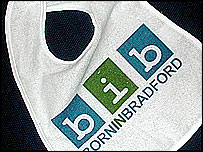 Every Born in Bradford baby gets a bib! And, as part of getting Bradford people involved with the project, photographer Ian Beesley - himself 'born in Bradford' - has joined the team as Artist in Residence. Ian says his role is not just about telling people the project is happening but it's also to "encourage some ownership because we are setting up various little projects where we involve the fathers, the mothers, the siblings and hopefully the children as they grow up." Ian has started working towards an exhibition at Cartwright Hall to reflect the early stage of the project which will be accompanied by workshops and other events. Always one to think big, Ian aims to create a wall of babies' faces: "When people says 10000 to me, it's quite a meaningless thing because I can't really envisage 10000 but it's really quite nice if you have 10000 photographs on the wall. Even though we are collecting pictures [as part of the project] we are going to invite anyone who comes along to bring a picture of themselves as a baby." About five and a half thousand babies are born in Bradford every year but not every woman attends the routine health checks during pregnancy and some of those who do turn up don't sign up for the project. Even so Professor Wright has been pleased at the response which compares very favourably with similar projects elsewhere in the world. If the present rate of uptake continues then it should take two and a half years to recruit 10000 Bradford babies!
It's up to Dr Pauline Raynor, Project Manager for Born in Bradford, and her team to get new mothers - not to mention fathers - to join the study. Although expectant mothers receive information about the project right through their pregnancy - Pauline says, "Nearly every woman who comes to the clinic has heard of it" - all the hard work is done during the routine screening 28 weeks into pregnancy. Here the expectant mums (and dads if they come along) are interviewed and helped to complete a questionnaire about where and how they live including details of their income and levels of debt, smoking, alcohol use, frequency of washing and other things. She doesn't believe there is any element of Big Brother in the way the information is collected: "There's no observation of the conditions in which they live; it's by self-report." John agrees: "I think there's a balance. People don't want to be intruded on in their lives but we are finding people are generally very altruistic about what they want to do to help their families and the whole community. It's a very inspiring result." Pauline points out that if, for some reason, mothers are not picked up at the 28 week screening, then there are other opportunities to get involved. We walk across to the hospital's Maternity Unit to take a look at where the Born in Bradford interviews take place. The first thing we see as we enter the building is a series of photos. They turn out to be of Ian Beesley's daughter taken by her proud dad - perhaps she's relieved he can now point his camera at several thousand other children! 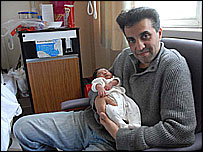 Dads are also asked to take part... The morning ante-natal session is drawing to a close but one expectant mum is still being taken through the Born in Bradford questionnaire. Here the pregnant women are also weighed and measured - such information is essential for the study. We go across to the main hospital building to take a look at the giant fridges where blood and other samples are stored, and to the lab where the samples are sorted and labelled. Dads are asked for a sample of saliva which provides the study with a record of their DNA. All this material will be kept for at least the next 20 years, helping scientists and doctors research many different aspects of childhood illness. And it's not a case of having to wait for a big report in two decades time - John expects the study may come up with some interesting findings within a year and believes that one way of keeping the participants engaged is to give them regular feedback. While most of the project's work now takes place in hospital, as time goes on it will be health professionals out in the community - GPs and Health Visitors - who will continue to collect information on the Bradford 10000. 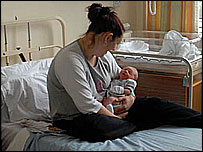 It's not too late to join after the baby is born Of course, as John points out, such a big study is not without its risks: "I think there's a bit of a leap of faith. One risk is the long term nature of it and the other is the financial risk of trying to raise funds for a major project like this." So far fund-raising has been relatively successful and this year Born in Bradford has received support from the Lord Mayor's Appeal. But John, Ian, Pauline and the rest of the Born of Bradford team believe this is a 'leap' worth taking. John says: "I very much hope the results of this study of a multi-ethnic population do inform policy...And not just in terms of health but in terms of society and understanding. We're really at the cusp of a change in society in terms of ethnicity and composition, of a new community coming into a major city like Bradford and what the implications of that are. We would like to be very optimistic about that but it will be helpful to describe that process as we go along." Whatever its eventual findings, Born in Bradford will be based on the experiences of 10000 of the city's children as they grow into adulthood. We hope to be featuring the stories of some of these children and their families right here on the BBC West Yorkshire website. [Baby photos are courtesy of Ian Beesley and the Born in Bradford project and should not be reused without permission] last updated: 22/04/2008 at 11:52 You are in: Bradford and West Yorkshire > People > Born in Bradford > 10,000 Bradford babies, 10,000 Bradford lives! |
| | About the BBC | Help | Terms of Use | Privacy & Cookies Policy |