


Stammerer Ashley Morrison gives his view on The King's Speech
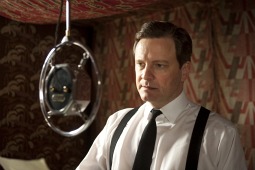
Therapy for stammerers has moved on considerably since then. Today there are a number of electronic devices that are available to help but how successful are they? Altered auditory feedback (AAF) devices work on the principle of replicating the so-called 'choral effect'. When stammerers speak (or sing) in unison with other people, the stammer usually disappears. Certainly that is true for me. Ask me to recite The Lord's Prayer alone and you'll be praying for salvation before too long; ask me to recite it along with the rest of the congregation and you'll never know my dark secret.
These devices attempt to replicate the choral effect by playing back the stammerer's speech through the earpiece fractionally after they have spoken and/or at a different pitch, depending on how they are configured.
Two of the most common devices are the VoiceAmp and the SpeechEasy, both of which I have tried. The SpeechEasy costs in excess of £3,000, although funding can be obtained via the Access to Work scheme. Cosmetically, it is nicer to use because it fits discreetly into the ear like a hearing aid. But it's not possible to alter the settings yourself so you have to take it back to the supplier to do it for you.
The VoiceAmp starts at £595 for a basic model, which is roughly the size of an average smartphone and comes with a very obvious earphone and microphone on a cable. On the plus side, it does come with software which means that it is fully customisable at home. There are also extras one can purchase, such as a wireless option which costs a further £455.
But did they work? Yes...temporarily. But now, unfortunately, the benefit seems to have worn off. The trouble is, the brain is rather sneaky and it seems to know when I am using an electronic substitute. My SpeechEasy tends to sit in its box most of the time. A bit disappointing, given that I have seen claims of an 80% success rate.
The most long-lasting controlling technique I have used is actually based around costal breathing - although I am not very comfortable using it...the reasons for which I am currently analysing, in fact. Costal breathing basically means taking a large intake of breath by flexing one's diaphragm and intercostals muscles (imagine the type of breath you take when you yawn) and projecting one's voice in a totally focussed manner at a slower, more controlled rate. Singers and stage actors practise costal breathing all the time. In fact, the rapid squats which Logue made Bertie perform were based around a similar principle - forcing Bertie to project his voice on a strong out-breath.
But since we have only fairly recently established that the cause of stammering is due to a neural malfunction, perhaps investing so much hope into electronic devices or, indeed, any other therapy, is rather dangerous. The stammerer's premotor cortex (the part of the brain responsible for the planning process in speech) doesn't work properly - we know that much. Bring on the neurosurgeon...
So I must conclude that these devices alone are not sufficient to get stammerers out of their stammering hole - just as Logue only helped and did not cure Bertie with his techniques. The truth is there is no cure, despite claims you may have seen on some websites and or heard on recent radio interviews. All stammerers can really hope for is to be helped through the daily trial of speaking by using a combination of techniques, therapies and willpower. You can help by being patient, not looking away, not looking like you're in a hurry and not trying to guess the rest of the sentence. You'd be surprised just how often you're wrong!
Ashley Morrison is a freelance blogger, copywriter and editor.
You can read an extended version of Ashley's blog here.

