Brand navigation

You&Yours

Weekdays 12.00pm

Radio 4's consumer affairs programme

Brand navigation

Archives for June 2010

New Territory

Post categories:

Julian WorrickerJulian Worricker|17:00 UK time, Wednesday, 30 June 2010

Comments

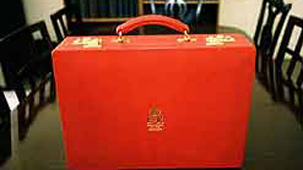
budget-box-for-blog.jpgIt struck me last week - when I was presenting last Tuesday's outside broadcast during the Budget speech from Gateshead - and again yesterday during 'Call You & Yours' that we're in one of those rare periods when people are both more engaged with the political discourse and more prepared to think the unthinkable. And then express the unthinkable.

In Gateshead, on a beautiful morning overlooking the banks of the River Tyne, I and my colleague, Sally, ventured out with a tape-recorder to - as we say in the trade - 'do a vox-pop'. In other words stop people in the street, interrupt them when they'd rather be left alone, and elicit their views on the burning issue of the day.

Usually I avoid doing these if at all possible. I don't enjoy butting in on people's days any more than they enjoy being on the receiving end of my pleading, but on this occasion it was a strangely enjoyable experience. Yes, it was a warm, sunny morning, which makes people naturally more accommodating when a strange man approaches them with a microphone, but people also wanted to talk. Even when I mentioned the Budget. This was a political event that people were interested in, and although they knew bad news was coming their way, they still wanted to discuss it. I can't think of a Budget that's had that effect on the British public for many a year.

As for expressing the unthinkable, that's what seems to be happening now that the Budget measures have been announced. A government is in place that is causing us to ask 'do we really need this organisation or that body or that amount of spending?' The answer may be yes or no, but there's something quite refreshing about the fact that the debate is happening at all. Only yesterday on 'Call You & Yours, as we examined the future of the housing market, a caller argued the case in favour of reducing the housing benefit budget. This wasn't an argument I'd heard for a good while, and because he held a strong view in one direction he quickly provoked equally strong views the other way.

Our job on You & Yours is to make sure that we properly scrutinise the effects all these changes in taxes and benefits are going to have on people currently dependent on them. If we don't, I'm sure you'll let us know.

Julian Worricker presents You and Yours on BBC Radio 4

Petrolhead Grandma

Post categories:

Catherine Carr|11:37 UK time, Friday, 25 June 2010

Comments

Grandma_in_car.jpgOn her ninetieth birthday - enroute to her celebration lunch - Grandma famously patted our new car, glanced at the engine size, and crowed: "mine is faster than this." I like to think her utter glee was my birthday gift to her... In the past she has also sniffily declared Bentleys to be 'draughty' and to have boasted that she can drive 'damn near anything'.

As a child she was my hero for reducing travel sickness by perfecting a driving style which, (in her words) 'smoothed out the corners' of the Devon lanes. As an adult I realised that this driving style could also be called 'brushing with death, driving a car at 40-50 mph in the middle of narrow lanes with many blind turns.' It has been a while since I have agreed to be her passenger.*

With a driving career spanning eight decades, and including stints in sports cars, driving ambulances in the blackout and managing a three tonne tea wagon in North Africa, she has been driving for longer than the driving test, which turned 75 this year. So, in honour of her grit, and because I knew she'd make a darned fine interviewee... I took my recorder to Devon, crossed myself, kissed the children goodbye and buckled up.

She bought her first car at 15, a Morris and hasn't been without wheels since - taking the official test as a sixteen year old in 1935. Her preference is for fast, sporty and big. Her favourite was a two seater Armstrong Sidley Hurricane which she bought in 1948 after her stint with the NAAFI. Along the way she has had trusty Fords, station wagons and Peugeots (one which used to make regular trips into Amboseli Game Park in Kenya to have breakfast and see the rhino..) She was once even given a car - (and a dog and a gun, but that is a different story) - by a surrendering German soldier. She bought the dog back home. Not the car.

Since I can remember she has driven Lancias and Hondas. Wide and comfortable, tarmac- hugging and FAST. And, you would think (if you have had a hip replacement), pretty tricky to climb in and out of. But she copes. For the sake of style, I think.

So how was the journey? Admittedly we only went to the village to drop off the empties at the bottle-bank, but that involved a 5 point turn, a 1:4 hill and some pretty twisty roads. Was I scared? No. Did I think she was safe? Yes. Do I think she should still be driving? Absolutely.

She's just written off for her eighth three-year licence. She drives with glasses, in the daytime, and often to pursue her other passion: golf. Without her wheels, her life would be unrecogniseable. When I asked her when she will give up, she simply said: "When I have to." I really hope that's not for a while yet.

*For the record, she has never caused a crash. She has been driven into, whilst stationary, twice.

Click here to listen to Catherine's interview with her grandma, broadcast on the You and Yours programme on Friday 25th June.

Catherine Carr is a reporter on You and Yours

You & Yours is on BBC Radio 4 at 1200 weekdays. Listen to today's episode on the Radio 4 web site.

"Elf and Safety" madness?

Post categories:

Andrew Smith|09:30 UK time, Wednesday, 23 June 2010

Comments

goat-303.jpgI'd be interested to know whether You and Yours listeners believe they are living in a country which is "elf and safety mad," so do write and let me know your views. We'll be discussing this soon in relation to an outbreak of E-Coli at a petting farm in Surrey.

The H and S-sceptic viewpoint is certainly a popular one. Last week David Cameron set Lord Young the task of eradicating an epidemic besetting Britain.

The Daily Mail sighed a huge sigh of relief, taking an opportunity to reiterate the symptoms - schools banning conkers, goggles outlawed at swimming pools, restaurants banning toothpicks.

But is Lord Young of Graffham looking for a needle in a haystack - if such a plainly hazardous activity is still permitted in "elf and safety" UK?

After all, right now we have the safety record of BP being called into question right across the world.

Admittedly this is under the US regulatory system, though BP is 44 per cent UK-owned. Much closer to home, five British-based companies have now either been found guilty or admitted health and safety offences connected to the explosion at the Buncefield oil depot in Hertfordshire in 2005.

If you're thinking the oil business is one of those industries - like coalmining - that is just inherently dangerous, and remain convinced that the UK's health and safety regime needs dismantling I would urge you to consider the relatively tranquil pursuit of running a "petting farm".

In August and September of last year the Godstone Farm in Surrey suffered an outbreak of the serious and potentially fatal E-Coli O157. This is a highly virulent organism, which the young and old are particularly vulnerable to. Ruminants carry the disease (it's harmless to animals) and it's passed on via contact with infected faeces.

At Godstone 93 people contracted the disease, 17 of them children. No-one died, but 27 people were admitted to hospital with a severe kidney condition, eight children required dialysis and some have been left with permanent kidney damage.

Worried parents featured in the national media - criticising the health authorities for not closing down the farm sooner - thus preventing further cases of the disease from occurring. Some of them voiced their view in newspapers which, ordinarily, are not keen on the UK "elf and safety culture".

Last week an official report into the incident was published. Written by George Griffin, Professor of Infectious Diseases at St George's University, it recommends 43 separate changes to the regulatory regime.

Essentially the report confirms that the outbreak could have been limited to fewer cases had the various agencies involved, reacted more decisively, sooner. But it also reveals a fog of responsibility.

Working farms are regulated by the Health and Safety Executive as they are regarded as a workplace. Yet when a farm becomes an "Open Farm" - primarily to attract visitors, it is officially regarded as an entertainment and become the responsibility of local authority environmental health departments (EHDs).

Local environmental health officers (EHOs) carry out inspections of Open Farms but don't have the knowledge that HSE staff have about health risks in an agricultural setting. Yet it is EHOs that have enforcement powers (it was down to them to force Godstone Park to close).

Furthermore the environmental health department responsible for Godstone Farm was responsible for food safety, hygiene and health and safety at over 2,000 premises, some of them requiring a visit every six months. The Griffin report reveals that at the time of the outbreak:

"...only two out of four posts...were filled . Given these circumstances it is unclear to us how much time was available to ...spend on Open Farm risk assessment. We believe the council should consider carefully whether the EHD is adequately resourced."

Inspections were carried out at non-peak times to "reduce the regulatory burden to the farm operator." The EHD "recorded that they were very confident in the Godstone Farm management and scored the premises above average."


Godstone was also required to appoint a "specific competent person in respect of health and safety." This was identified to be an Assistant Farm Manager who confessed to having received no training for his role. The farm later said the owner was this "competent person."

Meanwhile in the Health Protection Agency's regional operation, which was responsible for leading and co-ordinating the official response to the incident a "computerised case management and decision support system" was malfunctioning "due to insufficient broadband capacity at the Leatherhead office." This system was key to identifying linked cases which would have allowed the seriousness of the outbreak to have been discerned sooner. It had been "in use" since 2006.

Now I don't know about you but the picture I'm getting is less Health and Safety Stasi and more Inspector Clouseau.

Specific shortcomings identified at Godstone Farm were: staff inadequately trained in health and safety; paths badly designed allowing the spread of contamination; "limited opportunities for hand-washing" in certain areas and the "deep litter" system which allowed an accumulation of faeces in the pens.
The risk assessment was out of date, insufficiently detailed and not "site-specific."

And it is the risk assessment which sits at the heart of modern UK health and safety regulation. No longer do businesses fear the knock of the all-powerful, all-knowing "inspector," who can close them down with a single tap of pencil on clipboard. Instead we have a cheaper and "light touch" system which puts companies and organisations in charge of identifying their own safety risks and acting appropriately. And according to the Griffin Report on Godstone it's a responsibility businesses don't necessarily want.

"The....approach which allows employers to choose how to comply...suits large businesses with in-house resources and expertise enabling them to manage a variety of risks competently...This is not true of smaller, less well resourced firms who will often say 'just tell us what we should do'."

Perhaps Lord Young should take note as he waves his sickle at the UK health and safety thicket.

Winifred will be investigating the issues raised by the Godstone Farm E Coli O157 outbreak soon. Unfortunately the owners of Godstone have said they can't appear because some parents are bringing a legal case against the farm.

Andrew Smith is the Editor of You and Yours, In Touch, Fact the Facts and The Media Show on BBC Radio 4.

You & Yours is on BBC Radio 4 at 1200 weekdays. Listen to today's episode on the Radio 4 web site.

Social Housing

Post categories:

Siobhann Tighe|14:13 UK time, Tuesday, 22 June 2010

Comments

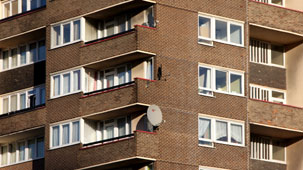
social-housing.jpg
At the beginning of the year in one of our regular You and Yours ideas meetings I suggested that we make a series of reports on social housing. To be honest I wasn't expecting my pitch to be greeted with whoops of excitement and as I guessed I saw people's eyes glaze over! Fair enough. The vague term "social housing" makes people wonder: "What's that got to do with me? Why should I care?" but still, I thought, the topic is very "us", and it's my task as a reporter to make a dull sounding subject come alive.

Months flew by but I hadn't given up on the idea. It needed more flesh on the bones however and a good place to start, I thought, was attending a conference last month called "Affordable Housing in the Age of Austerity". It was for finance experts attached to Housing Associations who were discussing in great technical detail what they could expect from the new Coalition. It didn't look good they admitted. A new government would have to cut spending, and the axe was likely to fall on affordable housing and benefits. And then the newspaper headlines started appearing. Last weekend's Observer, spread out on my desk, has the headline: "Cuts Threaten Slump In Homes For Poorest". The Daily Telegraph declared on its front pages a week or two before: "Housing Association Chief on £400,000 a year". And the Evening Standard wrote: "Councils Are Set To Put the Brakes On New Homes."

In true multi-tasking fashion, I'm planning a visit to Harrogate at the same time as I write this blog. I'm not going to "take the waters"; instead I'll be reporting from a larger and busier conference on Social Housing which will be attended by Grant Shapps, the Housing Minister. One challenge I've set myself is to get an interview with a Chief Executive of a housing association. Bearing in mind that, according to the Daily Telegraph, more than 50 executives at housing associations earn more than the Prime Minister, what do you think I should ask them?

Siobhann Tighe is a reporter on You and Yours

You & Yours is on BBC Radio 4 at 1200 weekdays. Listen to today's episode on the Radio 4 web site.

That Friday Feeling

Post categories:

Peter WhitePeter White|16:22 UK time, Thursday, 17 June 2010

Comments

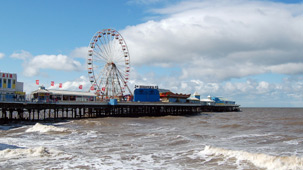
Blackpool-pier.jpgSo: what's special about Friday, then? Well, clearly it's the start of the weekend: although if you're retired, or not working at the moment, or even someone who regularly works weekends, that might not be such a big deal for you! But on You and Yours for the past eighteen months or so, we have been trying to give Fridays a slightly different "feel" to it.

It's not always that easy to define what that "feel" is, and we don't always agree about its definition. You know you're in trouble in editorial meetings when you come up with what you think is an absolutely cracking idea for the day's programme, only to have some bright spark pipe up in the corner, "Yes, but is it really Friday?" Back to the drawing-board.

I've been the regular presenter on Fridays over this period, and I couldn't give you an exact definition, but I suppose if you had to put it in one word, it would be "leisure", but interpreting that term pretty widely; so it could be travel and holidays, sport, the arts - books, film, music, the visual arts - transport (because so often to enjoy that leisure you have to be able to get there): or just some of the many and varied things people do for fun: potholing, collecting matchboxes, flying an autogyro!

But you can already see the potential problem: that's a big remit, and ripe for debate! One of our regular discussions is should we signpost it as a programme with a particular remit; certainly sometimes I'll say something like "Welcome to Friday's You and yours, and there's a strong leisure feel about today's prog"; but frankly we don't want to keep banging on about it, and I think we figure that regular listeners have already worked it out for themselves, and new ones will very soon get the idea.

In any case, it's not rigid. Clearly if a really big story comes up which is bang on the You and Yours agenda - a story say about the cost of energy, or the housing market, or Social Care, then we would do it; but that's when the debate about "is this really Friday?" is likely to get into full swing. The point is to make the content slightly different, but to stick very much to the You and Yours ethos of trying to get behind a story, and to find out what it really means to you and me as consumers.

So: it's not: what's the big new book, film, art exhibition of the week, but how is it being marketed, and how are we being persuaded to buy it. Not: where to go on holiday, but what underlying economic or lifestyle changes are influencing where we go, and what we're being offered. This is why we do quite a lot of sport: not because we want to add to the flood of coverage of results, personalities etc. but because we'd like to explain what's happening in the background: how much are you paying for the Olympics, what are you getting for your money if you don't live in London: what influences which sport you're able to see on the box!

That's why in many ways the classic "Friday" story has been for me the montages we've been doing on the World Cup. The event certainly doesn't need any more publicity from us but it is being used to sell us things: everything from hay fever remedies, to marriage guidance advice, to special horoscopes for the World Cup's duration! They give you a peep behind the hype, to uncover - more hype!

And by the way, if you've got an idea about a pastime, or a bit of marketing, or a travel trend that you think would make a good Friday investigation, we'd like to hear about it! You can be pretty sure your idea will start that debate all over again - "but is it really a Friday idea?"

Peter White presents You and Yours and In Touch on BBC Radio 4

Food Labelling and NHS Complaints System

Post categories:

Winifred Robinson|17:20 UK time, Wednesday, 16 June 2010

Comments

traffic-lights.jpgWe often ask for emails when we're on air. This came for me today from Richard. 'You said you don't have time to read labels - if you don't have time to think about what you're eating you deserve to DIE'. Sadly it was only sent at 12.52 and handed to me when I'd come off air, or I'd have read it out.

Richard is - I'd guess - not a Buddhist but clearly someone who cares a lot about food labelling. He was referring to something I said in a question to Julian Hunt from the Food and Drink Federation.

I'd suggested no one has time to read detailed food labelling giving guideline daily amounts and that traffic lights on the front of packs, giving red, amber or green signals for fat, salt and sugar content were easier for consumers to understand. We were talking about it because the European Parliament was voting on which system should be adopted. It's been a long drawn out wrangle between the Food Standards Agency, the government department set up to protect public health in relation to food and a large section of the industry. The FSA favours traffic lights but many of the big supermarkets and the manufacturers don't. Might it be that some food producers think a red traffic light would put you off buying the stuff? 'Not a bit of it!' they've been chorusing on You and Yours as this dispute has rumbled on for years.

In our office when the subject comes up, the team seems pretty split between those of us - including me - who find this fascinating and like to discuss whether a red traffic light on the front might put us off slipping that jumbo pack of pork pies into the trolley and others - including the editor Andrew Smith - who slip into a deep coma of boredom each time labelling is mentioned.

The European Parliament vote will settle things eventually - food producers will have to comply with whatever system they decide in about three years time.

I also asked for emails today on the subject of the system for handling complaints in the NHS in England. This is another subject with a long history. In April 2004 the Healthcare Commission was set up and among its responsibilities took on the task of sorting out the more complex complaints from patients which could not be resolved at a local level. A huge back log quickly built up and officials from the Commission came on to You and Yours and accused local hospitals and trusts of forwarding complaints that they could easily have dealt with themselves. One example cited was a letter from someone angry that they have been given a penalty for failing to display a parking ticket when they'd had to rush a patient to hospital. A year ago, when the Healthcare Commission was abolished the job of dealing with complaints was passed back to the local level.

We asked whether this system is working any better for patients and heard from Vanessa Bourne head of research at the Patients' Association and Frances Blunden, a senior policy manager at the NHS Confederation. We also illustrated some of the problems with the case of is Wilf Gerrard from Wigan. His wife Marjorie died in October 2006 from peritonitis. Mr Gerrard had complained to his Primary Care Trust - Ashton, Leigh and Wigan - because he felt she's been given inadequate treatment. Four years on he felt his complaint had still not been answered. We read out on air some of your experiences - including one email from a mother who'd taken a child to hospital with glass in a foot. A doctor had ordered an X-ray but failed to find the glass. The mother had pulled it out later at home. When she'd telephoned the next day there was prompt action. The consultant sacked the doctor because this was the third such complaint.

In the days before email it could take a researcher days to find cases to illustrate items like this where a lot of personal suffering and distress lies at the heart of what can seem a dry discussion about systems in a huge organisation, the NHS. Now though you can send us your stories in seconds. I think all of our news programmes have benefitted hugely as a result. Other emails have given us cases we will investigate and follow up on later programmes.

Which brings me back to Richard and his email - people are much ruder in writing than they are in person in my experience and he'd included a phone number and so I called him up, as I often do when people email. 'Did he really think if I don't read the food labels I deserve to die?' Describing himself as a concerned vegetarian he said he was worried about all the processed food we eat and said that if we didn't eat so much of it, we wouldn't have to read so many labels.
He conceded that perhaps it might have been better to have written that rather than suggesting I deserve to die but we both agreed that wouldn't have caught my attention.
We had a good laugh about it. Like most Radio 4 listeners, in my experience, he was polite and well-informed with a real sense of owning the network. 'Sometimes,' he confided, 'I hear something and I have to rush upstairs to the computer'.

Which made me think, perhaps it isn't that email is ruder or more brutish. It just has a different grammar. Keep them coming. Thanks to the listener whose email comment was passed to me on Tuesday after I got the time check wrong. I apologised today and then did it again, straight afterwards. No one's bothered to email about that one yet. They must have given up.

Winifred Robinson presents You and Yours on BBC Radio 4

How public is the "Public Transport Games"?

Post categories:

Peter WhitePeter White|11:51 UK time, Thursday, 10 June 2010

Comments

underground_train_blurry.jpgI can see that I'm soon going to be "persona non grata" on the London Underground, which is a shame, since it's one of my favourite forms of transport. But ever since London won its bid for the 2012 Olympics, and it was declared that this would be a "Public Transport" games, You and Yours has been exploring just how well this is likely to work for disabled travellers.

I've been on what's virtually become an annual pilgrimage, starting at Heathrow where many disabled visitors to the Olympics and Paralympics would be likely to arrive, and travelling east to the hub for the games at Stratford. The problem is that this is a massive challenge they've given themselves.

The problems are well rehearsed. We're dealing with an underground system much of which was built in the mid-Victorian era. It takes time and money to update old stock in both trains and buses; and disabled people come in many shapes and sizes: wheelchair users who need level access; blind people like me who need good, consistent information in a spoken form; deaf people who need good, consistent information in a visual form: etc, etc. It would be churlish to ignore the fact that they are trying really hard: hundreds of millions of pounds are being spent on installing lifts to take people down to ticket-buying level (although not always platform level, which is another story); information websites are being developed and improved all the time; London buses now have a comprehensive audio-system on them.

The problem is that every time I go on my pilgrimage, we still hit little snags; and for a disabled person dependent on consistency, it only takes one little snag to "de-rail" a journey: such as a bit of inaccurate information on a web-site, a wrong announcement in an elevator, or a train failure which leaves a wheelchair user stranded at a station where there is no access to opposite platforms so that they can change direction.

My own particular bugbear is announcements; time and time again, including this latest journey for the programme, officials assure me that good announcements are now mandatory, and time and time again I board trains where no announcements are made. No one can tell me why not. I know these announcements annoy some people, and I have sympathy with those who don't want a diatribe on how to organise their lives, not to forget their luggage, carry water with them, and generally obey a host of rules; but honestly, all I'm asking for is consistent announcements about the stop you're reaching at the moment and which is the next one! Tell me honestly who, whether they can see or not, hasn't needed that kind of information from time to time! And surely the glory of that change is that it should be totally cost-free.

Anyway, we'll keep plugging away with some bouquets as well as brickbats! For instance, the quality of staff help I get on the London Underground is second to none, and all credit to them for it! So don't ban me guys!

Just one little thought occurs to me! If you're a disabled person, and you've got hold of a ticket to an Olympic or Paralympic event, and you've paid for a plane ticket to get you into Heathrow, wouldn't you just jump in a taxi to get you to the "Public Transport" games!

Peter White presents You and Yours and In Touch on BBC Radio 4

Contacting the Driving Standards Agency

Post categories:

Andrew Smith|17:23 UK time, Friday, 4 June 2010

Comments

best-motor-school.jpgHow difficult do you think it is to get an interview with the Driving Standards Agency about changes to the driving test? When we read this morning about a new "independent driving" section to be introduced in October and that some of the driving schools were opposed to it, we thought it might be worth a few minutes of airtime. It's what we call in the office a "quick hit" - a well-founded, easily understood, on-the-day story which can be brought to the You and Yours midday wicket, with a minimum of fuss.

We phoned the Driving Standards Agency Press Office at around 9am who thought an interview should be possible and we started putting the other elements in place. Various phone calls to the DSA followed during the morning where, without guaranteeing an interview we were told they had a willing interviewee who was available at the time we needed them.

But still no final confirmation came through. Until 11.55am (with the item due to start ten minutes later) a somewhat embarrassed press officer informed us there would be no interview as the necessary "permissions" had not been obtained. There was no indication of what these permissions were or who was responsible for granting them.

So senior bods at the Driving Standards Agency - strap line Safe Drivers For Life - an executive agency which is part of the Motoring and Freight Services Group within the Department of Transport, turnover £190-million - can't talk publicly about driving tests without permission. And it takes more than three hours to get permission.

My hope that interviews with public organisations, which were citing "election purdah" as a reason not to take part in the programme a few weeks ago, might be easier to obtain once polling day was out of the way, may have been somewhat optimistic. I'll keep you posted.

The Driving Standards Agency press release about the new test

Listen to the final story on You and Yours broadcast on Friday 4th June

Andrew Smith is the Editor of You and Yours, In Touch, Fact the Facts and The Media Show on BBC Radio 4.

You & Yours is on BBC Radio 4 at 1200 weekdays. Listen to today's episode on the Radio 4 web site.

Driving Test

Post categories:

Catherine Carr|16:57 UK time, Friday, 4 June 2010

Comments

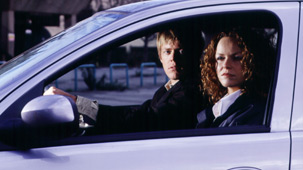
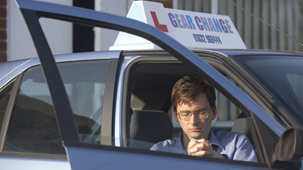
Lerner-driver.jpgSo the driving test turned 75 years old this week. Happy Birthday to one of the most exciting rites of teenage passage. Ah! freedom....It was a day I rehearsed for in a Renault Espace on Cotswold lanes: a dicey combination, which saw my dad adopting the 'parent of learner driver' brace position. (feet pressed into the foot well, pumping an imaginary brake, and both hands gripping the handle above the passenger window.) Reader I passed first time. Not all are so lucky - I distinctly remember listening to the deputy head of our school crowing about the test giving some of the more boffin-y members of our sixth form "an opportunity to fail" at something. Perhaps for the first and last time. The driving test as leveller, then.

Despite sailing through with narey six minor faults to my name, (does this terminology age me?..) it is not without a deep sense of retrospective relief that I read about the new 'initiative' element of the driving test, set to be introduced later this year. Thank the Lord I wasn't subjected to that. I'd still be lost on a scooter in Hull. And I live in Cambridge...The DSA website says it will "help candidates demonstrate their ability to drive without step-by-step instruction." which they believe "will lead to better and safer drivers." Now I am all for independent thinking...and for independence full-stop. I am frequently ashamed of fellow women (often) who give up their rights to drive the family car along with their surname. I know women who could be driven the same route thirteen times in daylight and who wouldn't have a clue how to do it themselves... and it makes me mad. BUT while I drive often, drive my husband around often, and rarely get lost...when the journey is to somewhere completely new, or I am stressed about it - I switch on the satnav. We bought her (for it is a her), after sitting in a pub car park, late for a friend's wedding in deepest Dorset, as my husband famously hissed at me "Let Me Tell You How. Maps. Work...."

For easy journeys and journeys unconstrained by time and stress, for regular journeys and motorway journeys the sat nav is redundant. She rests wrapped up in a sock in the glove compartment... But stress and driving do not mix: and what car journey could be more stressful than the driving test? Feeling suddenly sorry for today's wannbe-driving stressed-out seventeen year olds, I take a quick look at the Driving Standards Authority to see how else the test has changed over the last three score years and fifteen.

Until the mid seventies, I was amused to read, you were still examined on your use of hand signalling. It was a skill I still practised as a child, lifting the flap of our 2CV's front window to wave a limb when my mother shouted. Sometimes the window stayed flapped up for long enough, sometimes it didn't. I am glad no one has to trap a fore-arm to do this hand-flailing any longer. It could be painful.

In 1996 the theory test was introduced. I am so glad that I was done and dusted by then, although I do sometimes wish I understood a few more of the signs which litter the nations' highways and by-ways. Had the dreaded exam been around when I was that show-off seventeen year old in her father's MPV, I would still be the proud owner of a provisional license, and that scooter.

So in summary: Better understanding of signs, and less need for clockwise circular movements of the arm (or whatever it was) to denote deceleration.... But where does the new initiative test fit into this evolution of the exam? To me it feels like a retrograde step....By all means make the test harder. Test the learners on their technique and their signs.. Make them do more lessons in more conditions over a longer time, maybe... but don't put them through the added misery of getting lost and getting flustered. Keep those instructions coming from the examiner, after all the last seventy five years have brought us indicators and GPS. Let's keep our hands inside the car and our minds on the task at hand: passing the test and tasting freedom.

Catherine will be taking a trip with her grandma who learnt to drive before the test, and is still on the road at the age of 92. We'll hear how they get on in a week or so on You and Yours.


You & Yours is on BBC Radio 4 at 1200 weekdays. Listen to today's episode on the Radio 4 web site.


Catherine Carr is a reporter on
You and Yours on BBC Radio 4

Mental health in the workplace

Post categories:

Winifred Robinson|14:25 UK time, Wednesday, 2 June 2010

Comments

blurred_traders_303.jpgThe day at You and Yours starts with an 8am meeting where ideas are chewed over. Sometimes we apply the 'Tell me something I didn't already know' test - does the item reveal anything much?
Recently we've been reflecting how the MIND campaign tries to persuade employers to offer better support for people with mental illness. I have seen the damage mental illness can do to career prospects through a close relative who has bipolar disorder. Her regular, sometimes long absences from work were tolerated by the Littlewoods organisation. It was a family firm started in Liverpool by John Moores and it always had high ethical standards, long before it was fashionable. When my relative took voluntary redundancy from the pools arm of the firm she never found another job.
Which brings me back to things I didn't know. I'd always thought that companies who supported people with mental illnesses - by allowing them time off to get better, altering shift patterns, perhaps moving them to different roles - were motivated by altruism. They may well be but what I learned from the You and Yours discussion featuring two employers - the NHS and a small retail co-operative in Somerset - was that supporting people who are mentally ill can save money. In the case of the co-op, three workers on long term sick leave through mental ill health were approached with a view to helping them back into their jobs. The employers hired a management specialist who worked with the GPs and offered counselling. Two came back to work pretty quickly and one decided that it was time to let the job go and resigned.The co-op save money in the end.

On the subject of saving money I also hadn't realised how savage the cuts and tax rises have been in Ireland. The reason we haven't read about public sector pay packets shrinking by a fifth - no really, a fifth - and state benefits for all those of working age cut by four per cent, is that the Irish have pretty much just got on with it. It's a window on what may lie ahead for us. It made me want to go to Ireland on holiday just to show solidarity.

Still on the subject of saving money - I am opening my garden for a day for charity this summer as part of the National Gardens Scheme.

I've done it twice before and I should say two things - it's not a grand garden at all and in small villages like ours standards are not that high. I've always loved Lynn Barber's typically acid advice on how to create a beautiful garden - 'Spread money thickly'. But this time - like everyone else - I don't feel I have that much to spread and I don't want to slam a lot of plants on a credit card. There are six weeks left and so it's starting to feel a bit like Ground Force in our house only without Alan Titchmarsh's calming influence. I could post some pictures of the problem areas and the good gardeners among you could suggest what might work?

Mind Blog
BBC Gardening

You & Yours is on BBC Radio 4 at 1200 weekdays. Listen to today's episode on the Radio 4 web site.

Winifred Robinson presents You and Yours on BBC Radio 4

BBC © 2014The BBC is not responsible for the content of external sites. Read more.

This page is best viewed in an up-to-date web browser with style sheets (CSS) enabled. While you will be able to view the content of this page in your current browser, you will not be able to get the full visual experience. Please consider upgrading your browser software or enabling style sheets (CSS) if you are able to do so.