
BBC BLOGS - Today: Tom Feilden

Archives for December 2009

Protesters threaten to halt climate talks
Tom Feilden|08:19 UK time, Wednesday, 16 December 2009

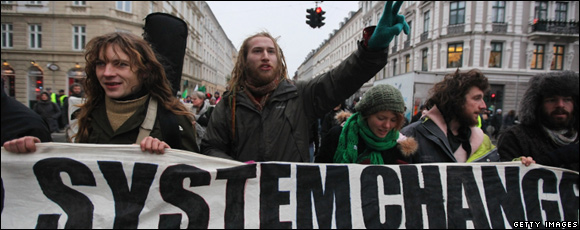
Environmental activists hold a protest in Copenhagen

While the climate talks are deadlocked inside Copenhagen's Bella Centre, outside things are moving fast.

Anti-capitalist activists are planning a four-pronged assault on the conference centre this morning, beginning with a march and rally outside the main gates.

That demonstration has been officially sanctioned by the Danish police, but a second tranche of protesters are planning a more mobile assault on the perimeter fence. They'll be moving around outside, probing for weaknesses and attempting to get in any way they can.

That group will be supported by a fleet of demonstrators on bicycles, whose main aim seems to be to divert police attention, and to provide some entertaining pictures for the world's media.

Finally, a fourth group of demonstrators who have managed to get accreditation will be staging a protest inside the Bella Centre itself. They plan to disrupt the conference, before marching out to link up with the protesters outside.

Richard Bernard, from Climate Justice Action, said the aim was to create a space, both politically and physically, to discuss the real issues facing the world's poor and disenfranchised. He claims the UN Conference on Climate Change has been hijacked by the rich nations and big business interests.

Needless to say the Danish authorities are determined to prevent any demonstration from disrupting the talks. Some sort of confrontation seems inevitable.

Chaos and confrontation in Copenhagen

Tom Feilden|08:26 UK time, Tuesday, 15 December 2009

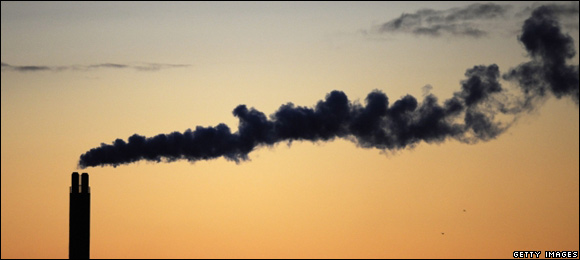
Smoke rises from a chimney in Copenhagen.jpg

It was a day of high drama and more than a little shambling chaos at the Copenhagen climate change conference.

On the outside thousands of people - all accredited - spent the day trying (and mostly failing) to get in....while on the inside delegates from the developing world were staging a walkout.

The main session of the conference was suspended for five hours when the G77 group, which represents 130 developing nations and includes China, India and Brazil, withdrew accusing their Danish hosts of trying to stitch up a deal behind closed doors.

The row exposes a deep rift between rich and poor nations that could scupper hopes of a deal. At it's heart of course is money - who will pay, and how much, to help developing countries deal with the impact of global warming.

In the end the ruffled feathers were smoothed over, and now the focus is very much on the arrival of Prince Charles.

If he can get past the accreditation commissars he'll be addressing the summit later this morning, lobbying for a meaningful final agreement and for action on de-forestation.

Then, this afternoon, Gordon Brown arrives - well ahead of many of the world leaders attending the summit. That may be because the Prime Minister sees himself in the role of honest broker - the man to mediate between the rich nations and the developing world.

He believes his track record on alleviating poverty in Africa, on the financial crisis, and on climate change (he promised to come to Copenhagen while others held back), gives him credibility in both camps.

It's a dangerous strategy, one that could blow up in his face if a deal can't be agreed. But the Prime Minister's experience chairing the G20 taught him that if you want to secure a deal you have to get your hands dirty - you can't just turn up on the final day and expect everything to fall into place.

BBC © 2014The BBC is not responsible for the content of external sites. Read more.

This page is best viewed in an up-to-date web browser with style sheets (CSS) enabled. While you will be able to view the content of this page in your current browser, you will not be able to get the full visual experience. Please consider upgrading your browser software or enabling style sheets (CSS) if you are able to do so.