

The Earth after us
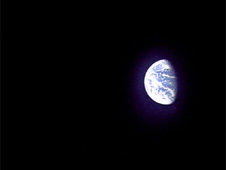 What will our legacy be?
It may seem a little premature to start talking about what the earth will look like after we're gone, but that's exactly what Jan Zalasiewicz, a geologist at the University of Leicester, has been doing.
Taking the perspective of alien explorers arriving on earth a million years from now Dr Zalasiewicz applies the lessons of his own research to piece together the fragmented clues we will inevitably leave behind.
Buried in the record of shifting continents, ice ages and rising and falling sea levels, the aliens stumble across something quite unique in a thin layer of rock: a period of massive upheaval, of dramatic climate changes, mass extinctions and strange movements of wildlife across the planet...and finally the petrified remains and fossilised bones of a lost civilisation.
It's sobering to think about the era in which humans have risen to dominate the planet - the Holocene - in the context of geological time. At 10,000 years it's a remarkably short period. The seam that will mark our passing in future rock formations will be a very thin one - but it should provide rich pickings for alien explorers.
In order to see this content you need to have both Javascript enabled and Flash installed. Visit BBC Webwise for full instructions
Our activities have already left a significant footprint on the planet, and it's not a pretty picture. Jan Zalasiewicz argues that it's not too late. But we will have to mend our ways if the alien postscript on planet earth is not to describe a world dominated by an incredibly clever, but equally foolish, bipedal ape.
 I'm Tom Feilden and I'm the science correspondent on the Today programme. This is where we can talk about the scientific issues we're covering on the programme.
