
BBC BLOGS - Iredale's Eye on Politics

Archives for April 2011

Will Boston's voters bypass the main parties again?
Tim Iredale|18:35 UK time, Wednesday, 27 April 2011

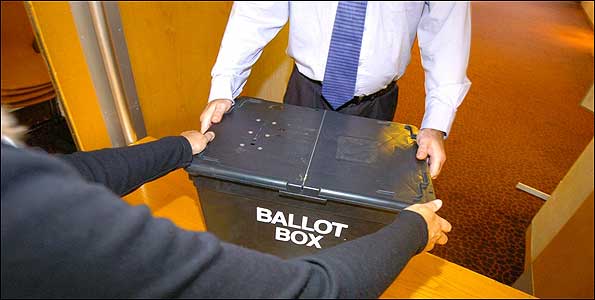
Typical ballot box

It was the political equivalent of an FA Cup giant-killing.

A collection of people with little or no political experience coming together to form a new party and taking on the established big guns and winning.

The Boston Bypass Independents stormed to power in the Lincolnshire town in 2007 - wiping out Labour and the Lib Dems and dramatically cutting the Conservatives councillor count as they took control of the borough council.

Four years on, the people of Boston will now be able to give their verdict again. So have things changed over that time?

Well there's still no bypass, but after almost a year of roadworks, a traffic new system with extra lanes and wider roads is in place in the most congested part of town.

However, that scheme is led by Lincolnshire County Council - which is the highways authority - and both the Bypass Independents and the county's ruling Conservatives are claiming credit for their role.

Only the Boston Bypass Independents and Conservatives have fielded enough candidates to be able to take outright control of the council, but there are plenty of other parties looking to make an impact.

For Labour and Lib Dems, this year could be the chance to re-establish themselves after losing all their councillors in 2007.

And while the Bypass Independents were the surprise package of the last election, could the English Democrats take that role this year? They are fielding 11 candidates - including a BNP councillor who has defected to them.

There are also 11 independents standing and UKIP is fielding 8 candidates.

For the first time a number of foreign nationals are standing for various parties, reflecting Boston's strong migrant community presence.

The 2007 result was one of the biggest political shocks anywhere in the country and with almost 100 candidates representing seven different political persuasions, the people of Boston have never had such a varied choice when they determine the road to power in this corner of Lincolnshire.

Don't scrap CCTV say Lincoln residents

Tim Iredale|13:16 UK time, Friday, 15 April 2011

Does cutting back on CCTV make clear financial sense in the current climate or put the public at risk?

It's a big talking point on the streets of Lincoln.

A month-long consultation on the future of CCTV in Lincoln drew to a close this week. Residents and businesses were asked their views on a range of options, which included turning-off the cameras altogether.

It currently costs City of Lincoln Council £434,000 a year to run the CCTV system round the clock. The Conservative leader of the council, Darren Grice, has already indicated that the majority of people consulted would prefer the cameras to keep rolling - although that would mean making savings elsewhere.

We've all become use to CCTV pictures filling our news bulletins. Who can forget the haunting images of James Bulger being led to his death? Or the July 7 London bombers preparing to carry our their terrible mission?

But not everyone is convinced the cameras are effective. One Lincoln shopkeeper told me they failed to catch a pair of would-be thieves who weren't picked up when they left his premises, because the picture quality was so bad it it couldn't be used as evidence.

Lincoln is always the scene of a fierce election battle, because this city tends to mirror the national political mood. At the moment it couldn't be closer in the run up to the local elections on 5 May, with the Conservatives and Labour both on 16 seats and the sole Liberal Democrat councillor holding the balance of power.

A final decision will be made on the future of CCTV here in the summer, with other councils also looking at switching off cameras as their financial constraints are brought into sharp focus.

Speaker Bercow says Parliament's image has not improved

Tim Iredale|16:20 UK time, Friday, 8 April 2011

In order to see this content you need to have both Javascript enabled and Flash installed. Visit BBC Webwise for full instructions. If you're reading via RSS, you'll need to visit the blog to access this content.


The man who sits in the big chair in the House of Commons knows full well that Parliament has an image problem outside the boundaries of the Westminster village.

I caught up with John Bercow in Sheffield as he embarked on a regional tour, where he is outlining his vision for improving the public's perception of Parliament.

It was a timely visit. This week, the former Scunthorpe MP Elliot Morley became the biggest culprit so far in the Westminster expenses scandal.

Morley pleaded guilty at Southwark Crown Court to fiddling his mortgage expenses to the tune of around £32,000. The former Labour minister will now almost certainly facing a prison sentence.

I asked the Speaker to sum up the damage caused by the expenses scandal, which broke in 2009, the year he was elected to the post. Mr Bercow said he believed the reputation of Parliament had suffered over a period of decades and has settled at an historically low level.

John Bercow's political journey from right-wing Tory to social liberal has been well documented. As have the thoughts of his Labour-supporting wife Sally. But Mr Bercow believes he's done more than any other speaker in history to bring the work of parliament to the provinces.

The Speaker is particularly passionate about reconnecting more young people with the Parliamentary process. He told students at Sheffield Hallam University about his plans to create a 'Speaker's Scholarship - where people from working class backgrounds will be paid to work in Parliament.

He rejected my suggestion as a "cynical Yorkshireman" that many people still believed MPs were on the take. Mr Bercow pointed to evidence showing that many voters mistrusted politicians collectively, but believed their own MP was hard working and conscientious.

So has John Bercow done enough to put his own house in order? It's one of our talking points on this week's Politics Show in Yorkshire and Lincolnshire.

BBC © 2014The BBC is not responsible for the content of external sites. Read more.

This page is best viewed in an up-to-date web browser with style sheets (CSS) enabled. While you will be able to view the content of this page in your current browser, you will not be able to get the full visual experience. Please consider upgrading your browser software or enabling style sheets (CSS) if you are able to do so.