Now that Labour's long leadership race has been settled, much attention will focus on the party's first big test at the ballot box since the general election.
That will come next May with local elections taking place across much of England and the parliamentary/assembly elections in Scotland and Wales.
May 5th 2011 is also the planned date of the referendum on changing the way we vote.
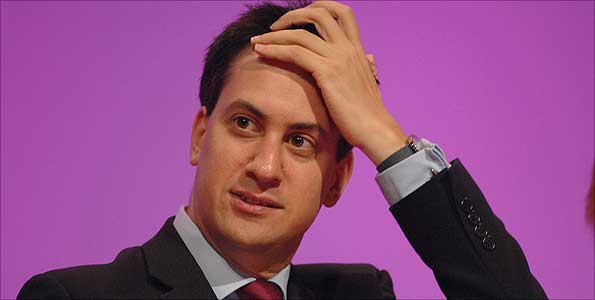
In his keynote speech to the Labour conference in Manchester, Ed Milband outlined his support for a "yes" vote in the referendum on whether we should switch to the Alternative Vote system.
But some Labour MPs believe the failings of the AV system have been laid bare for all to see in the party's own leadership contest.
They point out that Ed Miliband won a majority of union members, but he was not the first choice of the majority of MPs and MEPs or Labour Party members.
Many in the party believe last weekend's complex result shows just how tough a sell AV will be on the doorstep, compared with the relative simplicity of the first-past-the-post system.
Hull Labour MPs Diana Johnson and Karl Turner told me they would both be campaigning for a "no" vote in the referendum.
The other Labour MP in Hull - Alan Johnson - is known to be a supporter of electoral reform. Ironically, he was also one of David Miliband's biggest supporters for the Labour leadership. Will the former Foreign Secretary's defeat to his brother make the ex-Home Secretary think again?
This week marks the start of a new era for the Labour Party.
As Ed Miliband gets down to the serious business of fronting Her Majesty's opposition, attention will begin to turn to policy rather than personality.
I asked a number of Labour MPs from Yorkshire and Lincolnshire to outline the direction they believe the party should take, following Labour's second worst election defeat since 1918.
Some responses were not surprising. Great Grimsby MP Austin Mitchell - who describes himself as "not so much Old Labour, positively geriatric" - talks about a new focus on "redistribution" and a crackdown on wealthy tax evaders.
Scunthorpe MP and former college principal Nic Dakin wants education to be a priority for the new leader and told me he hoped the new regime would trust professionals in the jobs they do and not "mess around with structures."
However, Karl Turner - Labour MP for Hull East - takes a much tougher line on Labour's failings in the May election. He tells this week's Politics Show in Yorkshire and Lincolnshire: "I think we've got to look at where we went wrong. Immigration on the doorstep was a massive issue for me and I think we need to address that issue."
He added: "There were also issues around Europe, we need to address that, but I think immigration is the issue which the leader will need to deal with. We have got to be honest about where we went wrong, accept the responsibility of what we did in government, which was not very good for the electorate and move forward."
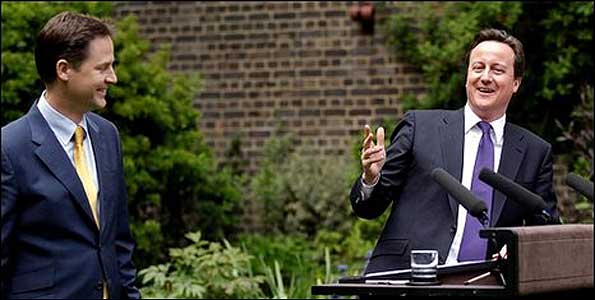
Senior Liberal Democrats have rejected a proposal made by an influential Conservative MP who believes the two parties should form an electoral pact at the next general election.
Nick Boles - the MP for Grantham and Stamford - has said the Conservatives and Liberal Democrats should not fight each other in seats they already hold.
He tells the Politics Show in Yorkshire and Lincolnshire: "We will have been working together through thick and thin and through some difficult times with Liberal Democrats for five years. Isn't a little ludicrous to think that three months before the election, we are suddenly going to start attacking people who've been our partners in the work of government?"
Although he is a new MP, Nick Boles is seen as a rising star of the Conservative Party. He is a former head of Policy Exchange, which has been described as David Cameron's favourite think-tank.
He has also been bracketed as a member of the band of Tory modernisers known as the "Notting Hill Set."
However, Simon Hughes, the Liberal Democrats' Deputy Leader has dismissed talk of an electoral pact. Speaking to the Politics Show in Hull he said: "We are a proud independent party. We will stand in every parliamentary seat at the next election as we did this year."
So, at the moment there seems to be no prospect of a deal on an electoral pact between the two coalition partners.
The much-maligned county of Humberside may be long gone, but some would say the economies of East Yorkshire and Northern Lincolnshire remained inextricably linked - with a shared focus on shipping, petrochemicals and the prospect of thousands of new jobs supporting renewable energy projects.
Not so, say the leaders of Liberal Democrat-run Hull City Council and Conservative-controlled East Riding of Yorkshire Council. They are joining forces with Scarborough to bid for a new Local Enterprise Partnership.
LEPs are set to replace Regional Development Agencies such as Yorkshire Forward and the government has received a number of separate bids from across Yorkshire and Lincolnshire.
Labour-run North Lincolnshire Council is pushing for a pan-Humber LEP which is being supported by a number of businesses.
More than 50 firms, including bosses from BP and Conoco Phillips, have signed a letter calling on the Coalition Government to give the go ahead to a Humber LEP.
Opponents say there have been a number of Humber-wide economic bodies in recent years, which have largely failed to deliver.
Ministers say they'll be looking at all bids over the coming weeks in an attempt to establish which LEPs would best provide economic growth.
The competitive nature of this process could prove to be taster of the battle to come, with local authorities jostling over an ever shrinking pot of cash.
So the countdown is underway to the conclusion of the Government's Spending Review on October 20th.
On Thursday, I hosted BBC Look North's regional debate in East Yorkshire and Lincolnshire, which was held at Hull City Hall.
Research commissioned by the BBC and carried out by Experian revealed that Hull was the local authority area most vulnerable to the effects of spending cuts in our region. The district found to be most resilient was South Kesteven in Lincolnshire.
It seems that everyone has their own view on how best to tackle the deficit and we heard many opinions in the course of our TV debate.
Here's a taster of some of the emails we received from Look North viewers following the programme...
Lee from Spalding said: "The politicians can throw accusations and rhetoric around as much as they like, but the fact is that the banks owe the UK people, and paying the money back through lending is not the way to pay us back."
Dale from Grimsby said: "While the government are cutting funding to local authorities which is most likely going to result in people out of work, how are unemployed people supposed to spend money to help local business, especially if benefits are due to be cut?"
James from Hull said: "I know several who are on job seekers etc but work for cash in hand. Stop benefits altogether and make them all go out to work - the economy would soon recover."


 I'm Tim Iredale, the BBC's Political Editor in Yorkshire and Lincolnshire and presenter of the regional Politics Show. This is strictly a "no-spin" zone where the political viewpoint is more Humber Bridge than Westminster Bridge. Your comments and observations are more than welcome.
