

Could Lincoln's voters lead the way again?
In October 1974, cinema audiences were paying to watch the classic horror flick The Texas Chainsaw Massacre.
That same month Mohammed Ali and George Foreman stepped in to the ring for the classic heavyweight contest which was dubbed 'The Rumble in the Jungle'.
October 1974 also saw that year's second general election take place. An election in February '74 had resulted in a hung parliament and the 'action replay' poll held in the autumn resulted in a swing to Labour that gave Prime Minister Harold Wilson a small working majority.
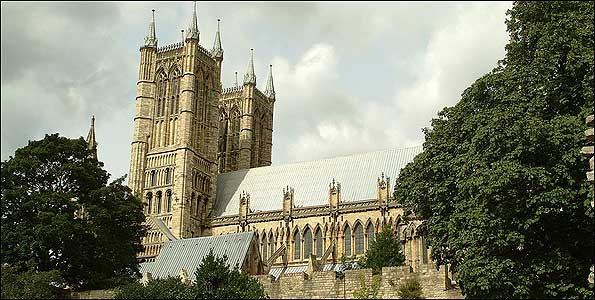
Also in the October 1974 election, a trend emerged that saw voters in Lincoln elect a member of parliament from whichever party formed the government of the day. A pattern that has continued unbroken to this present day. Lincoln has become a so-called 'bellwether' constituency.
Labour's Margaret Jackson - you might know her better by her married name Margaret Beckett - held the seat until 1979. Then came Conservative Kenneth Carlisle, who represented Lincoln though the Thatcher and Major years of the 1980s and 90s.
In Labour's landslide year of 1997 we saw the arrival of Gillian Merron, who became part of the record intake of female MPs dubbed 'Blair's Babes'. Ms Merron successfully defended her seat in the 2001 and 2005 general elections.
Now we face potentially the closest general election in many years and according to the bookmakers, the Conservatives' candidate Karl McCartney is the hot favourite to become the new MP for Lincoln. Certainly the recent form suggests the Tories are in with a good shout, having ousted Labour from control of the city council in 2007. They also polled strongly in last year's County Council elections.
However, the difference between Lincoln staying red or turning blue could be decided by less than 2,000 voters. According to the BBC's notional constituency figures - which take account of recent boundary changes - Labour's Gillian Merron is defending a majority of 3,806 over the Conservatives. So it only takes half that number to switch sides to change the city's political landscape.
So expect to see campaigning continue at a frantic pace in Lincoln, where it is no exaggeration to say that every vote counts.
You can see a full list of candidates on the BBC Lincolnshire website.
 I'm Tim Iredale, the BBC's Political Editor in Yorkshire and Lincolnshire and presenter of the regional Politics Show. This is strictly a "no-spin" zone where the political viewpoint is more Humber Bridge than Westminster Bridge. Your comments and observations are more than welcome.
