

The sound of Britain
Heard any good sounds lately, something that you might like preserved for posterity?
Perhaps nursery rhymes chanted in a playground, the roar of the crowd at a Premiership football match - or something as simple as the waves crashing on a beach?
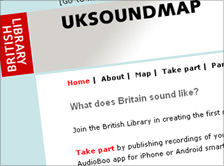 Well now you have the chance to contribute to an archive of sounds gathered across the country. The increasingly innovative British Library has got together with one of Britain's most interesting technology start up firms to create an interactive sound map of the UK.
The library is inviting anyone to use Audioboo, a smartphone application, to record sounds, and upload them with the tag "uksm".
Then, as long as the audio quality of the recording is good enough - watch out for wind noise is the advice from the folks at the Library - it will be plotted on the map.
The project has been launched nationally after a successful trial in the Sheffield area, and so far there are a couple of hundred recordings.
They include the sound of pigs at a farm near Bath, 4 minutes and 33 seconds of waterfall noise from Cwmaman, the sound of Coral Beach on the Isle of Skye and the sound of someone buying a car at Cinderford.
For Audioboo, it is an ideal opportunity to promote a service which aims to be a kind of audio version of YouTube, but which has yet to find an application that will make it useful to a mainstream audience.
The BBC World Service has been running a similar project called Save Our Sounds, inviting listeners from around the world to contribute recordings of sounds that could be endangered.
Now the British Library's map could deliver a sophisticated soundscape of our country, in all its noisy, or perhaps quiet and understated, glory.
But only if enough people hear about the project and decide to take part. So I'm off to record something on my phone right now. I just hope it makes it past the quality control inspectors at the British Library.
Update, 09:58: Good news - my recording for the UK sound map got through quality control at the British Library and is now plotted on the map. I recorded some audio in the control room of the studio from which Radio 4's Six O'Clock News is broadcast. You can hear it by clicking on the map - or you can go to Audioboo.
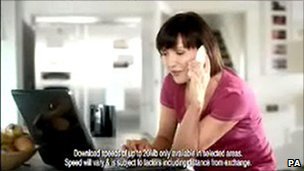 When I first saw the story I concluded that the ASA had finally decided that advertising of "up to 20Mbit/s" or "up to" anything was just too dubious to continue.
 A year ago stories abounded of bedroom developers making their fortune by developing applications for the iPhone App Store but now it looks as though Google's Android Market may be proving a more attractive and lucrative platform for some.
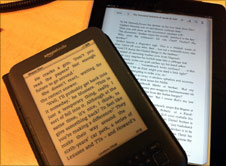 Last week, I was lent the latest Kindle by Amazon, with an invitation to try it out. It's smaller and cheaper than previous versions but built very much along the same lines - it aims to be just an e-book reader rather than an all-purpose entertainment gadget like the Apple iPad. Amazon's strategy is to appeal to people who simply want to read without any flashy extras, and I think it makes sense.
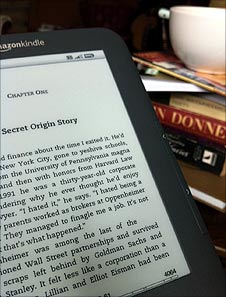 An American thriller writer, Joe Konrath, writes


 It was a line in
  The answer is in mining the vast flood of data now produced by hundreds of millions of people sharing information over theses networks and it is the reason, some say, that Google is now getting very nervous about the likes of Twitter and Facebook.
 I'm just back from a holiday in California, where I dropped into Twitter's San Francisco headquarters, and found row after row of empty desks. The company made it clear that they would soon be filled as its workforce continues to expand at a jaw-dropping rate. I wondered just how their salaries would be paid, but now I'm a little clearer.
 I'm
I'm 


