

Central banks’ hazards
- 15 Aug 07, 09:30 AM
The oldest dilemma for regulators is how to prevent their actions in protecting the integrity of the financial system from affecting the behaviour of those they regulate in the opposite ways to those intended.
It’s called “moral hazard”. The classic and legitimate fear is that regulators actually encourage banks and other financial players to take silly risks, by showing that they’ll always intervene to reduce the costs for the market of such imprudent behaviour.
Those concerns about moral hazard lay behind my uneasiness about how much cash the European Central Bank has been pumping into the banking system.
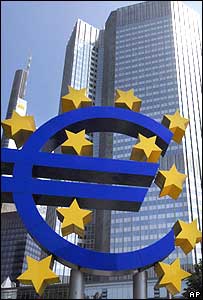 Of course, I understand that the ECB has a target for overnight interest rates. So in one sense it was rational for it to provide tens of billions of pounds of incremental short-term lending to Europe’s banks, to prevent that overnight rate from settling too far above its target of 4 per cent.
But the reason for the rise in those short-term interest rates was nervousness among lenders about which of them might be holding something very explosive and nasty in the frenzied game of pass-the-parcel of horrible financial risk – which stems ultimately from sub-prime lending in the US.
Or to put it another way, in providing all that cash or liquidity to the market, the ECB (and to a lesser extent, other central banks too) was bailing out banks – and, indirectly, hedge funds – who should have known better.
The danger inherent in the ECB bailing them out is that when this particular market storm is over, those banks and hedge funds will take on even greater risks and do even sillier and more opaque deals, safe in the knowledge that when it all goes wrong again – as it will – the ECB will always prevent drama turning into crisis.
On the other hand, there is a separate imperative for the ECB. There are growing signs of softness in the eurozone economy. And the sudden reduction in liquidity in the banking system and rise in short-term rates could have turned that softness into a more serious slowdown in economic growth.
It would have been unfair for Europe’s consumers and businesses to pay a big price in the form of slower growth in their income for the imprudence of those who lent to US homebuyers with poor credit histories.
Understandably, the ECB – and to a greater extent, Europe’s politicians – would want to avoid that.
Unfortunately, we are not out of the woods in terms of the impact on the real economic world from the financial mayhem. There’s a continued flight to quality going on, with the more marginal markets in Asia being hit hard overnight. That has prompted fresh falls in the larger, more liquid stock markets like London’s. Underlying all this is the continued reluctance of lenders to provide credit to all but the safest borrowers.
So eurozone consumers and businesses – and British ones – may yet pay a real economic price for the excesses of players in financial markets.
The BBC is not responsible for the content of external internet sites
I'm Robert Peston, the BBC's business editor. This blog is my regular take on the business stories and issues that matter.
Click here for all the business news
The New Capitalism: Download a PDF [37Kb] with my thoughts on how the global crisis occurred and what the re-made economy will look like


Archives
« August 2007 »
| Sun | Mon | Tue | Wed | Thu | Fri | Sat |
|---|---|---|---|---|---|---|
| 1 | 2 | 3 | 4 | |||
| 5 | 6 | 7 | 8 | 9 | 10 | 11 |
| 12 | 13 | 14 | 15 | 16 | 17 | 18 |
| 19 | 20 | 21 | 22 | 23 | 24 | 25 |
| 26 | 27 | 28 | 29 | 30 | 31 |
Being Discussed Now
- Will Thiam survive at Pru?(50)
- BP's financial pain is America's pain(407)
- Government cuts private pensions(137)
- Peston Picks is moving(46)
- HSBC banks on UK(61)
- What price a Greek haircut?(91)
- The big PPI lesson for banks(85)
- RBS opposes internal firewalls(97)
- Lloyds to settle PPI claims(136)
- Lloyds: back in the red?(27)
Websites linking here
- "Robert Peston at the BBC [gets blogging's] deepest utility: an essential intellectual tool as well as a means for distributing stories"
Website: Slugger O'Toole - "Peston, Murdoch and Marr sounds like a firm of dodgy solicitors, but they are, of course, the names of important prognosticators of our media future"
Website: Nick Baines - "Politicians really should be stepping up to make these arguments, but in their absence BBC reporter Robert Peston does a pretty good job of summing up"
Website: SqueezeBox - "I outline how blogging went from being an activity by a handful of journalists to being adopted by some of the BBC's biggest names, such as Business Editor Robert Peston, despite at times vehement opposition from within the corporation"
Website: Reportr
Robert's TV/Radio reports
- Rock criticised over risk taking
Broadcast: 20 March 2009 - Row over Sir Fred pension advance
Broadcast: 17 March 2009 - Testing times for China's economy
Broadcast: 12 March 2009 - Chinalco president on Rio Tinto deal
Broadcast: 06 March 2009 - China's factories 'in trouble'
Broadcast: 06 March 2009

Latest from BBC News blogs
Nick Robinson: |  |
Douglas Fraser: |  |
Brian Taylor: |  |
 |
Richard Black: |  |
Jonathan Amos: |  |
- News Editors
- Sport Editors
- Journalism Labs
- BBC Internet Blog
- Radio 4 Blog
- Peston's Picks
- Nick Robinson's Newslog
- Stephanomics
- Mark Easton's UK
- Mark Mardell's America
- Nick Bryant's Australia
- Andrew Harding on Africa
- Gavin Hewitt's Europe
- Soutik Biswas' India
- dot.Rory
- Science: Jonathan Amos
- Richard Black on environment
- Today: Tom Feilden
- Fergus Walsh's medical files
- Newsnight: Paul Mason
- Newsnight: Mark Urban
- Torin Douglas
- Will Gompertz's arts
- Phil Coomes on photojournalism
- Magazine Monitor
- Mark D'Arcy in Westminster
- NI: Mark Devenport
- Scotland: Brian Taylor
- Scotland: Douglas Fraser
- Wales: Betsan Powys
- Martin Rosenbaum on FOI
- 5 Live Breakfast
- Newsnight
- PM programme (iPM)
- World Tonight: Robin Lustig
