The “L” word
I’m signing off this blog for a few days. But with markets rather closer to the precipice than they’ve been for years, the timing of my absence doesn’t feel ideal.
The threat, of course, is from the “L” word – for leverage, you dunderhead.
It’s about that chain reaction I’ve been writing and broadcasting about for many months now, from losses for lenders at the riskier end of the US housing market, the so-called sub-prime bit, through to the re-pricing of complicated financial products that are linked to this sub-prime market (those blessed CDOs and CLOs and so on), through to the confidence of investors in other borrowers and other kinds of debt.
Right now, there’s almost a buyers’ strike for certain sorts of bond or debt, notably the borrowings of businesses being taken over by private equity.
These takeovers, like KKR’s purchase of the retailer Boots, have been financed by the big banks in the expectation that they would be able to parcel up the loans and sell them on to other investors.
But as these banks try to sell the debt on to insurers, hedge funds, pension funds or other institutional investors, they’re being given a giant raspberry.
To be clear, these takeovers still have to happen – they’ve been underwritten by the banks.
What that means is the banks now have much bigger loan-exposure to private-equity-owned companies than they had expected.
In the case of Boots, for example, some £5bn of loans has been left sitting on the books of eight banks, including Deutsche Bank, JP Morgan, Barclays Capital and Royal Bank of Scotland.
That’s the so-called senior debt or better quality Boots stuff. The banks are succeeding in placing the more junior Boots debt, but only (and this is important) at a loss to themselves.
The point is that Boots is not an isolated example. There is billions and billions of pounds of other debt held by banks which they want to place and can’t.
What does it all mean?
Well, when a bank is forced to keep a loan on its balance sheet, that is a drain on its capital resources and means it has less ability to lend to other companies or individuals.
And when certain instances of debt are re-priced downwards, well that can have a knock-on to the valuations of all sorts of other debt products, throwing up losses elsewhere in the financial system.
In an extreme case, banks can find their ability to lend on their own account is constrained by a shortage of capital resources. And buyers of debt manufactured by banks can lose all appetite for it because of the losses accrued on the stuff they’ve already bought.
When banks can’t or won’t lend and debt-investors can’t or won’t buy debt, that’s a credit crunch, or liquidity crisis, which would have seriously harmful ramifications both for individual financial institutions and for economic activity in general.
We’re not there, yet – but the threat of it is keeping financial watchdogs awake at night.
Oh, and one other small thing.
There’s a sizeable premium in the stock-market stemming from the belief that every company is vulnerable to a private-equity takeover.
Well right now KKR and its peers won’t get the warmest of welcomes at the big banks if they roll up and say they want to splash out tens of billions of dollars of other people’s money on buying this or that business.
So I’d predict we aren’t going to see any big new private-equity deals for a while, at least until debt markets regain their nerve and poise.
Which means that the share prices of companies thought to be vulnerable to a private-equity takeover are too high – and that in turn probably means that the stock-market as a whole may be set for some dismal days.
 Barclays said it would help CDB to learn best practice in customer service and product development. CDB staff would be trained by the blue-eagle bank, which would also help CDB recruit top class people from around the world.
 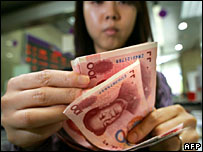 First, it confirms that the Chinese state is using its enormous financial muscle to acquire assets and knowhow abroad. A strategic stake will be taken by the
 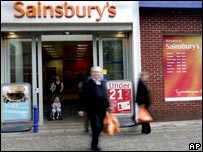 And what’s striking about this conditional bid is how similar it is to that earlier private-equity offer.
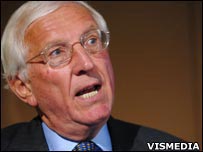 Walker says such secrecy is no longer appropriate. No surprise there. The Treasury has made not-very-veiled threats that if private equity firms don’t do a better job of telling their employees and other interested parties (including largely ill-informed politicians) what they’re up to, they could find themselves compelled to do so.
 Is the store group's remarkable recovery under its chief executive Stuart Rose juddering to a halt?
  How likely is such a market meltdown? Not huge, according to Thomas Huertas, a sort of lifeguard of the banking system at the City watchdog, the
  But what the Bank of England has almost zero influence over is what Savills calls the “super-prime markets”, or homes selling for many many millions of pounds each. These are still soaring in value, due in large part to “interest from international purchasers” (the Russians, the Chinese, Arabs, the non-British partners in hedge funds and private equity).
 The latest household-name business poised to fall under the control of private equity is
  I'm
I'm