

Cameron shuns thorny EU
 ROSSENDALE, Lancashire, UK:
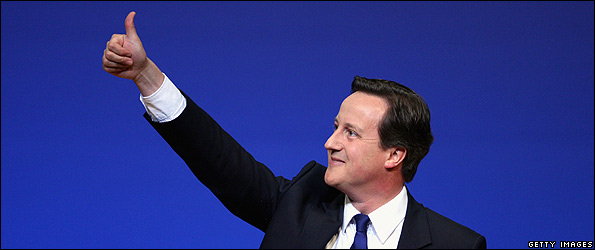
"Ideal for parties," says the banner outside the venue for the launch of the Conservatives' European election campaign. The atmosphere in these elections is anything but ideal for the big Westminster parties, mired in the mud of what in my days on the parliamentary beat we used to call sleaze. David Cameron tells the audience that "trust in politicians is shot".
The gimmick is that the candidates all have to get up and dutifully sign the pledge. Not a promise to give up the demon drink, but a promise to publish their expenses online. They sign up under the watchful eye of Mr Cameron, who gives off the air of a subaltern hoping the grizzled old guard will do the decent thing.
I take it the reason Mr Cameron has come to St Mary's Chambers (also ideal for weddings and celebrations, according to other banners) is because the North-West of England is a really important battleground, with the British National Party (BNP) possibly poised to take their first ever seat in a national election, slugging it out with not only the big three but UKIP and the Greens as well.
The European bit of the European launch is decidedly muted. His call for a general election, ten times more necessary than before, he says, will get the headlines and there's little or nothing new in the manifesto.
The Conservatives, like most of the other parties, don't particularly want to talk about Europe in these European elections. Some think this is because "Europe" reminds voters of the Tory civil war that raged from Mrs Thatcher's Bruges speech to the defeat of John Major at the polls, when the pro-Europeans finally lost their positions of power in the party.
Maybe it's a consideration. But I think it's mainly because of the risk of getting bogged down in complex "what if?" questions about their policy, whereas calling for an election is easy. Which is a shame, because the Conservatives' ideas on Europe, even if not new, are worthy of attention.
Above Mr Cameron's head, as he enters the building, flutter the Union Jack, the Stars and Stripes and the flags of Canada and Japan. His ideas for linking up with different countries in the parliament are not that radical, but they would make a splash.
Other policies would also feel pretty dramatic if Mr Cameron was in Downing Street, at least to those sitting in other European capitals. A referendum on Lisbon if the treaty is not fully ratified. A promise not to let matters rest if it is. A promise to negotiate a looser relationship with the EU. A promise that there'll be a law ensuring no new powers go to the EU level without a referendum. (Would this include, say, the treaty to allow Croatia to join?)
But there's also a fair amount of hot air. Take the promise in the manifesto that Conservative MEPs will force a vote to do away with the second parliament in Strasbourg. If Mr Cameron doesn't know, someone should tell him that the decision is nothing to do with the parliament itself. It is up to national leaders.
If Mr Cameron became prime minister the ball would be in his court, not that of the MEPs. He is the one who could force the issue onto the agenda and try to undo the agreement signed up to by John Major all those years ago in Edinburgh. Will Mr Cameron sign a pledge to raise the question of the Strasbourg seat as his first priority at his first European Council? If so, I pledge Mr Sarkozy's face will be a treat.
 I’m Mark Mardell, the BBC's North America editor. These are my reflections on American politics, some thoughts on being a Brit living in the USA, and who knows what else? My


Comments
Sign in or register to comment.