


Benefits of events
- 22 Jun 07, 04:07 PM
Harold Macmillan famously said that it’s "events, dear boy, events" that make or break politicians.
I don't think he was talking about events in the way we use the word now - events managed by professional organisers, from the Olympic Games, to the Glastonbury festival.
But it is these big events that can make or break cities and towns.
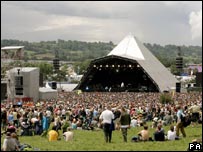 Take the Glastonbury festival, which in fact, occurs in the village of Pilton, population: 1,000 or so. The residents multiply by 100 during the festival.
The tickets generate £20m of revenue - so in fact, more money is probably spent by festival-goers during three days, than by the whole village for the rest of the year. Indeed, more sewage is probably created by the festival-goers than the rest of the village too.
This year’s Glasto will be the biggest yet. They've sold about 140,000 tickets at an average price of £145. The on-site power generator consumes about two tankers of fuel a day… there are 23 bars, the biggest of which can serve 10,000 pints of beer an hour at peak times.
Mendip District Council is the licensing authority for the event. It's trying to carry out an economic assessment of it. Consultants have been employed, and the results will be put together later this year.
But for the village and the Mendip district, don't confuse the huge economic scale of the event, with the benefits to the local area. Just because a lot of money is spent, doesn't mean it makes local people rich.
The ticket revenues, the performers’ fees that are paid out, the beer that is brought in by van… It all represents money that comes from outside Mendip, and goes outside Mendip.
In fact, the biggest beneficiaries of Glastonbury are probably the organisers, the participants and the customers.
So why then, do places like Glastonbury so love these events? Why do towns compete for events, sometimes even pay for them?
Well, the answer is that, even if the benefits are only a fraction of the total turnover of the festival, benefits there are.
The local hotels, garages, pubs, make hay while the sun shines, or rain falls, on the outsiders coming in. Plus local charities get support, some of the festival's profits are spent on cleaning and tidying in the village all year round.
In short, what the local district gets out of the festival are some of the crumbs dropped by the visitors - but because the festival is so huge, the crumbs add up to a tidy pile.
And in fact, what Glastonbury does, is a small scale example of what much of the modern British economy does - we host other people's activities, and pick up a portion of the money in the process.
 It's what Wimbledon, the tennis tournament, consists of.
It’s what the City does too. A lot of money comes and goes - but as a little more comes than goes, we can earn something.
So, these "events dear boy… ", are not always as profitable as they sometimes seem. But profitable they usually are. And I suspect Glastonbury is a good deal more profitable for the community, than the proceeds of the dairy farm that occupies the space the rest of the year.
The BBC is not responsible for the content of external internet sites
I'm Evan Davis, the former BBC economics editor.
I've now moved on to a new job, presenting Radio 4's Today programme. Evanomics will continue to exist in some form, as yet undecided.
Evan's categories
- (Latest entries, and comments)
- Notes on Real Life
| Are we stupid? (63) Central banks get together (32) Flat market (55) |
Small Change
 | Taboo of nationalisation (11) Chancing it (10) Shrinking economy (3) |
Vital Statistics
 | Setting prices (17) Unsustainable deficit (68) The first quarter... (20) |
Stars and strife
 | Dollar thrill (13) Prompts v causes (9) Dow vs ABX (11) |
Evan's Reading List
 | Irrationality (72) |
Archive
« January 2008
| Sun | Mon | Tue | Wed | Thu | Fri | Sat |
|---|---|---|---|---|---|---|
| 1 | 2 | 3 | 4 | 5 | ||
| 6 | 7 | 8 | 9 | 10 | 11 | 12 |
| 13 | 14 | 15 | 16 | 17 | 18 | 19 |
| 20 | 21 | 22 | 23 | 24 | 25 | 26 |
| 27 | 28 | 29 | 30 | 31 |
Evan's TV/Radio reports
- Banks' share trading probed
Broadcast: 19 Mar 2008 - Evan Davis on the economy
Broadcast: 18 Mar 2008 - Banks unite on credit crisis
Broadcast: 11 Mar 2008 - Housing slump hits flat prices
Broadcast: 29 Feb 2008 - Bank predicts soaring inflation
Broadcast: 13 Feb 2008
- The above links are to some of Evan's recent TV & Radio reports.
You will need Windows Media or Real Player to watch/listen (help).
Feeds

- News Editors
- Sport Editors
- Journalism Labs
- BBC Internet Blog
- Radio 4 Blog
- Peston's Picks
- Nick Robinson's Newslog
- Stephanomics
- Mark Easton's UK
- Mark Mardell's America
- Nick Bryant's Australia
- Andrew Harding on Africa
- Gavin Hewitt's Europe
- Soutik Biswas' India
- dot.Rory
- Science: Jonathan Amos
- Richard Black on environment
- Today: Tom Feilden
- Fergus Walsh's medical files
- Newsnight: Paul Mason
- Newsnight: Mark Urban
- Torin Douglas
- Will Gompertz's arts
- Phil Coomes on photojournalism
- Magazine Monitor
- Mark D'Arcy in Westminster
- NI: Mark Devenport
- Scotland: Brian Taylor
- Scotland: Douglas Fraser
- Wales: Betsan Powys
- Martin Rosenbaum on FOI
- 5 Live Breakfast
- Newsnight
- PM programme (iPM)
- World Tonight: Robin Lustig
