Legal and moral questions
The appearance on YouTube of footage taken by a camera phone during a case at the High Court in Glasgow brought into sharp focus what I believe to be a significant dilemma for the BBC.
The clip showed three young men, who later admitted beating a man to death, in the dock. The judge is seen in the background.
The video had been entitled: “The troops in the high court” and there were accompanying posts boasting about the killing.
The story first appeared on the front page of a Scottish newspaper and was followed up by many media outlets, the BBC News website among them.
The issue for us was whether or not we should provide a link directly to the video on YouTube.
On one hand, we should - providing we’d undertaken sufficient checks to ensure that the video was in fact genuine. But if we’d been able to establish that, would we have come close to colluding with a criminal or criminals? Section 9 of the Contempt of Court Act 1981 makes it an offence to use in court any sound recording instrument “except with the leave of the court to do so”.
The video is pivotal to the story therefore we should direct readers to it, so this argument goes. Part of the BBC’s online remit is to provide clear signposts to other web content. If we don’t provide the link, the reader will ask why it’s not there and go straight to YouTube to find it (not always an easy task).
On the other hand, we shouldn’t. Again, assuming that the video is genuine, clearly a crime had been committed and would a link from the BBC News website have a) made it appear that we were “conspiring” with the commission of that crime and/or b) tacitly endorsing the crime and glorifying it by saying: “Here it is, come and click on it!”?
In these circumstances, is our disclaimer: “The BBC is not responsible for the content of external internet sites” below links on stories sufficient to distance ourselves from any criticism?
There are legal and moral questions here. The former is about the recording and storing of the video, the latter is about the BBC being seen as a publicly-funded stage on which law-breakers can perform.
In this case, we took the view based partly on legal advice from a BBC lawyer in Glasgow that we should not link to the video. I think that was the right decision, taking into account the reaction of the mother of the dead man. She described the footage as “sickening”.
We did not include it in our television news coverage of the story either. STV, the commercial channel in Scotland, made extensive use of it.
We have to bear in mind an increasingly complex set of factors as the internet generation becomes more sophisticated, and sometimes the BBC will have to be brave in rejecting what other media outlets perceive as a “good” story if it breaches our Editorial Guidelines.
I recently turned down a reporter’s offer to write a story about a clip appearing to show the dashboard of a performance car being driven at 155mph on a road in Scotland notorious for accidents. It seemed a clear-cut case of glorifying speed and encouraging others to try the same feat.
The story later appeared in a newspaper. Was I wrong to knock it back? Discuss.
As a final thought on the same subject, we’re seeing an increasing use of Facebook and other social networking sites following fatalities involving young people. Their friends post tributes and the media lift the words and pictures for our reports. Simply because information has been published into the public domain does that make it acceptable for the media to exploit its existence?
It raises the public/private question as well as the issue of copyright ownership. There are bald legal answers but perhaps the most difficult area to negotiate is the moral one, where there are not only “black and whites” of opinions but many shades of grey in between.







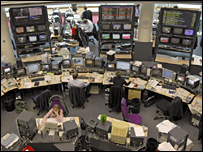 Essentially, a reduced licence fee settlement, together with tough efficiency targets, mean that we need to radically change the way we work to best serve our many different audiences. In the biggest overhaul of BBC News in 15 years, we are going to become truly multi-media. You can get an idea of what we have in mind from my speech to the staff of BBC News.

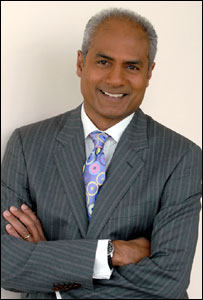 George is, obviously, a hugely well-known and well-respected journalist, who brings vast amounts of experience and tremendous versatility to the programme - he's as comfortable with reporting from scenes of flood devastation as he is reporting from Downing Street. The six o'clock bulletin has a special remit to report fully stories from around the UK, and we'll be working closely with George to fulfil this objective.



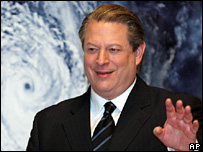 It's this that some listeners took issue with - they pointed out that boiling what the judge said to “Al Gore got it wrong” is misleading because the judge didn't say the nine claims he criticised were necessarily wrong - they were controversial and not part of the scientific consensus (my colleague Roger Harrabin goes into

 A few months ago a
 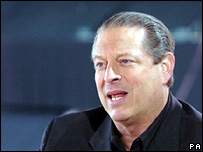 Today he won the prize, and - unsurprisingly - it's a controversial choice, not least because the question being asked is: what has climate change got to do with promoting world peace?
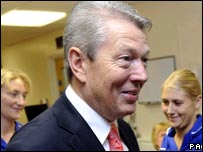 I've heard a few deeply suspect selections from very senior politicians down the years, but I'm pretty certain Alan Johnson, Health Secretary and rock star wannabe, was speaking from the heart on the latest show. And good choices too (

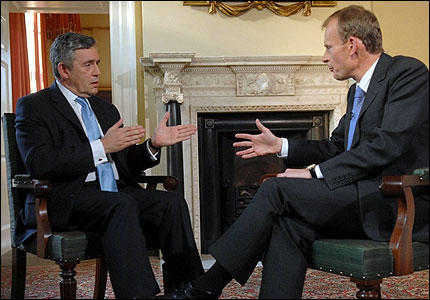
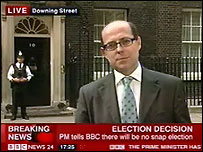 The two would then tap-dance all the way down Downing Street, as Nick Robinson (first, I’m pleased to say) and Adam Boulton broke the news to the nation.

 As a producer on The World At One or The World This Weekend you knew that when you told him you'd fixed x or y to be interviewed, he'd immediately ask why, what could they add to our understanding of a particular story?
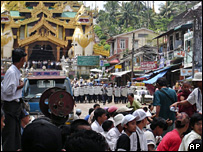 The fact that many news organisations and official bodies - although by no means all - have started using "Myanmar" does mean that we need to also acknowledge that usage in many of our stories and links. So you might hear Burma and Myanmar in a story or cue but never Myanmar alone.