


Media standards
- 4 Jun 07, 02:20 PM
I’m catching up with the first series of Life on Mars – that’s what media on demand is all about.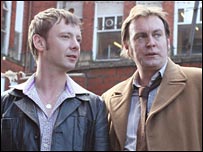 It is, of course, brilliant. Our 21st Century hero Sam Tyler takes PACE (Police and Criminal Evidence Act) and post-Scarman, post-McPherson, post-Bichard, post-Morris attitudes and procedures back into the policing Wild West of 70s Manchester.
His ‘guv’, Gene Hunt, is unencumbered by the niceties of collecting evidence and thinks ‘questioning’ is another word for ‘bloody good hiding’.
Sam Tyler calls Hunt: “An overweight, over-the-hill, nicotine-stained, borderline-alcoholic homophobe with a superiority complex and an unhealthy obsession with male bonding?
Hunt’s reply: You make that sound like a bad thing.”
To make this series about the police, you have to time-travel – albeit only cognitively and coma-based.
You could make a similar series about the British press (call it ‘Life on The Sun’ maybe??) without leaving 2007.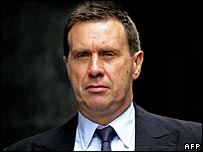 The former News of the World royal reporter, Clive Goodman, is in jail for bugging (royal) mobile phones; the information commissioner, Richard Thomas, says more than 300 other journalists do the same kind of thing; a few years ago, the Sun’s editor told MPs it was ok to pay policemen for confidential information; entrapment and intrusion are routine.
Where the British press doesn’t fuse fact and fiction, re-shape evidence to support obsessions with house prices, mobile phones, cancer or the death of Diana, it relies on sources it could name but doesn’t for fear of its stories failing any test of verification.
Oh… and anyone trying to correct even the most blatant falsehood faces either a lengthy, costly, unpredictable struggle in Her Majesty's courts or what usually amounts to a haughty brush-off from the newspapers’ own court, the Press Complaints Commission.
And yet, the British press remains unembarrassed.
In the US, newspapers have responded to scandals with a thorough examination of standards and practices. Almost every paper in America – no matter how small or local – now has a written code of conduct, many have a readers’ editor or ombudsman; corrections are increasingly prominent and swift.
The debate over the press is much more developed there, too, led by the universities, schools of journalism and organizations such as the Committee of Concerned Journalists or the Project for Excellence in Journalism, assisted by an army of bloggers.
A new(ish) entrant to the (emerging) UK debate (joining other newcomers such as the Reuters Institute, POLIS and, of course, the BBC College of Journalism – no public link, yet) is the Media Standards Trust – actually, it’s been going a while but its website is very new. So is its approach.
The MST’s director, Martin Moore, hopes the site will be:
“a properly independent public space where people can have an informed discussion about news coverage”
… especially standards; accuracy, fairness, context, sourcing and ethics. This week’s topic, for instance, is: 'Are the media presenting the dangers of wi-fi radiation fairly?’ Panorama does not escape unscathed.
He also wants it to be a place where people (readers, viewers and listeners as well as journalists) can confront the press with challenges and propose solutions.
It’s impossible to know whether this venture will be part of bringing newspapers’ ethics and practices up to the journalistic equivalent of Sam Tyler standards. It may well be that pressure from formerly passive, newly active audiences has a greater effect – lippy bill-payers can be persuasive.
But it would be good to think that if the British press is to change its ways, it does so following something approaching intelligent critique and the kind of open debate the Media Standards Trust is offering.
(Update 5 June: The Guardian did appoint Ian Mayes as its readers' editor in 1997, a move which was followed by a handful of other papers.)
Kevin Marsh is editor of the BBC College of Journalism

 When we set about making the three part BBC2 series Power to the People we knew we were in for a rocky ride. The premise was simple enough: take a group of angry people who feel they've been pushed too far and no-one is listening to them, and follow them as they stage a symbolic act that helps them to finally be heard.
 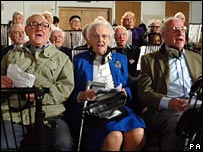 The results were incredible. The comments about all three programmes showed that the idea of people taking a stand and fighting back really struck a chord with the public and never more so than the stunning response to the Zimmers (our band with a combined age of 3,000) who entered the charts at number 26 last week and