- Tim Levell
- 1 Dec 06, 03:21 PM
When CBBC's Newsround first considered doing a special programme about child poverty, something which affects an astonishing three million children in the UK, the standard documentary techniques were rolled out - undercover filming, moody reconstructions, children showing a sympathetic reporter around their grim surroundings...
 But one of the aims of CBBC is to make television that's engaging for seven to 11-year-olds, and all our recent research shows that bleakness is a turn-off, both visually and emotionally. Children respond best to strong visuals as well as some practical and positive outcomes.
So when CBBC's creative head Anne Gilchrist suggested the idea of using cartoons to tell the children's stories, everyone at Newsround instinctively knew that this could be a very exciting and powerful idea. As far as we know, no one has ever attempted to tell current affairs using animation.
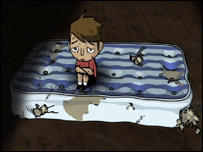 And the result - broadcast online (click here to watch) and on TV from today - is something we are hoping will have a real impact.
Children we've shown it to have really liked the different animation styles, including photo-montage, comic strip and cardboard cutouts. They weren't really expecting a "documentary", but to our relief they've kept watching, and some have even had tears in their eyes by the end.
Most of that is down to the children and their uncompromising stories of neglect, of overcrowding, and of isolation.
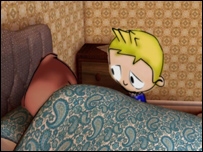 The show's producer and creative brain, Kez Margrie, spent a lot of time with them, building up their trust and respect, enabling them to talk about their lives with both honesty and dignity. She involved them in every step of the process, from checking the look of their animated characters to agreeing the final edits.
The children are proud of the final outcome. But do you think it works? Would a conventional documentary have been better or more suitable? I'd be very interested to read what you - and perhaps your children - think of it.
Tim Levell is editor of Newsround

- Peter Barron
- 1 Dec 06, 11:45 AM
Wherever you turn these days there are conspiracy theories.
 Recently Newsnight broadcast a piece by the film-maker Shane O'Sullivan pointing to new video evidence that three CIA agents were present on the night of Bobby Kennedy's assassination. That generated loads of earnest debate across the web. Then we've had the assassinations of Pierre Gemayel and Alexander Litvinenko, and theories abound. Lord Stevens' report into the much-theorised death of Princess Diana is due any day, and almost every day new emails and attachments land in our in-boxes pointing to apparent discrepancies in the official version of 9/11, with titles like The South Tower Napalm Bomb Seventh View.
While the conspiracy theory has long been with us, the internet has allowed it to become an exploding and intriguing growth industry. But how much of this stuff should we report?
When Shane came to us saying he thought he had new evidence in the Bobby Kennedy case of course my first reaction was "oh yeah", but when he showed me the video of the three alleged CIA agents, and the testimony of former colleagues who positively identified them, I was convinced the material at least raises new questions - without buying into a grand theory which explains exactly what happened.
Last night an amateur film-maker spoke to me about his belief that there's been a huge cover-up in the official reporting of both 9/11 and 7/7. Why, he asked, doesn't the BBC report the many discrepancies and oddities surrounding the accounts of these hugely significant events?
In fact, on Newsnight we have briefly examined some of these questions, but we've barely scratched the surface of the icebergs of material which float aroundthe web.
The reason we haven't gone deeper is that there's surely no rational explanation for the attacks other than that they were carried out by two groups of Islamist terrorists, however puzzling some of apparent inconsistencies.
But I would say that the fact a conspiracy theory surrounds a story should never be a reason either to run with it or reject it. Take, for example, the stories of white phosphorous at Fallujah and Dan Brown's Da Vinci Code. One true, one rubbish. But it would be a big mistake to make up your mind until you've had a look.
Peter Barron is editor of Newsnight

Daily Mail: Reports on a speech given recently by the BBC's head of TV News, which you can read in full on this blog. (link)
The Scotsman: "BSkyB chief exec James Murdoch launched a withering attack on the British broadcasting industry, and the BBC in particular." (link)
The Telegraph: "Jeremy Paxman, notorious for his merciless interviews on Newsnight, has turned his fire on the show itself." (link)