BBC BLOGS - The Code

Archives for July 2011

The Treasure, Unveiled!

Post categories:

Adrian Hon - GamesmasterAdrian Hon - Gamesmaster|16:44 UK time, Wednesday, 27 July 2011

So the truth is out there. The eagle-eyed of you will know now what it is you’re playing for. If you were one of the 700 or so who applied for a unique postcard - and got one - then you were part of a sensational team who successfully deciphered the approximate shape of the prize through collaboration on Facebook and revealed it’s shape before we did. Each postcard was a thin planview slice of the shape, each with a unique code.

Working together the team assembled them in the correct order, worked around the gaps and came up with a few 3Dmodels which were really very close to the real thing. A seriously clever bunch. The real thing revealed on BBC News magazine this morning (27th July) is totally unique designed by Californian sculpter Bathsheba Grossman, known for her mathematcial sculptures. 

She attended Yale University studying Mathematics and Pennsylvania studying Fine Art – so you can see where she was going. 

A photo of The Code treasure sculpture

We asked her to describe the prize. This is what she said about this completely unique prize:

“This is a composition of the Platonic solids, the five polyhedra whose faces are all identical. They're fundamental to understanding order and symmetry in 3D space, and also dripping with golden ratios.

“They're arranged in three concentric spherical shells. The outer hull, the most complex, is the dodecahedron (bronze) and icosahedron (silver). The solids are in dual position, showing that they have the same symmetry, and sized so their vertices all lie on the same sphere. The second hull is the cube (bronze) and octahedron (silver), arranged likewise. And the innermost is two tetrahedra, one in each metal, showing that this four-sided solid is self-dual. This makes it twice as excellent as any other Platonic solid.” 

She certainly thought it through.

The prize sits on a hexagonal black granite base which will feature a lasered inscription of the winner’s name and the BBC and The Code logos. 

Will your name be on it?

And here’s the best bit. The bronze/steel composite has been fabricated using the latest 3D-printing techniques, while the silver has been cast from 3D prints using the ancient lost-wax process, which dates back to pre-history The combination of ancient and modern technology is relevant to The Code. Mathematics is established in old trusted principles and processes while constantly adapting and changing with new ideas and discoveries. The Code Prize represents that. 

We hope that the winner will love this prize as much as we loved commissioning and making it. 

Welcome to Week One!

Post categories:

Marcus du SautoyMarcus du Sautoy|16:23 UK time, Tuesday, 26 July 2011

In order to see this content you need to have both Javascript enabled and Flash Installed. Visit BBC Webwise for full instructions. If you're reading via RSS, you'll need to visit the blog to access this content.

Tonight's programme is called Magic Numbers, in which we begin our journey to reveal the hidden code of the mathematics that underpins everything, from the way snails grow to the trajectories of the planets. We discover how it's only by turning nature into numbers that we can uncover the patterns that lie hidden behind the apparent chaos that surrounds us. And remember that while watching the programme you too are looking for hidden clues to help you crack the Code Challenge that we’re running alongside the series.

I was particularly excited to film this episode as I got the chance to meet two of my mathematical heroes of the animal world for the first time: the magicicada and the nautilus.

The magicicada is an extraordinary species of cicada that uses my favourite numbers in mathematics, the primes, for its evolutionary survival. To find them we travelled to Nashville Tennessee, home usually to the sound of blue grass and honky tonk. But every 13 years the banjos and basses get drowned out by the chorus of an insect that has fascinated me ever since I became a mathematician. It might seem strange for a mathematician to be interested in bugs but these cicadas are rather special. Only found in the eastern states of north America the cicadas exploit mathematics to help them to survive. They appear periodically but only emerge after a prime number of years. In the case of the brood appearing around Nashville: every 13 years.

I've read about their story, seen their pictures, watched videos of them emerging from the ground. But this year was the first time I've been lucky enough to see them for real. Maybe the fact that 2011 is prime number year was a good omen.

As part of the Code Challenge you will also need to master your primes to survive, not in the forest around Nashville, but in the kitchen of Chef Mersenne in our addictive game Prima Pizzeria. Make it to a certain point and you’ll get an important clue to help you crack the Code Challenge. And remember to keep on sending us pictures of prime numbers in the environment. We’re hoping to get all the primes up to 2011. You can also email pictures to [email protected].

After Nashville it was back up to Brooklyn to come face to face with one of the icons of the mathematical world: the nautilus. The shell of the nautilus is such a thing of beauty that it has become the poster boy for the world of mathematics. But it’s only by turning the dimensions of the shell into numbers that we can reveal the secret to how it grows. Although I’ve seen countless images of the shell, my trip to Brooklyn was the first time I’d seen the animal that actually lives inside the shell. A strange ancient octopus that looked like one of the ood from Doctor Who.

The Code mascot - Fibunnacci - capured by Marcus.

The Code mascot - Fibunnacci - capured by Marcus.

Although he didn’t make the cut there is another animal that deserves a mention. We adopted a very friendly rabbit as The Code mascot who kept us company while filming a very cold sequence at the Sunkenkirk stone circle in Cumbria about the number pi hidden inside all circles. We named him appropriately enough Fibunnacci.

Enjoy the first programme and best of luck with the treasure hunt!

Week 1 Puzzle: Cicada Survival

Post categories:

Adrian Hon - GamesmasterAdrian Hon - Gamesmaster|14:04 UK time, Tuesday, 26 July 2011

This week on The Code, Marcus takes a look at the surprising mathematics behind the mating patterns of the Magicicada. These incredible insects take safety in numbers, emerging at precisely coordinated intervals of 13 or 17 years. By appearing in the hundreds of thousands, the risk to each cicada of being eaten is massively reduced - the predators simply aren’t able to eat the cicadas fast enough to pose a significant threat to the population.

This is a survival strategy known as "predator satiation". The key to this strategy is for the cicadas to emerge in such large numbers. For this to happen, the cicadas must maintain their tightly synchronised life cycles.

It is thought that the primality of these life cycles could be the reason for the survival of these broods of Magicicada. Because the period of their emergence is indivisible, the chances of them appearing at the same time as another brood is greatly reduced. This prevents crossbreeding between broods, which could cause the cicadas to appear at a variety of intervals, vastly reducing their numbers at any given time and increasing the threat presented by predators.

We’ve taken this theory as the inspiration for our puzzle for this week. We want you to imagine an environment which contains four broods of cicadas: A, B, C and D.

Brood A emerges every four years, starting in year four.

Brood B emerges every six years, starting in year six.

Brood C emerges every seven years, starting in year seven.

If a brood’s survival is compromised by emerging in the same year as another brood, what is the shortest life cycle Brood D can have and still survive past year 40?

Enter your answer into the Episode 1 Codebreaker on the ‘fourth hand’. Good luck!

Prime Number Challenge: Second Milestone

Post categories:

Matt Wieteska - Code MasterMatt Wieteska - Code Master|12:49 UK time, Tuesday, 26 July 2011

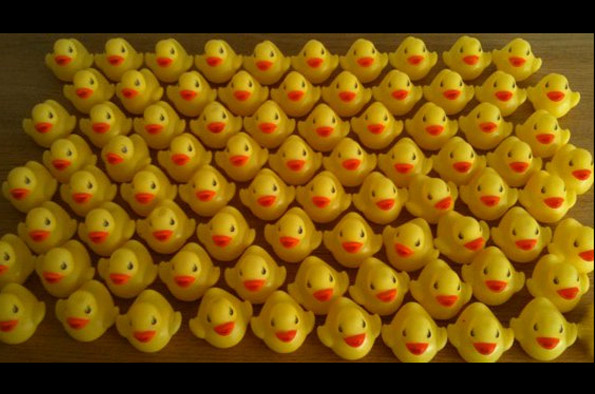
79 ducks posted by Mari-Clare Bonner

They said it couldn’t be done. They said it couldn’t be true. They said the second milestone in the Prime Number Challenge couldn’t have been broken a mere four days after the first. They have been proven wrong.

Congratulations are once again in order to all the Prime Hunters out there. A massively impressive organisational effort has led to the second milestone being smashed days before the first show has aired. Incredible work.

Without further ado, here is your second community challenge clue:

GAUSS

This should be entered in using the sixth hand on the codebreaker for week two. Bear in mind that this codebreaker will not be released until the week episode two airs, so you may have to wait a few days to use it.

So here we are. One day to the show. 100 primes to go. Show us what you’re made of.

Prime Number Challenge: First Milestone Reached!

Post categories:

Joanna Witt - BBC Producer|16:31 UK time, Thursday, 21 July 2011

Congratulations to all you wonderful Prime Hunters out there - you’ve smashed through the first milestone well ahead of expectation! By our count at time of writing, you’ve captured pictures of 105 primes in the world around - and no doubt that number will have grown by the time you’re reading this!

It’s with great pleasure, therefore, that I reveal to you the first clue for the Codebreaker for the first week of The Code Challenge:

ARCHIMEDES


Enter this word onto the Codebreaker to start your journey towards cracking The Code!

Some of you have also been asking about what type of photo we’ll be counting towards the Prime Number Challenge. For a bit of clarity, our main criterion is originality. By that we mean that your photos must be original content, and that they should display originality and creativity. If you’ve taken the photo, or captured the screenshot, or created the image in some other way, it’s exactly what we’re looking for. If it’s creative and inspiring, all the better. But we will not and cannot count links to pre-existing images online, or to text resources (such as the Wikipedia list of prime numbers), or to anything else that is not an original photo.

Of course, we’re using our best judgement with every submission and the above isn’t to be taken as an absolute rule, but we hope it provides some helpful information.


Now, with that out of the way, we have one message: Keep Up The Great Work! Only 200 to go! And remember if you're not on Facebook you can send your photos to [email protected].

Prime Number Challenge: Two Weeks In

Post categories:

Joanna Witt - BBC Producer|13:45 UK time, Tuesday, 19 July 2011

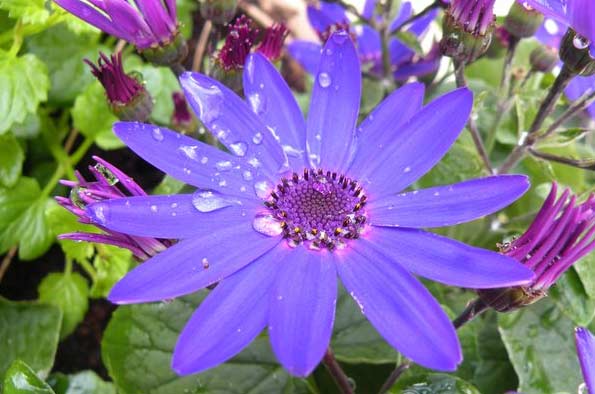
Thirteen petals on a flower

Thirteen petals on a flower by Paul Tyler

Hi Code Fans - mission control here with a check-in message now that we’ve been rolling on the Prime Number Challenge for a fortnight.

Two weeks ago, we invited you to find every prime number between 2 and 2011 (that’s 305 primes!) in order to release clues for the Code Challenge. This is no small feat, but you’ve come together on our Facebook and Twitter pages and risen to the task admirably. We’ve been delighted with the response and with the fantastic photos you’ve been submitting. Keep up the good work!

As a few of you have recently spotted, however, capturing every one of these 305 primes in the coming month isn’t just going to require some first-class camera skills. It’s also going to require some truly sensational teamwork. You’ll have to join forces to keep track of where you’re up to, which primes you’re missing, and to create a plan of attack for the rest of the challenge.

We know that you’ve got the ingenuity, the community spirit and the gumption. You already have two ideal places to connect and collaborate: our Twitter and Facebook pages and we’ll be feeding back on this blog so keep monitoring this page. So here’s the gauntlet we’re throwing at your feet: use Facebook, use Twitter, set up a forum, set up a wiki, create a system of smoke signals or an intricate network of carrier pigeons; however you do it, we want you to come together as a community to create the best method for you to successfully complete this challenge.

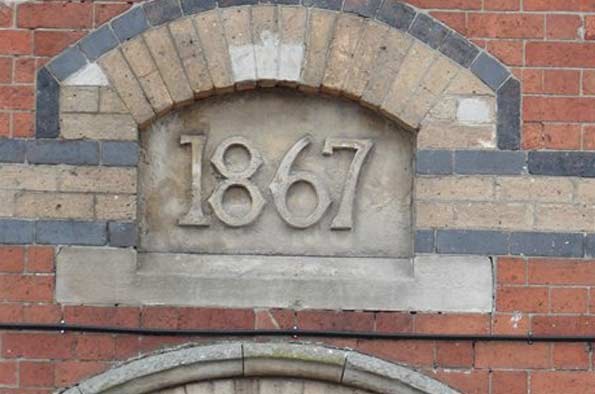
Date 1867 on a Heanor Town Hall in Derbyshire by Nigel Lee

Date 1867 on a Heanor Town Hall in Derbyshire by Nigel Lee

There you have it. 305 primes. 4 weeks. Surprise us. Make us proud. Crack the Code. 

The game is on and we need you!

Post categories:

Marcus du SautoyMarcus du Sautoy|13:00 UK time, Tuesday, 12 July 2011

Welcome to The Code. This new series for BBC2 will make you see the world in a completely different way. Because underlying everything that surrounds us, from the natural world to the cities we live in, there is a hidden code that explains why things look and behave they way they do. That code is Mathematics.

My name is Marcus du Sautoy and I’m a mathematician. In the three programmes that make up my new series The Code, I want to reveal to you the hidden language of the universe and let you see the world through my eyes. Watch Pixar movies through the lens of a fractal geometer, listen to the story of Jack the Ripper through the ears of a mathematical detective and discover secret numbers built into ancient stone circles and gothic cathedrals.

But what makes this series so unique is that it is more than just a television programme. Running alongside the programmes is an exciting mathematical treasure hunt full of engaging puzzles, addictive online games and clever conundrums that will take you on an exciting mathematical journey of discovery. Called the Code Challenge it is an experience that combines the intrigue of solving a murder mystery with the addictive playfulness of Angry Birds.

For me mathematics is not a spectator sport. The best way to appreciate and get excited by the power of this extraordinary subject is by immersing yourself actively in its world. The Code Challenge is a fantastic way to play and explore the mathematical language of the universe. And not only is it fun to play but there is a unique and valuable prize awaiting the person who finishes the challenge first.

There will be clues hidden inside each programme to help you crack the Code Challenges but you can already start taking part by helping us to capture pictures of the building blocks of mathematics: the prime numbers. These indivisible numbers are my favourite in all of mathematics – not least because the football shirt I play in for my Sunday League team is a prime, 17. But they are also the most important numbers in my subject because all numbers are built by multiplying primes together. Primes are the atoms of arithmetic.

Your first challenge is to work as a team and send us pictures of the first 100 prime numbers from 2,3,5… all the way up to 541. Perhaps you live at a prime number house, go to work on a prime number bus, have a cow in the local field with a prime number branded on its back. Or perhaps you can find a prime hiding in an unexpected location that would surprise us here at Code headquarters. 

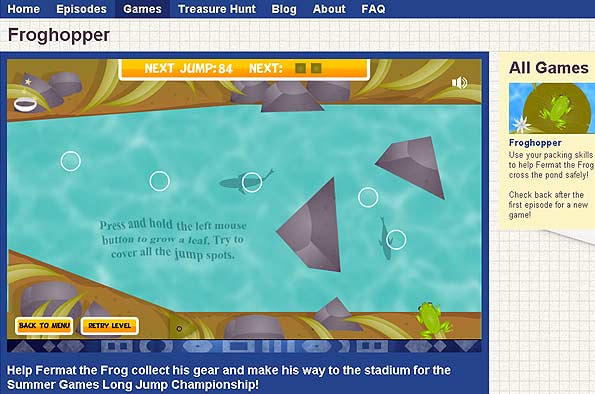
Screengrab of the Froghopper game - part of the BBC Code Challenge

Get warmed up with Froghopper - the first of The Code's online games...

There is also the first of several addictive online games available to play. Called Froghopper it will help you warm-up your geometry skills. Can you pack shapes efficiently to help our frog to get to his destination? You never know, playing this game might help you when you next try to pack the car or a suitcase if you’re off on your holidays soon.

So get your puzzle hats on and good luck in cracking the Code Challenge! Get chatting on this blog or see what everyone else is saying on Twitter.

BBC © 2014The BBC is not responsible for the content of external sites. Read more.

This page is best viewed in an up-to-date web browser with style sheets (CSS) enabled. While you will be able to view the content of this page in your current browser, you will not be able to get the full visual experience. Please consider upgrading your browser software or enabling style sheets (CSS) if you are able to do so.