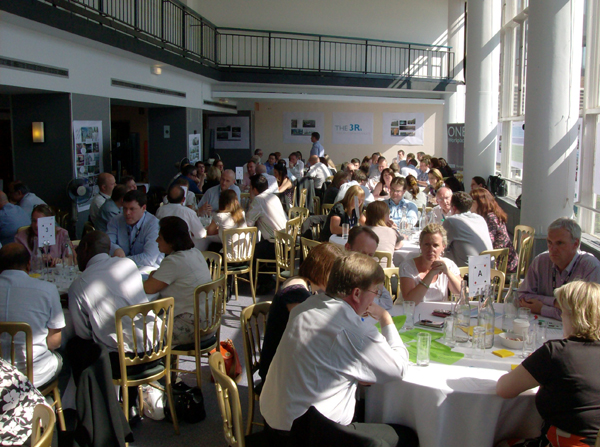
 In a glasshouse type setting last Monday afternoon, as temperatures soared to the high twenties, some 200 Workplace team members came together in Television Centre's Showstoppers to hear from the BBC's COO Caroline Thomson and to discuss the year ahead.
We set the theme for the afternoon around Roles, Responsibilities and Results, and spent a few hours hearing about the future direction of the BBC and discussing what went well last year and what we need to do to achieve an even better result for 2010.
Although it got pretty hot we had a productive session. The feedback is still being analysed, but for me, I thought that it was good for the wider group to hear about the BBC Strategy review from Caroline Thomson. I felt very proud for the group to hear her praise for our efforts during the last year.
I realise that for some it may have appeared more of the same and that there was a lot of telling going on. If you feel like that it would be good to chat to see how we can do something different. As I said at the time I don't have all the answers.
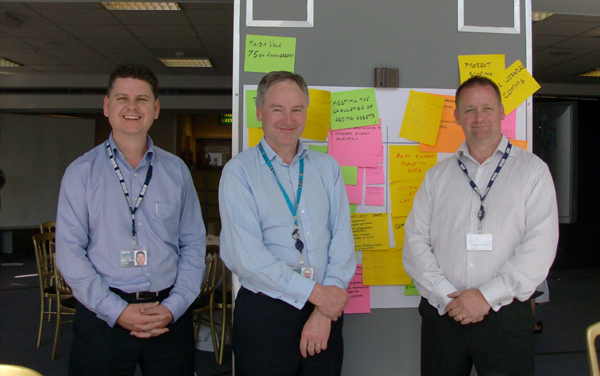
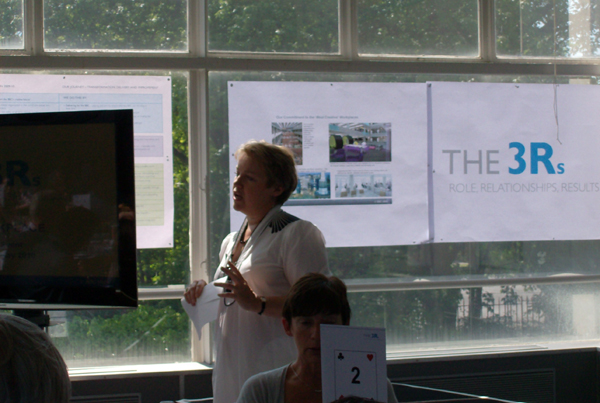
Pictured below: l-r Grant Walford, Chris Kane and Pete Mathieson; Caroline Thomson.
At last week's Leadership meeting Mark Thompson paid tribute to our Deputy Director General Mark Byford for running the BBC's General Election campaign from his front room. What's this all about you may ask? Has the BBC taken its property cost cutting campaign to an extreme?
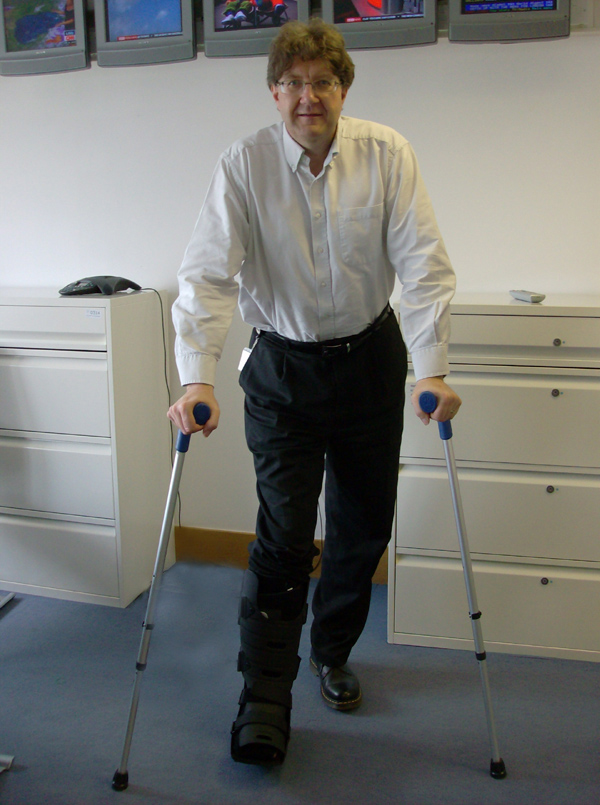
As a result of an unfortunate accident Mark Byford (pictured below) found himself nursing a badly broken leg for three months and unable to make his daily commute. Not to be constrained by such an inconvenience Mark was determined, as Head of BBC Journalism, to be able to lead the overall co-ordination of the BBC's Election coverage. Armed with his broadband connected laptop, Blackberry, TV and radio, he was able to do this from his Winchester home. In effect he watched and listened to more output than anyone else and was able to lead the overall Election team effectively throughout the campaign chairing daily phone conferences and giving regular feedback.
From a flexible working point of view this is yet another example of how we need to stand back and reflect on the adage - 'work is something you do, not a place you go to.'
We want the BBC to be the most creative place to work in broadcasting - flexible and dynamic, where people can achieve their best. People often say they feel obligated to work in a BBC building even when they know they could be more creative or productive in a different environment.
To solve the problem of 'presenteeism' we need to strike a different work-life balance that, where possible, gives people the option of working part of the time away from their building base.
The case of Mark Byford proves it can be done.
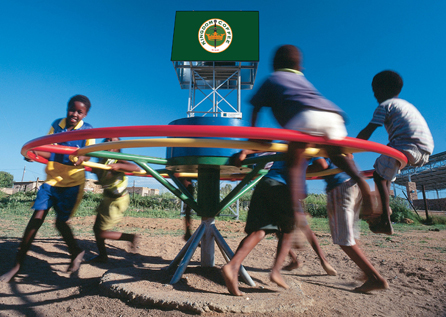
Every now and then fate deals us a good card. Excellent sales of One Water across BBC catering outlets up to March mean that a third play pump can be set up to help communities in Malawi. One Water also has money left over to get well on the way to purchasing a fourth one! Thanks to all staff and visitors who have bought One Water for making this possible.
The playpumps use special technology so that while children have fun spinning on the playpump merry-go-round, clean water is pumped into a tank above ground.
I visited Lesotho last year and was enormously proud to see how this simple idea has completely changed the lives of people in these communities. I will be making a return trip to Malawi in July, along with Catering Manager Hilary Friel and Cutomer Service Director Kate Smith, to see first-hand the benefits that the new pumps will bring.
In preparation for the trip, Island Mastara from Media Village engineering has even been helping us with some language lessons - 'zikomo' Island! (Thank you!)
Well done to everyone who has supported the One Water initiative.
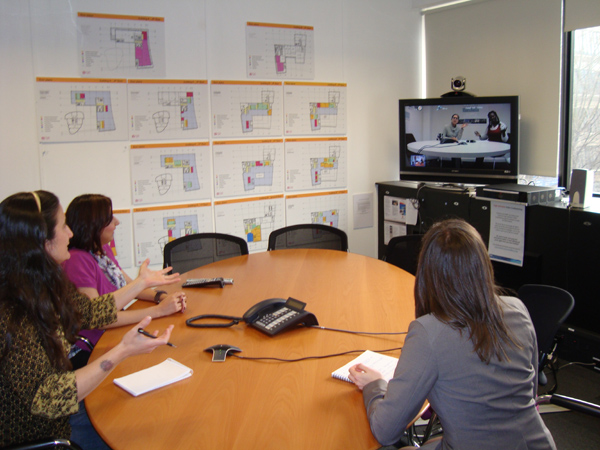
Lots of people talk about the benefits of using video links to avoid the need for travel. In the main there is a fair degree of scepticism about the usefulness or otherwise of this technology, for example, 'it's expensive, the picture is poor and one needs a degree in rocket science to get the kit working!'
For the BBC move to MediaCityUK in Salford we're working on the theme 'Salford - it's not as far away as you might think.' A key element of this is embracing video conferencing.
To help us get started we have installed 'the Tube', a permanent video link between the Manchester and London based project team. We have allocated two meeting rooms that work as a pair, enabling team members to drop in at any time to connect up. It's simple, requires no technical support and provides a richer form of interaction.
A sign of things to come.


 |14:10 UK time, Friday, 28 May 2010
