

Divide and rule? Why One North East could become five
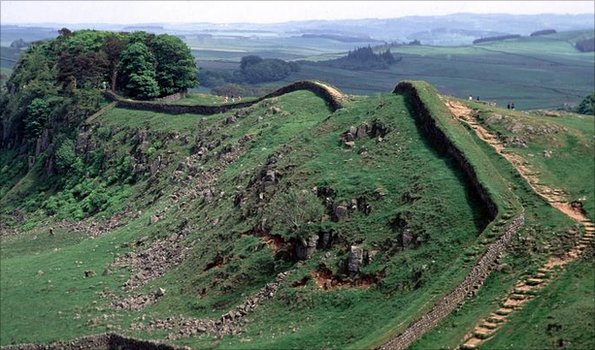
Hadrian's Wall might not be the only thing dividing the North East soon
The region's politicians said the North East would want to do just that.
How then have we arrived at a situation where the regional development agency One North East could be replaced by no less than five different new organisations?
It's all part of plans to replace One North East with what are called Local Enterprise Partnerships.
These would be a combination of councils and businesses looking after the economic interests of the areas they represent.
Initially, there seemed to be some enthusiasm for just one North East-wide partnership.
But then the councils in the Tees Valley area decided to bid for their own, and from there the fracturing has continued.
That's resulted in five bids.
Apart from Tees Valley the others bidding for partnerships are Northumberland-North Tyneside, Newcastle-Gateshead, Sunderland-South Tyneside and County Durham.
The Government believes these smaller local organisations will be more effective than the region-wide development agencies.
But some are not convinced.
First, there's the question of what powers and budget these partnerships will have.
That's very unclear at the moment, indeed there may be no budget other than what the partnerships bid for from the new £1bn regional growth fund.
In terms of powers, the Government says they will tackle planning, housing, local transport priorities and enterprise, but is vague on how.
The big powers that the regional development agencies have will be heading south to civil servants in London.
That means control over inward investment, European funding and business support leaving the regions.
And then there's real concern about the divisiveness of the region splitting into five different organisations potentially competing against each other for jobs and investment.
Businessman and former Newcastle United owner Sir John Hall, has already talked about the problems that could cause with areas competing against each other.
I've also been speaking to other businesses who share his concerns.
Simon Pearson, who runs a digital agency advising businesses in the North East, believes five bids is far too many, as they the partnerships may prove too weak to compete against the likes of Greater Manchester and Leeds.
He would have preferred to see three at most.
So is this the end for the idea of a united region?
Well, perhaps not, because another bid has been tabled this week too.
The Association of North East Councils and the Northern Business Forum also want another regional organisation to be formed alongside the five local partnerships.
They want to persuade the government to hand over the powers it had planned to hold nationally - inward investment etc - to this new regional partnership.
They're also keen for it to inherit One North East's assets, including its considerable property portfolio.
The problem is, will the Government wear that?
But in actual fact, we are all in the dark here.
The Government's consultation is rather vague. It talks about redrawing the regional boundaries, but warns against the partnership bids being for too small an area.
And many of the groups bidding for Local Enterprise Partnerships admit they're unclear about what they'll do and what money they'll have to spend if they're successful.
Cumbria is bidding for its own Partnership, but the county's Chamber of Commerce says they are uncertain about what exactly they'll be empowered to do.
Some in business would have preferred to see the Regional Development Agencies retained, but slimmed down and refocused.
That though is not an option on the table.
It seems regions will be divided, but whether for good or ill, it remains to be seen.
 I'm Richard Moss, the BBC's Political Editor for the North East and Cumbria. Welcome to my irreverent - but hopefully insightful - northern take on reporting politics for Look North and the Politics Show.

Comments
Sign in or register to comment.