

Tottenham go back to basics
Tottenham have gone out with the new and in with the old to restore credibility at White Hart Lane and save a season in danger of meltdown.
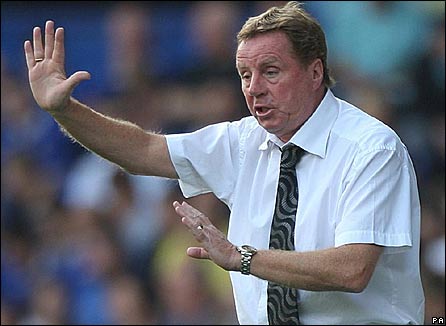
Coach Juande Ramos and sporting director Damien Comolli, supposedly the modern model of the managerial structure, have gone and in their place comes a good old-fashioned English manager in Harry Redknapp.
Chairman Daniel Levy was in a desperate situation but he has not resorted to a desperate measure in giving 61-year-old Redknapp a final crack at the big time.
In fact, by dispensing with a theory much loved by football's modernisers and purists and appointing a man steeped in traditional methods, he may have made an inspired choice.
The growing threat of relegation, European exit and words of warning from players like Jonathan Woodgate may have contributed to Levy's decision to push the button on Ramos so quickly.
I was at Ramos's final game at White Hart Lane, the 1-0 defeat by Hull City that turned up the pressure on the previously successful Spaniard to almost unbearable levels.
He cut a doleful figure as he strolled across the car park an hour after the final whistle, the arm of his wife draped around his shoulder in consolation.
Defeats by Stoke City and Udinese followed, prompting the end for a coach who arrived from Sevilla with a huge reputation and who captured the hearts of Spurs fans by winning the Carling Cup against Chelsea last season.
On that rain-soaked Sunday against Hull, there was a sense of something wrong at the heart of Tottenham.
Ramos's English was improving but he was an almost peripheral touchline figure, struggling to get his message across. His players were trying but when they looked for guidance and inspiration, none came.
Gus Poyet was appointed as the buffer between Ramos and his players but again there was nothing of substance to suggest Spurs would fulfil anything like their expectations this season.
I watched Ramos struggle at his press conference, done partly in English but also with the help of an interpreter.
This could not have helped his cause in imparting his ideas and if he bought into a set-up that meant he had players chosen for him by sporting director Comolli then, for all our sympathy, he had a giant hand in his own downfall.
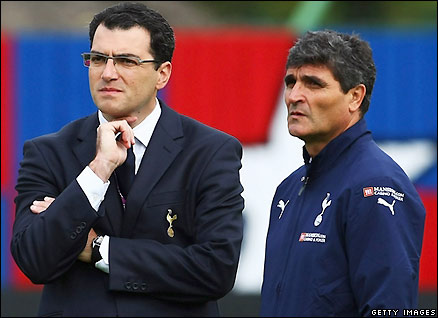
Comolli's choice of players was flawed on too many occasions and it may just clear the air around White Hart Lane to revert to a simple, slimmed-down system of management.
I am no fan of the director of football role - unless the person doing it comes as a pair with the manager. If they arrive separately it does not work and I will happily cite Newcastle and Spurs as exhibits A and B.
Ramos is a good coach. He may go back to Spain and be a success once more but at Spurs he was the right man in the wrong place.
It was a bold appointment by Levy but he may find that going for Redknapp - almost the antithesis of Ramos - will give him the results he needs.
Spurs fans will also surely be toasting the end of Comolli's reign and the cult of the director of football, which has done nothing to improve them in recent years.
Redknapp will stand and fall by players he chooses, not those handed down to him by a boardroom figure who enjoys power without true responsibility.
And one of English football's most enduring and popular figures will relish this chance to manage one of the giants of the game so late in his career.
The most used description of Redknapp is a "wheeler dealer" - damning with faint praise the abilities of a man who is tactically adept, signs good players and makes them perform for him.
He is a manager players want to play for - and those who do not will be moved on in short order.
Redknapp's first task is to get Spurs into a system that suits talented players, beef up midfield with a leader - Lassana Diarra perhaps? - and then get expensive buys like David Bentley performing like the player he thinks he is.
And all this must be done with Premier League survival as his main aim.
Redknapp has also answered questions from the cynics. He has proved he is prepared to put his reputation on the line after some accused him of basking in the Portsmouth comfort zone when he rejected Newcastle last season.
It is a bitter blow for Portsmouth, with any money received from Spurs scant compensation for losing a manager who had become their talisman. One can only wonder what players he brought in, such as Peter Crouch and Jermain Defoe, will have thought on learning he was leaving.
For Spurs, this appointment could be the day they returned to being a football club as opposed to an experiment, a guinea pig used to test out designer theories on how modern management works.
It is a back to basics appointment - but one I believe could turn out to be a masterstroke by a much-maligned chairman.
 NOTE: This page is no longer being updated - for Phil's latest articles please visit

Comments
Sign in or register to comment.