BBC BLOGS - Peter HenleyHenley's Hustings

Archives for July 2010

Political picture competition

Peter Henley|19:48 UK time, Monday, 26 July 2010

Comments

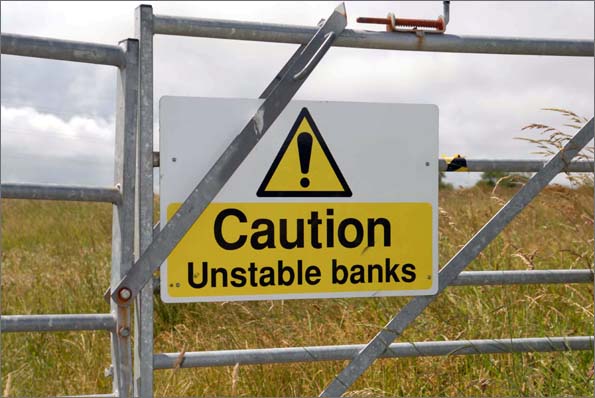
unstable banks signMany thanks to blog reader Dr Simon Newman who is Reader in Helicopter Engineering at the University of Southampton and recently spent a couple of days in Somerset taking photographs of the levels near Bridgwater.

Whilst walking amongst the drainage ditches he came across this sign and writes "With the present state of play in the country's finances I thought it rather apt. I am sending it to you in case it might trigger a chuckle."

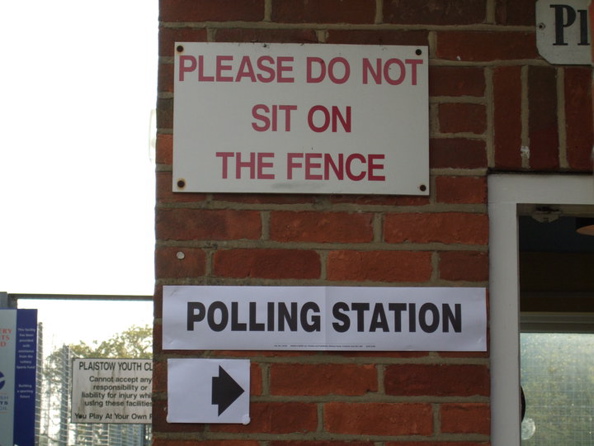
Yes. Just like the "Don't sit on the fence" sign next to the polling station in Sussex.

fence.jpg

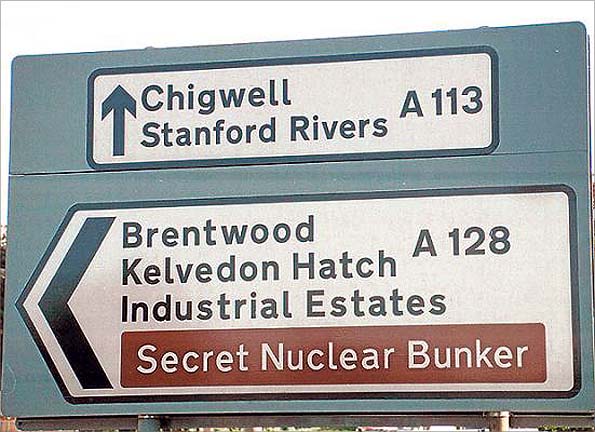
This may look like another leak of state secrets, but it's actually a tourist attraction in Essex:

bunker.jpg
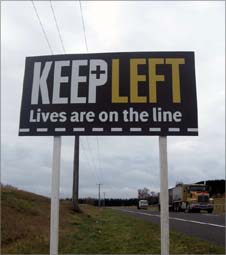
keepleft.jpgThanks to James Maguire from Bournemouth.

This is a road safety campaign in New Zealand, not a voting instruction.

Any more holiday photos please send them - and all candid stuff from the party conferences when we get there... Yes, it's holiday over, back to work for us too!

A community right to build

Peter Henley|16:37 UK time, Friday, 23 July 2010

Comments

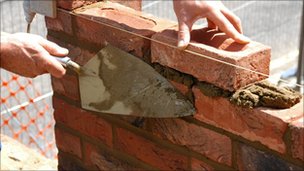
_48460180_001454850-1.jpgProviding decent homes without destroying the beauty of the South of England is perhaps the biggest challenge facing our region. The attractive environment that brings people to our part of the world, and keeps them here, is the very thing that could be at risk of being destroyed.

Today's announcement of a "community right to build" sees the council planning system pushed aside - a radical step, but perhaps the only way to make progress.

What's always struck me about the regular clashes between the two sides is the sheer passion of the battle. Placard waving NIMBYs with endless protests confronting Evil Developers with massed ranks of consultants and lawyers.

The plea from Housing Minister Grant Shapps today was to harness that energy to build the better communities that all of us would like to see. Launching the plan he said:

"Our problem is that the young people grow up and find they can't afford to live in this village anymore. We believe that people have a right to stay in their community and if people want to build that community to make it a bit bigger and expand it a bit, within reason, they should have the powers to do that."

His target is the wealthy rural areas - parts of Oxfordshire and Sussex, around Winchester and Bournemouth, where village schools could be kept alive by a modest number of new homes. A pub or a shop that starts to thrive again on the back of a carefully planned new build.

Under the plan villages would be able to form local housing trusts, and hold a referendum to decide if house building should go ahead. A large majority would be needed and it would not be possible to use the proposed Right to Build to expand communities by more than 10 per cent in a 10-year period.

So what about the Green Belt? Is this the thin end of the wedge?

The Campaign to Protect Rural England has criticised the proposals, saying that there should be proper planning scrutiny of house building by democratically-elected councillors rather than a simple public ballot.

The Royal Town Planning Institute have concerns too, this was their comment today:

"Proper planning scrutiny has served us well whereas this proposal appears to disempower local authorities by removing their right to determine development proposals and may mean that new housing built as a result may conflict with existing wider community priorities."

You can download their Q & A on the proposals here.

Some will see Conservatives rewarding their backers in the building industry, but others will point to the empowerment of local people as the best possible protection against the bulldozers.

Michael Gove's plan for Free Schools was touted during the election as the flagship radical policy. But now it's tainted by the cancellation of BSF and subject to cuts.

For the South of England the devolution of local control from Right to Build could prove the most effective and popular element of David Cameron's plan to bring power to the people.

Labour leadership odds

Peter Henley|15:23 UK time, Wednesday, 21 July 2010

Comments

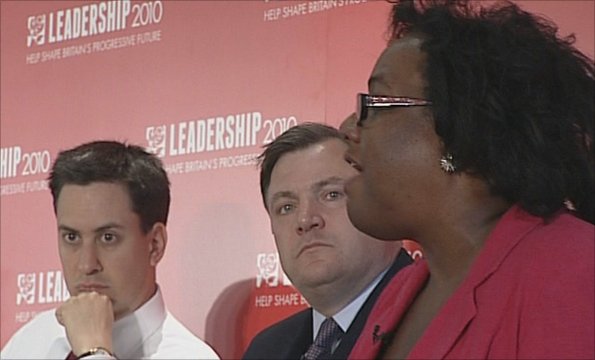
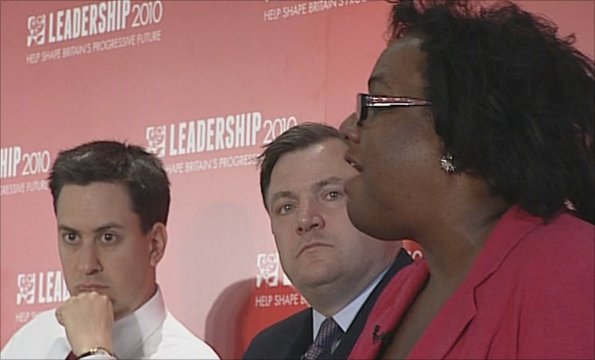
leadershipBroad smiles amongst those backing Ed Miliband's leadership bid at Westminster today. Gloom amongst the others. The younger brother has won the backing of the biggest public sector union, Unite.

Bookies Paddy Power immediately cut their odds to 7/4. David Miliband remains the favourite at 2/5. Ed Balls drifts to 10/1, Andy Burnham is 33/1, Diane Abbot 50/1.

The union vote is one third of the total, of course, alongside Labour party members and Mps. And it's one member, one vote - so the General Secretaries' opinions may well be completely ignored.

Can you tell them apart? Four men. Four Oxbridge educated politicans. Two Eds. Two Milibands. What is the real choice for Labour?
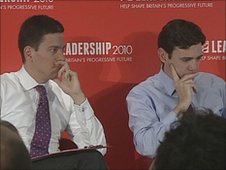
contenders
And what can we work out from the speeches designed for internal consumption about the speech that the winner will make to conference in September?

If it's Saturday it must be Southampton, the latest stage of a gruelling hustings tour around the country. I saw the five contenders at an earlier appearance in Oxford and I offer this guide to the evolving picture.

Diane Abbott gets a huge cheer from the activists, and plays up every difference she can find. David Mililband looks and talks most like a Prime Minister in waiting, but is that such a good thing?

Certainly Ed Balls comes across well, but he's struggling to leave the baggage of his links with Gordon Brown. By contrast Andy Burnham seems to be carving out the freshest approach, the only one reluctant to push high taxes as the cure for all ills, but we're still waiting for the killer policy.

Which leaves Ed Miliband. He's a confident performer, in a University town he talked about a graduate tax instead of tuition fees.

He's talked about the South of England as a key to Labour fortunes, openly raising the problems caused in communities by migrant workers, trying to address the lower income Labour voters who deserted them at the polls.

The transferable voting system will also make a difference, probably working against the front-runner as second preferences are distributed amongst those knocked out.

At a Downing Street reception that point was forcibly made to me by former Conservative Leader Ian Duncan Smith. He reminded me how he'd come from behind to snatch victory.

In fact IDS was so convinced that Ed Miliband was underestimated that he told me that he put his money where his mouth is early on, and stands to pick up a tidy sum from the bookies himself if the younger brother wins Labour's contest.


Tolpuddle Festival Poem

Peter Henley|23:20 UK time, Tuesday, 20 July 2010

Comments

Tony HIllier

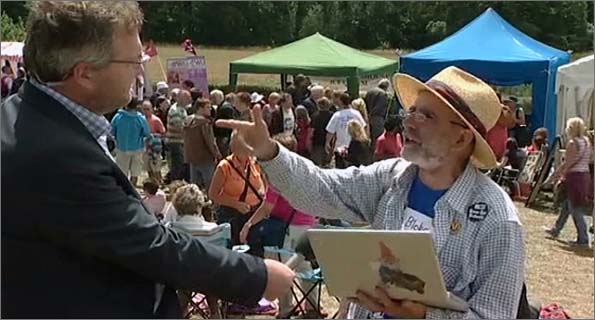
Politics Show viewers on Sunday saw Swindon Community Poet Tony Hillier composing lines on the mood amongst unionists at the Tolpuddle Festival live on air, and I said I'd put the finished composition on line.

He was pleased with it, and so were we.


Politics Show shows you


So now you know

Politics Show
shows you how it's dun
Shows ur not the only one
Who thinks that way
who pitches their tent in a Puddle, a Tolpuddle

The Politics Show letz u know
The size of the the political temperature
Is best Found where Coalitions of left wingers Count the Cost of the Cuts
Design website banners
and bandage to CUT BACK that oil slick

People FROM FAR AND WIDE
take to the streets
to the workplace
the homes
So that ACTION is taken
that will STRIKE the NATION as SENSE
NO coalition you can't cut as you like

NOW, is in the PRESENT TENTS

See Tony perform "Politics Show shows you" on the iPlayer here. It's the last thing on our live slot.

Other guests included Bob Crowe, Frances O'Grady, Lord Jim Knight and Adrian Edmondson.

The names of the fallen

Peter Henley|20:21 UK time, Wednesday, 14 July 2010

Comments

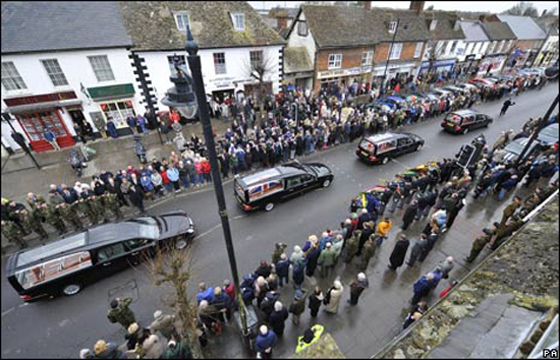
_45530316_repatriate3.jpgIt's become a solemn and often moving part of House of Commons business. The roll call of servicemen killed on active service was read out by Tony Blair and then Gordon Brown each week before Prime Minister's Questions.

It is a tradition much valued by relatives, a custom that has grown along with the ceremony at Wootton Bassett.

But on two occasions since David Cameron has taken over names have been missing, the roll call an incomplete record of those who have fallen in the service of their country.

The reason is that the Prime Minister had read out the names at an earlier House of Commons statement, in one case addressing the house after the meeting of the G20.

There had been discussion that the roll call at PMQs was taking up valuable time for questions. And MP Paul Flynn had accused the government of attempting to "smuggle out" the names at a time when they would get less attention.

Today speaker John Bercow was asked if he would intervene, insisting that the roll call continues.

He answered that he would talk to the party leaders directly, and make clear their decision "sooner rather than later."

What is the public mood on cuts?

Peter Henley|21:14 UK time, Thursday, 8 July 2010

Comments

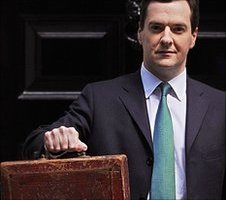
osborne.jpgI can clearly remember the moment I felt the shift in the public attitude to government spending.

Think back to the start of the year - Conservatives were talking about "sharing the proceeds of growth" and Labour accused them of a secret cuts agenda.

Now cuts are the only show in town - from household budgets to local government to national corporations - if you're not belt-tightening then your trousers are around your ankles.

The moment I realised that the public mood had changed was at a public meeting in Romsey during the election. OK, that part of Hampshire is a well-heeled area, but I was surprised to see almost every hand in the room shoot up when I asked if people wanted to see spending cuts going faster and further.

Polling by MORI illustrates how attitudes have changed. This was the question asked on March 20th:

The Conservatives say that the national debt is the greatest threat to the economy and the deficit needs to be cut quickly, starting this year. Labour say that it should not be cut so soon as reducing public spending may stop the economic recovery. Which of these do you think is right?

The verdict was 32% for cuts, 56% against. But for those who said they supported the Liberal Democrats the proportion were 15/71 - a clear vote against the cuts.

Fast forward to June and the Con/Lib budget is now in place. A Populus survey for the Times asked people to say which of two statements they agreed with:

Britain's deficit is so serious that we must start making significant spending cuts now. Delay will only make the problem worse, increasing the size of our debt and the amount of taxpayers' money going on interest payments, not public services. If we delay, confidence in our economy will weaken meaning higher interest and mortgage rates.

OR

There will have to be significant spending cuts in due course, but these cuts should not be made until the economic recovery is much stronger. If we cut spending now we risk increasing unemployment and even tipping the country back into recession, when what we need most is to get the economy growing strongly again.

Now the results show 43/57 against the cuts, a much more even split, but hardly a resounding chant of "we're all in it together."

And this is the lull before the storm. Westminster is full of tales of civil servants with nothing to do over the summer. All the projects that they were working on have been halted and there's no point looking for work in another part of the public sector.

We're at the point of the execution before the axe falls. The victim has been pointed out, at least some of the crowd have voiced approval, the head is on the block. But when we see the blood will the cheering stop?

Not building schools for the future

Peter Henley|20:36 UK time, Monday, 5 July 2010

Comments

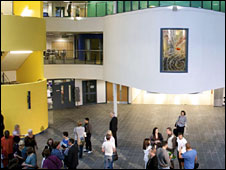
schoolThe Department for Education put out a sobering document this evening. The word "stopped" appears alongside the names of dozens of the south's schools who had applied for rebuilding under the Labour programme Building Schools for the Future.

You can see the list here. Southampton, Portsmouth and Bournemouth and Poole are hit hardest. Hampshire, West Sussex and West Berkshire also have an interest. The schools allowed to continue are mostly ones that are nearly finished. Academies will be reviewed case by case along with some individual "sample" schools where a lot of planning had already been done.

In the House of Commons Michael Gove forensically picked out the dreadful record of the programme. Its delays and overspends have been documented by the Public Accounts Committee.

He poured scorn on the centralised bureaucracy that led to arguments over the correct species of trees to be planted, or required the cutting down of forests more to produce the application forms which he banged on the dispatch box.

But in the end this is a money saving exercise, and the list of projects stopped is a list of hopes and dreams dashed for hundreds of thousands of children, their parents and teachers.

BBC © 2014The BBC is not responsible for the content of external sites. Read more.

This page is best viewed in an up-to-date web browser with style sheets (CSS) enabled. While you will be able to view the content of this page in your current browser, you will not be able to get the full visual experience. Please consider upgrading your browser software or enabling style sheets (CSS) if you are able to do so.