BBC BLOGS - Paul on Politics

Archives for November 2010

Bristol City's stadium dilemma

Paul Barltrop|11:12 UK time, Monday, 29 November 2010

In order to see this content you need to have both Javascript enabled and Flash installed. Visit BBC Webwise for full instructions. If you're reading via RSS, you'll need to visit the blog to access this content.


Sometimes the law is an ass.

That's the view from numerous MPs I've talked to about the laws that could kill off Bristol City's plans for a new stadium on fields at Ashton Vale.

Yet our laws are made by Parliament - with the most recent changes just four years ago.

A combination of legislative changes and landmark court cases have seen the scope of what can be designated a 'town green' or 'village green' widened.

That means, according to an official report, that the 42-acre site on the edge of Bristol qualifies.

Being a town green means it could never be developed; the only constructions on the land would remain the blue pipes which today bring up methane from the rotting landfill underneath.

There are plenty of other curious town or village greens, including swampy land, a beach and a golf course.
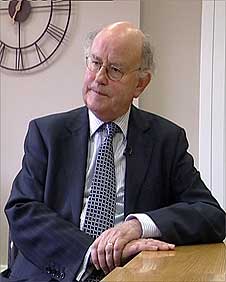
Barrister Charles George

Barrister Charles George

Barrister Charles George has been involved in several significant cases - and is very critical of our lawmakers.

"Parliament has been particularly obtuse, because they had the chance in 2000 and in 2006 to say that the law has become a bit of a nonsense," he says. "Instead of which on both occasions they chose to make it easier to register land as village greens."

The 2006 Commons Act was put through by Labour MPs - including Bristol East's MP Kerry McCarthy.

Yet four years on she's championing the stadium bid, even tabling a Commons motion insisting it should not be killed off by the town green issue.

"As ever with legislation it's when things are put to the test in real-life scenarios that sometimes you find things aren't quite perfect," she admits.

"I don't think the town green legislation was designed to be used for land on this scale."

She's written to the government asking for them to change the law; so too has the Wells MP Tessa Munt.

"This is bonkers, this is absolutely bonkers!" she exclaims.

"I have to say it's happening in other parts of the country as well."

Defra (the relevent department) is considering changes - but they would come too late for Bristol City.

Expect a big crescendo of angst and fury as the issue comes to a head (such as at a joint BBC Radio Bristol - Evening Post debate).

A committee of councillors must decide whether to accept the town green recommendation.

But their personal wishes, and all the surrounding passion and emotion will count for little.

What matters is the law, and whether those muddy fields above an old rubbish tip meet the official criteria.

If councillors say they don't, the case may well go right up through the legal system.

Losing in the High or Supreme Court wouldn't just be embarrassing; it'd also be very expensive.

Steve Webb grasps the pensions' nettle

Paul Barltrop|16:54 UK time, Thursday, 18 November 2010

In order to see this content you need to have both Javascript enabled and Flash installed. Visit BBC Webwise for full instructions. If you're reading via RSS, you'll need to visit the blog to access this content.


"I have four children, and I feel sorry for the people who are between 35 and 50 because they'll never have what my family have had, or what I've been able to have before I've hit the squeeze."

This pensioner in Dunster in Somerset hit the nail on the head when it comes to state pension reform - which is being thought through by our very own Steve Webb MP for Thornbury and Yate, and now Minister for Pensions.

An unenviable task if ever there was one. The nettle he has to grasp is that because we're all living longer, we're all going to have to work longer.

State pensions are paid from current tax revenue, so the coalition wants to raise the retirement age for everyone.

For women, it'll speed up the process so it rises to 65 by 2018, and 66 by 2020.

This could particularly affect those now aged 57: their retirement could keep slipping out of their grasp, while those a few years older can book the cruise they've always wanted.

As pensions expert Tom McPhail from investment firm Hargreaves Lansdowne told us: "We may see the state pension age for women very rapidly increasing from 63 to 65 around 2016 to 2018.

"So women around 57 now, who suddenly find the state pension age goes up faster, and people around them, have very different pension ages as it get stretched out."

On the other side of the coin, women could do significantly better out of state pension reform.

It's been reported that everyone could get a flat rate pension of about £140 a week.

This would be regardless of what savings you have, so no more means-testing for top up credits, and regardless of what national insurance contributions you've paid into the pot.

This idea gets a cautious welcome from women's groups.

"It means women will be recognised as full citizens who are deserving of an equal pension - women who've spent a large proportion of their lives juggling childcare and elder care with work - often low-paid work," says Helen Mott, from the Bristol Fawcett Society.

The government says it wants to deliver better pensions and make them easier to get.

Steve Webb is working on a discussion paper, which should make interesting reading - particularly for women.

Phil Woolas and truth in politics

Paul Barltrop|17:34 UK time, Saturday, 6 November 2010

Phil Woolas

Phil Woolas and his election leaflets, eh?

"The respondent had no reasonable grounds for believing them to be true and did not believe them to be true."

So ruled the court in this unusual case. It could be the tip of an iceberg.

Oldham East may be a long way from the West of England, but behaviourally it's only too close to home.

Too many times I've been shown campaign literature that is at best misleading, at worst downright dishonest.

I've had members of all parties complain bitterly about what their opponents are putting out.

But in the heat of an election campaign it's been pretty much accepted - with resignation - that there's little to be done about it, except put out your own counter-claims.

Voters can become bewildered, and very cynical.

So let's hope this landmark court case - the first in 99 years - ushers in a new, more honest era in our politics.

In order to see this content you need to have both Javascript enabled and Flash installed. Visit BBC Webwise for full instructions. If you're reading via RSS, you'll need to visit the blog to access this content.


BBC © 2014The BBC is not responsible for the content of external sites. Read more.

This page is best viewed in an up-to-date web browser with style sheets (CSS) enabled. While you will be able to view the content of this page in your current browser, you will not be able to get the full visual experience. Please consider upgrading your browser software or enabling style sheets (CSS) if you are able to do so.