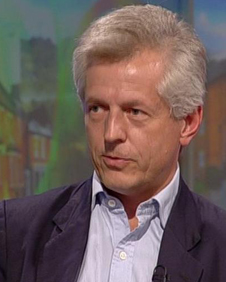
BBC BLOGS - Paul on Politics

Archives for September 2010

Vote David, get Ed

Paul Barltrop|08:48 UK time, Monday, 27 September 2010

It is a curious voting system. And it produced a curious result.

David Miliband won the vote among MPs and among party members - particularly in the West.

You can look at the exact figures for every constituency, and the older brother comes out on top across the region.

Notable was the influence of one of his campaign team, the former North East Somerset MP Dan Norris; Labour members there voted 2:1 for David M.

But the union vote swung it - and that was a far from perfect ballot. 36,000 papers were spoilt, most it seems because members had failed to tick a box confirming they supported Labour.

I'm sure some were not supporters of the party. We met a Bristol couple mystified why they'd been sent a ballot paper. She had been in the union but retired 14 years ago - and neither vote Labour!

However for activists that is now water under the bridge. They will unite behind the new leader, and focus on fighting the government and rebuilding the party.

And that's where the detailed voting figures make rather sober reading for the party, as we get to see the number of members in every seat.

Across the West it ranges from more than 600 in Lib Dem held Bristol West to just over 100 in South West Wiltshire, a pretty solid Tory seat.

The scale of the challenge is apparent in places that once were red.

Labour today have around 250 members in constituencies like Kingswood, Gloucester and North and South Swindon. It's similar in the party's two remaining Bristol seats.

That's a long, long way from the glory days of the late 90's.
Councils, cuts and confusion

Paul Barltrop|11:35 UK time, Tuesday, 21 September 2010

The procession of politicians stepping forward with scary statistics about spending continues.

Latest to go, Wiltshire Council, and there were plenty of gloomy figures being bandied about.

A total of 240 jobs going - £40m being cut by next April. And increasing demand on services.

Reporters, particularly those covering a wider area, naturally make comparisons - and that's where the trouble begins.

Wiltshire's unitary authority say over the next four years they must save £100m, invest and redirect £124m into priority areas, while losing £122m government funding. Figure that out!

Looking at neighbouring councils can make matters worse. Somerset County Council talk of a £75m deficit over three years. Gloucestershire warn of cutting £120m over four years. Oh, and remember those counties also have district councils with their own financial troubles.

So how do we guage how bad it really is?

I'd suggest two ways. Seeing how local residents are affected (a long term measure), and guaging the mood (much quicker!).

We will be watching and reporting tangible effects like library or swimming pool closures over the next few years.

But for now it's worth noting how Wiltshire Council's top people are feeling.

The leader, Jane Scott, was smiley. The chief executive Andrew Kerr was serene.

And he had a simple message: merging five councils to create one last year had come at almost exactly the right time - "a fantastic opportunity".

I wonder whether Eric Pickles, the Secretary of State for local government who's railed against new unitary authorities, will notice.

Badgers, culls and facts

Paul Barltrop|17:35 UK time, Wednesday, 15 September 2010

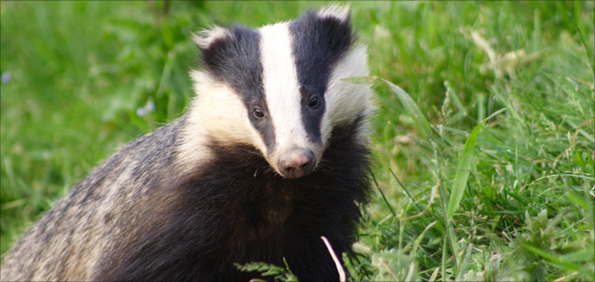
A badger

Yes, you can cull.

The government's announcement that farmers could kill the badgers that they blame for TB in their cattle seemed straightforward.

The NFU certainly thought so, with warm words of approval.

But is it really that good for farmers?

Here are some facts to bear in mind.

First, they'll have to pay for it.

They'll only be able to cull in areas of at least 150 square kilometres. In the West of England that would likely contain more than 100 farms.

So a farmer wanting to institute a cull might have to persuade 99 others to agree to it.

And they won't all have cattle; it's reckoned that kind of area would on average contain 22 herds.

Then there's the cost: the government estimates the necessary cull, lasting several years and done under licence, would cost £1.2m. Others think it'd be higher: a report by academics at Imperial College suggests it could top £2m.

So persuade 100 farmers to accept a cull, and the 22 with cattle to pay at least £50,000 each, and off you go.

Oh, and watch out for the legal challenges: judges in Wales halted a cull in Pembrokeshire after casting doubt on the scientific grounds for it.

There are plenty of scientists on this side of the border keen to see a cull meet the same fate.

Not so drastic

Paul Barltrop|10:59 UK time, Tuesday, 14 September 2010

Richard Graham

Richard Graham, Conservative MP for Gloucester

It's as if they've been trying to outdo each other.

For weeks, influential figures have made ever grimmer predictions about the cuts.

In our own Points West Debate the former Chief Constable of Gloucestershire dropped something of a bombshell.

Forget about shaving public spending, said Dr Tim Brain: "What we're talking about is losing an arm and a leg."

He estimated police forces could lose a quarter of their employees - if government cuts are at the top end of predictions.

They may not be.

It could serve the coalition well to paint things black at the moment.

The Conservative MP for Gloucester faced an angry union representative in our Politics Show West studio.

Richard Graham used to work in the pensions' industry, so knows a fair bit about money.

"There will have to be cuts," he stated. "But they may not have to be quite as drastic as the worst-case scenario being painted by some people."

His calm demeanour spoke volumes.

When we hear and see the true scale of the cuts, the thought may be: "It could have been a lot worse."

Doom and gloom (and PR)

Paul Barltrop|23:55 UK time, Tuesday, 7 September 2010

I'm starting to feel like a messenger of misery.

For months, almost all we've talked about on the news are the cuts.

The doom and gloom is now building to a crescendo: on October 20th the government will make its most calamitous pronouncement yet.

The Comprehensive Spending Review will be a catalogue of cuts, as almost every area of government spending learns just how bad the future will be.

Before then, local authorities are queuing up to offer their own grim forecasts.

The latest is Gloucestershire County Council, announcing it needs to save £120m in the next four years.

But don't worry, ordinary foik will get a say. Yes, they're holding that eternal favourite of politicians in a pickle - a public consultation.

Others are following the same path: Bristol City Council has been running theirs since June. More than 400 people have taken part.

And what difference will it make? Guaging by the experience of other councils who've done this, very little.

It turns out that pretty much every service that councils run is valued by someone somewhere. After all, why else would they be doing them?

So if it yields no brilliant ideas for saving money, why hold a big consultation?

Well it must surely improve relations with the public. So, you might say it's a PR exercise.

Losing leaders UKIP-style

Paul Barltrop|14:27 UK time, Thursday, 2 September 2010

Plenty of rude things have been said about the UK Independence Party since its creation in 1993.

But some of the strongest words have come from its own supporters, not least following the farcical events of their election campaign in the West Country.

In April, party leader Malcolm Pearson tried to persuade several UKIP candidates to stand aside to help other parties' Eurosceptic candidates. Firmly rejected, he then used local newspapers to ask voters in places like Taunton and Wells NOT to back UKIP.

"Local members were livid," one Somerset candidate told me; activists prepared a no-confidence motion for the UKIP Conference (Torquay 3-4 Sept).

With the pressure mounting, Malcolm Pearson quit.

That softened the anger felt in the South West, but he took no chances - opting not to attend his own conference.

So yet again the party lurches into a leadership contest. It looks likely to be entertaining.

"The man's a lunatic... a charlatan," was how one senior figure described one high-profile candidate.

The new leader will be UKIP's seventh in 17 years (plus a couple of acting leaders). I wonder how long he (or she) will last?

BBC © 2014The BBC is not responsible for the content of external sites. Read more.

This page is best viewed in an up-to-date web browser with style sheets (CSS) enabled. While you will be able to view the content of this page in your current browser, you will not be able to get the full visual experience. Please consider upgrading your browser software or enabling style sheets (CSS) if you are able to do so.