Archives for November 2009

A fresh news website for Ukraine

Post categories:

Dave Lee|15:59 UK time, Monday, 30 November 2009

Last fortnight, we re-launched the website for BBC Ukrainian. Multimedia producer Olexander Hryb writes about some of the changes, and hopes for the future:

We were waiting for this moment for years, and now we have our new website!

Suddenly, BBCUkrainian.com has turned from a marginal appendix to radio into a multimedia site with original video output, proper interactive forums, blogs and lots of other functions we could only hope for in the past.
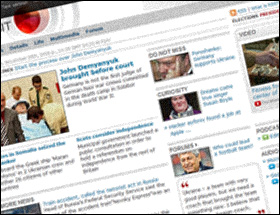
ukrainian_homepage_280.jpgAnd we got a new name too: BBCUkrainian.com is called BBC Мій світ (My World)

It should reflect not only its new lease of life, not necessarily dependant on radio, but also our drive to reach new audience.

We would like BBC Mій Світ to be on every desktop of our already devoted users; however we also explore how to reach to a younger audience in Ukraine as well.

Until now, our website was popular mostly among Ukrainians working abroad who did not have necessarily access to the mass media at home. We were their link to Ukraine.

What we need now is to become a link for Ukrainians to the global news world.

We can offer our content on different platforms, including mobile, at the time when mobile phone penetration in Ukraine is increasing and broadband is growing fast as well.

Now we have a website with functionality that for the first time allows reversed syndication with partners in Ukraine. While BBC World Service is generally renowned for providing global perspective of international affairs, the reversed syndication page would offer our users an option to view how local news is covering the same stories.

Effectively, BBCUkrainian.com (Мій Світ) provides aggregation of useful resources in addition to our original content. In return our content will be syndicated via most popular Ukrainian portals and websites.

Ultimately, we would like to see our new logo BBC My World on every desktop of open minded, cosmopolitan users hungry to understand the outside world and integrate it into their own.

Olexander Hryb is Multimedia Producer, BBC Ukrainian.
Only in Africa

Post categories:

Cathy Packe|13:40 UK time, Thursday, 26 November 2009

On Over to You this week, one of our listeners, Henry Adumuah, takes issue with a regular new section of Network Africa. Known as "Only in Africa", it's usually the last part of the programme, and it consists of listeners telling personal stories - usually of some near-disaster that has befallen them.

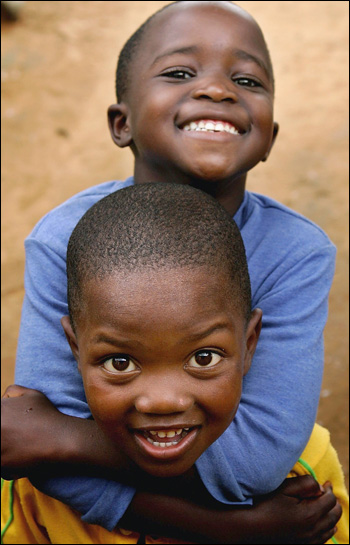
africakids_350_getty.jpg

I'm not a regular listener to Network Africa, but I've been trying to catch it recently, intrigued by "Only in Africa". The stories I've heard have sounded charming and entertaining - the kind of thing you might recount to a friend.

But Henry Adumuah thinks it perpetuates a negative image of Africa, and he told us in his email that "It is not only in Africa where bad things happen".

We were interested to know why "Only in Africa" had been introduced, so Rajan talked to Joseph Warungu, as you can hear in this week's Over To You.

Joseph is the man responsible for Network Africa, and he is sympathetic to Henry's view: "I'm one of those who actually feels aggrieved when I see Africa's portrayal, especially in the western media", he said. And that, he told Rajan, is precisely why he'd created a spot where the programme might get away from serious topics like politics, and let listeners talk about their day-to-day experiences. If you haven't heard the programme, take a listen and see what you think.

A topic that is definitely both serious and political is the trial of Comrade Duch, one of the Khmer Rouge leaders in Cambodia, which has been taking place in Phnom Penh. Resident BBC correspondent Guy DeLauney talked to Rajan about how the trial is being reported within Cambodia, and the restrictions and limitations placed on local reporters.

And on the subject of correspondents, in our Christmas programme we shall be talking to three of the BBC's foreign correspondents, all of whom have experience of living and working in different parts of the world.

So this is your chance to ask them a question. How did they get the job in the first place? Does it matter whether they speak the local language? Are journalists more at risk now than they were in the past? Whatever your questions, send them in and we'll put them to our panel.

Cathy Packe is the Producer, Over To You

Over To You is your chance to have your say about the BBC World Service and its programmes. It airs at 10:40 and 23:40 every Saturday, and at 02:40 on Sunday (GMT).

The ethnic origin of our presenters: does it matter?

Post categories:

Rajan Datar|15:33 UK time, Friday, 20 November 2009

Do you care about the ethnic origins of the presenters you listen to on the World Service? The liberal answer to this would be of course no, on the perfectly valid grounds of non-discrimination. And anyway, you might say, this is radio - the ultimate equaliser where a direct relationship is built up between broadcaster and audience that relies solely on the gift of verbal communication. Ethnicity is irrelevant.

But that is not quite how listener Musaazi Namiti, who lives in Doha, in Qatar, sees it. He contacted Over To You to wonder why the presenters on the flagship news and current affairs programme Newshour were all native English speakers from the west. He stressed he did not want to make an issue of race here but his point was :shouldn't the team of presenters reflect the diversity of the World Service audience, the majority of whom are not native English speakers?

Well on this week's Over To You you can hear the editor of Newshour give a not unsympathetic response to this point - while of course stating that Newshour is a particularly demanding programme to present which requires the finest broadcasters. It is certainly true that other programmes do have non-native English speaking presenters doing a very good job so presumably it's just a question of time before Newshour follows suit. But how much time?

What do you think? Does accent matter? Do you prefer native English speakers presenting on what is after all the British Broadcasting Service? Or are you of the view that the current situation is out of date, conservative and unacceptable? Let us know.

lysedoucet_600.jpg

Lyse Doucet is a presenter on Newshour. Are there too many native English speakers on the network?

Also in this week's programme - and staying with the non-native English speaker theme - we talk to the winner of the World Service playwriting competition for first-time writers for whom English is a second language.

And when it comes to bad language - expressed in the most rustic English - have a listen to our item about the documentary Africa's Forgotten Soldiers (indeed listen to the documentary itself if you can).

Commenting on food served up by the British army to African recruits during the second World War, one former soldier gives his honest view. You don't need to have English even as a third language to guess what he might be saying - the only thing is he's not allowed to say it. Find out why on Over To You this week - and keep those blog comments, emails and calls coming. We can't do this programme without you!

Over To You is your chance to have your say about the BBC World Service and its programmes. It airs at 10:40 and 23:40 every Saturday, and at 02:40 on Sunday (GMT).

Old City, New Dreams: our new Afghan drama

Post categories:

Cathy Packe|11:24 UK time, Thursday, 12 November 2009

This week on Over To You you can hear about a new radio drama serial that has recently been launched in Afghanistan.

Called Old City, New Dreams, it's aimed at the many people who are moving into the cities and are finding the problems of modern life - unemployment, lack of housing, crime and so on - hard to cope with. There are some five million people who have returned to Afghanistan since 2001 from exile in neighbouring countries like Pakistan, as well as many people who are leaving their rural villages in search of a better life in the city.

afghan_spade_600.jpg

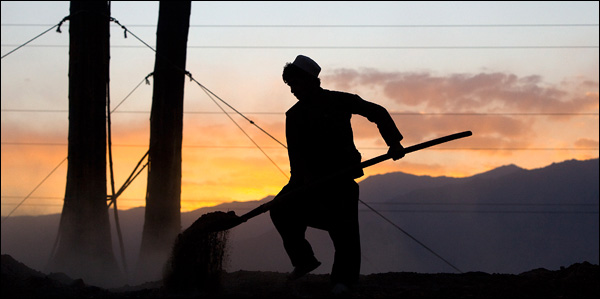
Better life: the new drama follows Afghans returning to life and work in the city

Shafiq Hakimi - who is the director of the World Service Trust's Afghan Education Projects and the man behind the new drama - talks to Penny Vine, who's presenting the programme this week, and it's fascinating to hear how his team go about their research, finding out through interviews and focus groups what the real problems are, and then turning them into storylines that will capture the attention of the audience.

Shafiq talked to us from Kabul, but Penny was joined in the studio here in London by Felicity Finch, who knows Shafiq well because she's been over to Kabul twice to work alongside the cast of Old City, New Dreams, and the longer-established rural drama New Home, New Life. Some of you may recognise Felicity, either by name or by voice - she's certainly well-known to radio listeners in the UK, where she plays the role of Ruth Archer, in The Archers, a drama serial that has been broadcast in this country for nearly 60 years, which makes it the longest-running soap opera in the world.

Felicity's role was to work with the actors and give them the benefit of the experience she has gathered from years of working in radio. Many have had little formal training - and they all have some other occupation as well, finding the time to record Old City, New Dreams on Fridays and Saturdays. I should imagine it would be fascinating, as a relatively inexperienced actor, to be able to work with someone like Felicity, who has so much expertise.

You can also hear an interview Penny recorded with Steven Duke, who's the editor of One Planet. Regular listeners to that programme will know that at the end of each edition, presenter Mike Williams calculates the carbon emissions caused in the course of making the programme. So here in the Over To You office we were intrigued to hear that the programme had set off on a round-the-world tour... which is why we invited Steven into our studio to explain himself.

You can hear what he had to say on this week's Over To You.

Cathy Packe is the Producer, Over To You

Over To You is your chance to have your say about the BBC World Service and its programmes. It airs at 10:40 and 23:40 every Saturday, and at 02:40 on Sunday (GMT).

Has new technology 'killed spontaneity'?

Post categories:

Penny Vine|14:40 UK time, Friday, 6 November 2009

A listener on a recent edition of Over to You claimed that the BBC World Service had "lost its soul".

This remark seems to have struck a chord as it's been picked up and debated by many of those who've contacted us since.

This week, Jonathan Snowden, listening in the UK offers his analysis of why that might be so.

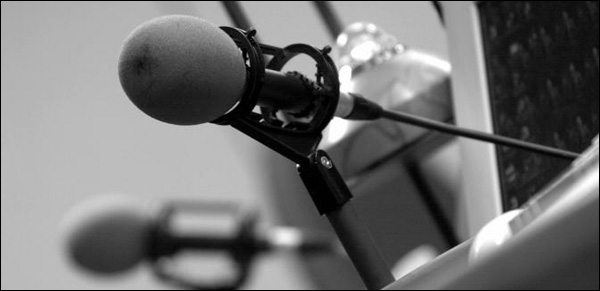
microphone_studio_600.jpgNew studio equipment saves costs, but is it at the expense of truly live radio? One listener thinks so.

He suggests the villain of the piece is the automated system which plays out the programmes! Having this technology, although obviously a cost-effective resource "requires an announcer to record live at only one point in the day so that the same announcement can be replayed as if new throughout the rest of the day" which, says Jonathan, "kills much of the live spontaneity that characterised the World Service for so many decades".

Even in live programmes, "presenters are having to battle to work around the precise timings of the machines that have effectively replaced the live announcer.

Pauses here, the cutting off of people in mid-interview there, all to bring us a recorded programme trail that we have already heard many times over".

He ends by saying that he believes the World Service's heart is still beating, but sometimes he wishes that beat were a little more irregular! What's your diagnosis? Do you agree with Jonathan about this?

Elsewhere on the programme this week we find out whether the BBC is reviewing its presence in Kabul following the announcement by the UN that it is temporarily removing around 600 of its workers because of concerns for their safety.

Rajan also speaks to the Head of the Somali service about the communication he's had with both hostages and pirates involved in the abduction of a British couple from their yacht in the Indian Ocean.

Looking ahead, we're planning a programme where we'll get a group of BBC foreign correspondents in discussion about their lives and the stories that have made most impression on them.

Have you got any questions for them? For example, are you interested to know how they became correspondents in the first place? What aspects of their life are the most interesting or difficult?

If you have something to ask, please get in touch!

Penny Vine is producing Over To You this week.

Over To You is your chance to have your say about the BBC World Service and its programmes. It airs at 10:40 and 23:40 every Saturday, and at 02:40 on Sunday (GMT).


Making it easier to access BBC World Service on your internet radio

Post categories:

Dave Lee|15:20 UK time, Sunday, 1 November 2009

For information on all the ways to listen to the BBC World Service, please click here.

Lately we've been getting lots of emails enquiring about how to listen to BBC World Service on internet radios. Karl Kathuria, Head of Digital Delivery, introduces a new page on our website with all the information you need to listen:

From the number of emails we've received we know that internet radios are getting more and more popular.

News imageDuring the first half of October, many internet radio owners wrote in to tell us that they could no longer hear BBC World Service, and were asking why we'd stopped making our internet audio available.

Internet radios are devices that connect to your home broadband connection, usually via Wi-fi, and play radio stations over the internet. Rather than being limited by stations based near to where you are, they can play any of thousands of stations from all over the world.

To get to our audio, internet radios have to read from a list of stations provided by the company that makes the device. Although we have no direct control over the links that are provided, we do work with manufacturers and database providers to provide up-to-date links.

What we found last month was that one particular database provider had an old link to BBC World Service that we hadn't kept up to date. It took us a while to find this out because of the range of different devices that we were told had problems, but they were all getting an audio loop from the BBC saying that there were no programmes. I got in touch directly with some of you and together we managed to figure out what was going wrong.

What can you do if your radio is still wrong?

In most cases, there will be a menu on your radio to help you refresh the station list. Some radios may need their firmware - the software that runs the radio - to be updated. To do this, you should be able to find instructions online or in the box your radio came in.

It is also usually possible to manually enter a link to the radio station you're trying to listen to. One of the things that we've learned from last month's problems is that it's not easy finding this information for BBC World Service. To make this easier for everyone from now on, we've created a page that contains all of the direct links to our audio.

We will keep these links up to date, and if we need to make any changes to the way we stream, we will make sure these continue to work.

As well as playing live radio stations, many internet radios can access our on-demand streams, so you can listen to the latest edition of our programmes at any time. Finding direct links to these has also been tricky for some of our listeners, so we're including them on our new 'how to' page as well.

Hopefully this new page will be useful to everyone with an internet radio, and will help you to find the programmes you're trying to hear.

Karl Kathuria is Head of Digital Delivery, BBC World Service Future Media.


More from this blog...

BBC © 2014The BBC is not responsible for the content of external sites. Read more.

This page is best viewed in an up-to-date web browser with style sheets (CSS) enabled. While you will be able to view the content of this page in your current browser, you will not be able to get the full visual experience. Please consider upgrading your browser software or enabling style sheets (CSS) if you are able to do so.