Archives for September 2009

Your comments: Behind the scenes at Business Daily

Post categories:

Dave Lee|11:17 UK time, Wednesday, 30 September 2009

Paul Hebert - not Herbert - was interviewed for last Friday's Business Daily. He blogged about the experience:

Reaching all the way across the pond to chat with me was Ed Butler and Stephen Evans from BBC World Radio. I recorded the interview in the studio yesterday and they edited and posted this morning. It is 18 minutes long of which I am only the first 6 minutes. Listen carefully - you'll hear my alter ego named "Paul HeRbert" instead of Paul Hebert. It happens a lot - believe me.

Naming mishaps aside, Paul seemed happy with his interview, and posted this video of his chat in its entirety. For those interested in how radio works behind-the-scenes, it's a candid look at how we conduct our interviews - even when interviewer and interviewee are in different continents.

BBC Interview 9-24-09 from Paul Hebert on Vimeo.

**

"Be fascinated," demands BritPop.co.au, talking about a recent programme about the Beatles.

**

Someone calling themselves 'The Old Hack' considers the plethora of international news outlets available today:

"In earlier days, I was devoted to BBC World Service, to the extent that the first tune my son ever sang was the famous theme of the news, every hour on the hour, Lillibulero. You can hear it in all its glory here. There is a certain amount of controversy attached to the tune, says Wikipedia, but BBC engineers chose it because they found it 'particularly audible through short wave mush.'


Over To You is your chance to have your say about the BBC World Service and its programmes. It airs at 10:40 and 23:40 every Saturday, and at 02:40 on Sunday (GMT).

Chinese whispers: rivalling the BBC

Post categories:

Rajan Datar|10:10 UK time, Friday, 25 September 2009

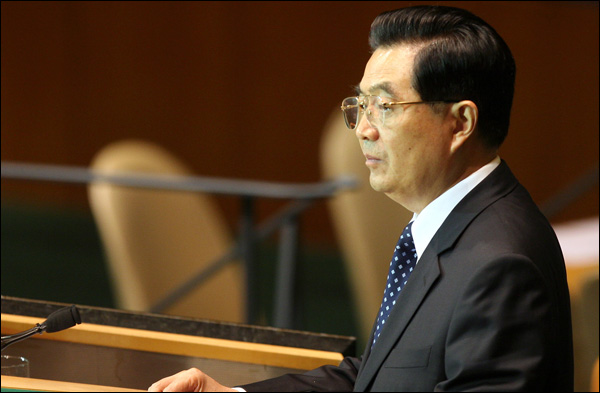
This week the world witnessed a significant statement from the Chinese president Hu Jintao at the UN summit of 100 world leaders - significant in part because of his commitment to curbing the "intensity" of China's CO2 emissions.

But more - as we explore in this week's programme - because Hu Jintao was playing to the gallery - that's you and me in this multi-media electronic age - and clearly recognising the reach and influence over global public opinion this stage afforded him.

hujintao_UN_600.jpg

President of China Hu Jintao addresses the 64th General Assembly debate of United Nations.

It's reported that the Chinese are spending billions of dollars on what party insiders call "overseas propaganda" i.e. achieving a greater presence in the competitive media market. We are talking English (and French,Spanish, Arabic and so on) versions of newspapers like the Global Times and CCTV - the state broadcaster. The ultimate aim is to provide a rival for Al Jazeera, CNN and yes, the BBC.

According to the BBC's China Editor, Shirong Chen, this great leap outward of soft power isn't guaranteed success just by having huge resources pumped into it.

"Of course, we know audience reception is not like that," he told me in an interview that you can hear in this week's Over To You. "It's not what you say, it's what the audiences choose to accept or to hear."

Quite simply there will always be a credibility and impartiality issue which any Chinese-based international broadcaster would have to overcome. And how easily would this sit with a seemingly tighter grip on domestic media, publications and websites in China itself ?

Nonetheless, would our understanding of the world and the quality of global media benefit from such a presence in the commercial media market?

Rajan Datar is the Presenter, Over To You

Over To You is your chance to have your say about the BBC World Service and its programmes. It airs at 10:40 and 23:40 every Saturday, and at 02:40 on Sunday (GMT).

Your comments: Wherever you are, you're with the BBC

Post categories:

Dave Lee|13:10 UK time, Wednesday, 23 September 2009

Our recent documentary about civil rights leader Benjamin Jealous caught the eye of Leslie Kossoff, a listener in the United States. She blogs:

"No matter what your thinking about either civil or human rights and their associated organizations, this is a good listen to see how organizations that don't keep on top of their brand and their strategy can so easily lose themselves - no matter how good their past performance or current product, service or intention."

A Global Business listener took away some sound advice last week:

"While listening to the Global Business BBC podcast a couple of weeks ago, I heard the author of What They Teach You in Harvard Business School. He said something that struck a cord with me.

"Comparison is the death of happiness"

I think he's right."

On a slightly more serious note, "Iraqi Mojo" was touched by a recent episode of Outlook:

"Today on BBC World Service I listened to this program, partly about the stories of two people, a Palestinian and an Israeli who joined the Circle of Bereaved Parents after losing two daughters in violence. I was saddened by these stories, but I was pleased that at least some Israelis and Palestinians are understanding each other and are reconciling with each other."

If you listen to this selection of idents from the history of the World Service, you'll notice the phrase "Wherever you are, you're with the BBC". And indeed, you really are. Here's Anna Kellar's experience:

"I found myself stuck to my hotel room for the day, too sick and weak to want to leave my bed. With nothing else to do, I found the channel for the BBC world service on my TV.

Only then, I found out that Michael Jackson was dead. It was also when I found out about the protests following the Iranian election (and honestly, I was more concerned about the latter). For a whole 12-hours, I watched variations on the same news stories, about the memorial service, the questions surrounding the death, and the custody of his children. I just didn't get why it was a big deal. Why did so many people care so much about one pop star?

I felt like I'd finally made contact again with my home planet, only to not recognize it."

Anna touches on something many of you got in contact about: Michael Jackson. Back in July we made a programme about all your comments.

Finally, is World Have Your Say too pre-occupied with the United States? One listener wrote in to the programme with this firm message:

"I think there has been a lot of America on WHYS lately. I thought it covers the world issues...it's becoming boring, Obama this, Obama that, America this, America that, even the most mundane topics are given prominence on this programme. For instance, yesterday was Founder's Day in Ghana marking waht would have been 100th birthday of Kwame Nkrumah, there could have been a discussion on Pan Africanism and whether it is viable and achievable the way Pan Europeanism is apparently working in EU or whether this concept can work for Asia.

Apart from that we can reflect on feeding the world and the status of food security in different parts of the world in light of the passing of Norman Borlaug [Father of the Green Revolution] as a tribute.

Won't be tuning in tonight

Mwesigye"

Never wanting to shy away from debate, Ros Atkins is asking for your opinions on their blog. Head over and let them know what you think.

Over To You is your chance to have your say about the BBC World Service and its programmes. It airs at 10:40am GMT (11:40am BST) every Saturday.


Can we trust citizen journalists?

Post categories:

Cathy Packe|10:26 UK time, Tuesday, 22 September 2009

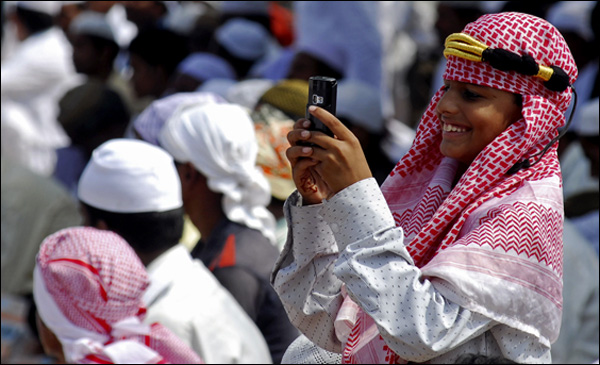
Over the past few weeks we've touched on a number of subjects - violence in the Xinjiang province in China, the elections in Afghanistan, issuing of mobile phones to villagers in Nigeria by BBC Hausa - that are linked together by a common thread. They all involve citizen journalists, ordinary, untrained reporters whose accounts of what is happening in their part of the world is a significant part of the BBC's reporting.

muslimboy_mobile_600.jpg

A young Muslim boy clicks photographs of the crowd with his mobile phone, after offering Eid al-Fitr prayers at Mir Alam Idgah Mosque in Hyderabad, India.

Before the days of the internet and mobile technology, these "journalists" would have been described as "eye-witnesses" whose contribution would only have reached the wider world if they had been interviewed by a professional journalist, someone working for a newspaper or broadcasting organisation, who would talk to them and then record or report what they said for the wider world.

Now that so many of us have mobile phones and internet access, we can all become reporters. For anyone making news programmes this is potentially a huge benefit - it means that whatever happens, and wherever it takes place there will (almost) always be someone on the spot to describe events.

But it can also be a danger: who is the citizen journalist accountable to? Did he or she behave responsibly in reporting the story? So I was interested to read a post on this subject on the Editors' Blog from Matthew Eltringham, who is the assistant editor of Interactivity.

He is involved in putting together some guidance about what constitutes good practice for citizen journalists - and judging by some of the comments on what he has written, this is not a subject everyone is going to agree on.

Matthew has agreed to come on to Over To You this week to talk to Rajan. So whether you feel strongly that there should be guidelines - or that the whole point of citizen journalism is the lack of rules - do get in touch.

On another subject, we've had a number of emails about "The Day that Lehman Died", the fictionalised drama about the collapse of Lehman Brothers' bank. And you can read some of the comments that have appeared more widely on the recent post from my colleague, Dave Lee. As you'll be aware, the drama is part of a wider season of programmes about the Lehman Brothers collapse, called Aftershock.

Another of the season's programmes that I've been listening to is Building out of the Recession, presented by Jonathan Glancey, a fascinating account of the relationship between architecture and the economy. I'm finding that being able to listen to a range of different programmes is giving me a wider understanding of recent economic events, but I wonder whether you all feel the same?

Cathy Packe is the Producer, Over To You

Over To You is your chance to have your say about the BBC World Service and its programmes. It airs at 10:40am GMT (11:40am BST) every Saturday.

Sultan Munadi: second class treatment?

Post categories:

Rajan Datar|10:58 UK time, Friday, 18 September 2009

sultanmunadi_250.jpg

Are some people on a news mission in danger zones more equal than others?

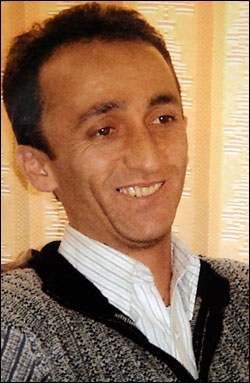
That's the claim from some Afghan journalists who are bitter about what they regard as second-class treatment of their colleagues after the tragic death of translator/fixer Sultan Munadi (pictured).

He was killed during a NATO raid on a house in Kunduz province in which he and New York Times correspondent Stephen Farrell were held hostage last week. Two civilians and a British soldier were also killed in the rescue mission.

Fact: Sultan is not the first Afghan fixer to lose his life. Fact: many more local "host" journalists and translators have lost their lives than foreign correspondents from the big networks. Fact: according to the International Federation of Journalists more than 1100 journalists and media staff worldwide have been killed in the last 12 years. And the fact that Sultan's body was left behind by the NATO special forces hasn't exactly discouraged disabused Afghan journalists from believing that their lives are essentially cheaper than Westerners'.

On this week's Over To You we talk to the experienced BBC foreign correspondent David Loyn who offers an honest and fascinating perspective of life on the frontline and in particular the relationship between fixer and Western reporter. What is clear from talking to him and the IFJ is that there exists a unique bond of inter-dependency in life- threatening circumstances where both parties are protective over each other but one has far better safety training and a far stronger support system than the other.

Mind you, what has not suffered, even after incidents like this, is the common passion amongst all journalists in war scenarios to question the military and government line and to take risks to seek out the truth.

Perhaps a glimpse of a future where all correspondents have equal standing comes out of our other main report on this week's programme. This was in response to a listener query as to why African correspondents in situ are sometimes overlooked by the Bush House newsroom when broadcasting for the English language network, in favour of "big hitters" from the main bureaux. There was agreement from Jonathan Chapman, newsgathering assignments editor for the World Service, and Joseph Warungu, editor of Focus on Africa and Network Africa, to work more closely together to ensure that African service reporters on the ground take part in a wider range of news coverage on the World Service in the future, without undermining the value of an independent perspective from a seasoned correspondent "parachuted in ".

I'd be very interested to learn what you value most in a World Service foreign correspondent. Local knowledge and expertise? Authoritative reporting? A fresh but measured viewpoint from outside the fray? A beautiful turn of phrase that encapsulates and clarifies a complex conflict?

Or none of those things?

Rajan Datar is the Presenter of Over To You.


Over To You is your chance to have your say about the BBC World Service and its programmes. It airs at 10:40am GMT (11:40am BST) every Saturday.

Your comments: Lehman Brothers, Digital Planet and BBC Languages

Post categories:

Dave Lee|17:22 UK time, Wednesday, 16 September 2009

Every week we receive tons of feedback via email, text and telephone. And, more recently, we've been gathering comments on this very blog.

But the feedback doesn't stop there. We also check out what people are saying about the World Service and its programming in other corners of the web. So here's the first post (of many, we hope) sharing some insight from the blogs, the tweets and the forums.

On our recent radio drama based on the final days of collapsed back Lehman Brothers, listener Stella writes:

"A dry subject, you might imagine, but I listened to The Day That Lehman Died last night, and found it strangely compelling.

The only criticism I would have of the drama was that the actors sounded like actors. Senior executives of banks probably don't generally sound like BBC radio announcers.

Still, it's worth a listen and gives a good understanding of the shenanigans that went on in these massive financial institutions, which took money off thousands of individuals and then tried to wring every last cent out of it in profit, ending up losing a good deal of it because they lent it to people who couldn't afford to pay it back."

Elsewhere, on Twitter, the programme got some kudos from Eric Parks:


"BBC radio has done a fascinating radio drama/documentary on the fall of Lehman Bros, "The day Lehman died" Kudos."

The drama wasn't the only output getting kudos this week. The Digital Planet team, who produced a special show from Nairobi, are on the end of some nice praise from Juliana:


"#DigitalPlanet Kenya Special is great. @garethm @billt @m000sh kudos. Friends @justabandwidth featured!"

For those unfamiliar with Twitter, "@garethm @billt @m000sh" refers to the programme team, Gareth Mitchell (presenter), Bill Thompson (pundit) and Michelle Martin (producer). If you're using Twitter, using "#DigitalPlanet' will make it easier for the team - and us! - to find your comments.

Finally, some thoughts from Sarah Houghton-Jan, Digital Futures Manager for the San José Public Library:

"I was astounded by the amount of language learning material available on [the BBC] website for free. The full beginner's courses (12 weeks long) are available in 4 languages. The site also provides audio & video courses for learning Spanish, French, Chinese, German, Italian, Portuguese, Greek, Gaelic (!), and so on. And, finally, the site covers essential phrases in 36 languages. It is easy to use and the language materials are practical, rather than esoteric. Congrats BBC on yet another top notch resource."

Over To You is your chance to have your say about the BBC World Service and its programmes. It airs at 10:40am GMT (11:40am BST) every Saturday.

Climate change: always a hot topic

Post categories:

Cathy Packe|10:14 UK time, Tuesday, 15 September 2009

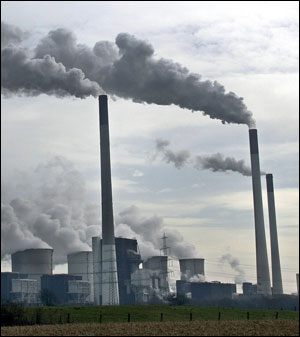
One of the aims of any radio producer is to put together a programme that will capture the interest of the audience, but it's impossible to know how the items are received unless you, the listeners, get in touch to let us know of your reaction. But I suppose I could have predicted that climate change, one of the topics we covered in last week's programme, was guaranteed to get people emailing us and writing blog comments.

climatechangeplumes_300.jpg

If you missed the programme why not listen now - the item that provoked all the reaction is the interview with Steven Duke, editor of One Planet.

He defended his programme against comments from two listeners who felt that One Planet didn't adequately reflect the views of those sceptical about the reality of climate change.

Some of you responded to the blog posts that Rajan and I wrote last week, but we also had a lot of emails on the subject prompted by Steven Duke's interview and the views expressed by the listeners we featured - often disagreeing with them.

Ulric Schollaert, for example, sent us a long and detailed email putting the case for coverage of the view that climate change is real. Among the points he made was this:

"I find the BBC is perfectly entitled (and, in my view, is even under an obligation...) to give wide coverage to the views that climate change is happening and is a definite threat to humanity. The principle of precaution commands such coverage. There is overwhelming evidence that something momentous is going on, that is caused by humans, and that consequences would be dreadful and costly - A LOT MORE costly than what spending it would take to keep on the safe side."

But I'm pleased to say that we have had emails on a variety of other topics, too. I was particularly interested to hear from listener Joel Atadan, who wrote:

"I am not impressed with the reporting on African matters like the riots in Kampala where I was present when the police out of the blue started beating innocent people trying to open up their stalls."

We shall try to follow up on Mr Atadan's criticism on this week's programme.

But in the meantime, I imagine that others among you might have found yourselves in the middle of something that was then reported on the World Service news. It might not have been a riot, but perhaps you were in the audience for an important speech, or took part in a protest march that was then reported around the world? I wonder whether later, when you heard or read the news reports, you felt that they reflected your own experience? Or do you think it's inevitable that journalists concentrate on giving a broader view of what is happening?


Cathy Packe is the Producer, Over To You

Over To You is your chance to have your say about the BBC World Service and its programmes. It airs at 10:40am GMT (11:40am BST) every Saturday.


Is it the BBC's job to save the planet?

Post categories:

Rajan Datar|13:14 UK time, Thursday, 10 September 2009

"It is not the BBC's job to save the planet."

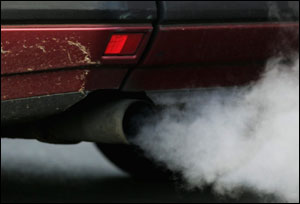
carexhaust_300.jpg

I was reminded of these words from a former editor of a BBC current affairs programme as we were making this week's programme. Two listeners were unhappy with what they regarded as a one-sided approach to the issue of climate change in last week's One Planet. Alarmist and too unquestioning of the scientific orthodoxy on this issue, was the tenor of the criticism.

As Steven Duke, the editor of One Planet, tells me in this week's programme - there are three stages in the whole global warming debate. Stage one: is the planet in serious trouble? Stage two: how much has mankind contributed to this? Stage three: what can we do to rectify the situation? The fact is that many people still have concerns over the first premise.

Steven recognised that it's important to cater to this opinion even in a programme whose purpose is to examine the interaction between humans and nature. Should the World Service, indeed the media, still be talking about stage one? Or is it vital we move on to raise consciousness and find solutions?

Then again, it's not the BBC's job to save the planet, is it?

Also in this weekend's show, listener Pablo Verde from Seville is unhappy with the choices of voiceovers for non-English speakers in news and documentary programmes. In particular the deployment of people with heavy accents which he felt prejudices our interpretation of the interviewee. Often in news, particularly in the field, it's a case of just finding someone to do it.

Jeremy Skeet, the editor of documentaries at the World Service, insisted it is something he and his team think long and hard over. For him it's more important to get the correct intonation than fret over accents.

When I asked if he would be influenced by a poll of World Service listeners who felt they would rather have neutral accents for all translations, he said yes. So it's Over To You. If this is something that has bothered you - let us know.

Rajan Datar is Presenter, Over To You.

Over To You is your chance to have your say about the BBC World Service and its programmes. It airs at 10:40am GMT (11:40am BST) every Saturday.


Voices in the background

Post categories:

Cathy Packe|17:40 UK time, Monday, 7 September 2009

With the Climate Change summit in Copenhagen only a few weeks away now, two of the emails we received over the weekend were a timely reminder that phrases like "climate change" or "global warming" can often arouse strong views. Both our correspondents, Keith Sullivan from Vilnius in Lithuania and Ray T Mahorney from Ohio in the USA, emailed to say that they felt the recent edition of One Planet was unbalanced - both of them expressed the view that the scientific debate is not yet over, so the programme should express both sides of the argument. I'm not an expert in this field myself, and I know aspects of climate change have been very controversial - but I also know that there is broad agreement among experts on many aspects of the debate.

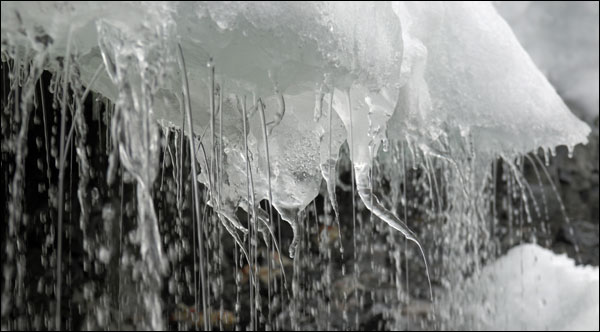
ice_600.jpg

Ice melts on Cuverville Island, off the coast of Graham Land in the Antarctic Peninsula in Antarctica.

Anyway, I had a chat this morning with Steven Duke, who's the editor of One Planet. As you'd expect, he takes critical views of his programme seriously, and he'll be talking to Rajan about them later in the week - you'll be able to hear the interview on the next edition of Over To You. You may have queries of your own about climate change - or any other environmental matters that you've heard discussed on One Planet - and we can put those to him too. So do let us have your thoughts and opinions.

Another topic we're hoping to look at this week is the use of voice-overs on the World Service - the voices that provide an English translation of an interview that was conducted in another language. It's something that can't be avoided unless programmes restrict themselves to interviews in English, which would make for very limited coverage. But Pablo Velarde, from Seville in Spain - one of our regular Over To You correspondents - takes issue with some of what he hears. In his recent email to us he says: "This common practice in BBC programmes gives an air of theatrical unreality to the bits voiced over with heavily-accented voices that detract from what I assume is the aim of the programme".

I was reminded of a recent trip I made to Spain. The weather was unexpectedly wet, so to avoid the rain I went to the local cinema, where an American film was being shown, but with the original English dialogue dubbed into Spanish. "Theatrical unreality" exactly describes the result as far as I was concerned. I was watching some well-known actor on the screen - I think it was George Clooney - but the words that came out of his mouth didn't seem to match what I expected, and I found it very hard to concentrate on what was happening on the screen.

I wonder what you think about voice-overs on the World Service? Does it really matter what a voice sounds like, as long as you can understand the meaning? Or do you agree with our listener, Pablo Velarde, that the voice-over can detract from what is being said? And anyway, is a person's voice so much part of the personality and character that having someone else speaking the words is never going to be anything but second-best? A fascinating subject - and I look forward to reading your comments.

Cathy Packe is the Producer, Over To You

Behind the scenes of our Lehman Brothers drama

Post categories:

Cathy Packe|13:52 UK time, Wednesday, 2 September 2009

It's amazing to think that it's nearly a year since the collapse of Lehman Brothers bank, an event which at the time probably seemed pretty remote but whose after-effects will have had an impact on most of us, regardless of where we live and whether we had any investments.

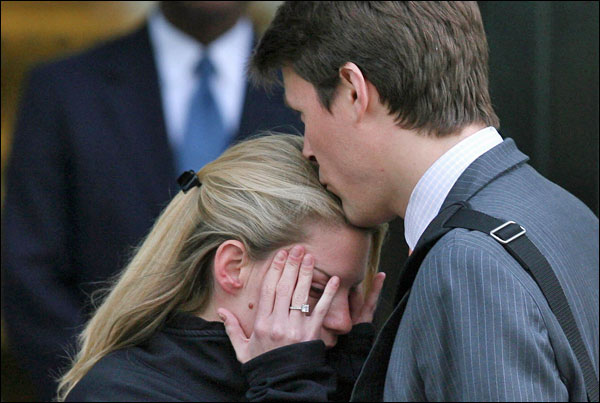
lehmenbrothers_600.jpg

A couple console each other outside the Lehman Brothers European Headquarters building in Canary Wharf, London.

I've been reminded of the drama of the Lehman bankruptcy in a fascinating play which will be broadcast on the World Service this weekend - producing Over To You allows me the occasional sneak preview, and means I can tell myself I'm working while I listen! We shall be featuring the drama - The Day that Lehman Died - on Over To You this week, looking at how the production team turned real-life drama into a fictionalised account of what happened. The behind-the-scenes story is fascinating - as is the drama, which really did have me on the edge of my seat, even though I knew what happened at the end of the weekend.

But do you feel that news events - especially ones that happened so recently - are a legitimate subject for a drama? I wonder what other events you might like to hear dramatised? Or whether you think that plays should be the stuff of fiction? I look forward to reading your comments.

Another topic we're looking at this week is swine flu - at least that's the name that the BBC gives it. But Shaoming Wang emailed Over To You from Malaysia to point out that the World Health Organisation refers to it as H1N1. So what's in a name, as long as we all understand what we're talking about? But perhaps you have your own reasons to object to the name "swine flu" - if so, do let us know. We shall be hearing from the BBC's Medical Correspondent, Fergus Walsh, on the subject in this week's programme.

It's good to read your contributions to our blog. I've particularly enjoyed those that follow on from the item in last week's programme about villagers in northern Nigeria receiving mobile phones so that they can keep in regular touch with programme-makers here in London - Rajan refers to this in his recent blog.

This latest development is all part of an increasing trend towards "citizen journalism" - also the title of an interesting two-part series presented by Michael Buerk for the World Service. Do you agree with the comment from PeggyMiles, that getting news from ordinary citizens gives the BBC's journalists "information from a more robust source"? Or do citizen journalists have a different agenda from professional reporters? And I wonder whether you feel that their role is significantly different according to where they are in the world? All these are topics we shall be covering in the coming weeks, so do keep your comments coming.

Cathy Packe is the Producer, Over To You

More from this blog...

BBC © 2014The BBC is not responsible for the content of external sites. Read more.

This page is best viewed in an up-to-date web browser with style sheets (CSS) enabled. While you will be able to view the content of this page in your current browser, you will not be able to get the full visual experience. Please consider upgrading your browser software or enabling style sheets (CSS) if you are able to do so.