So, Gordon Brown is to put Britain's nuclear programme on the table at this week's talks in New York about how to stop the spread of nuclear weapons.
Later today he will tell the United Nations that "if we are serious about the ambition of a nuclear-free world we will need statesmanship, not brinkmanship" .
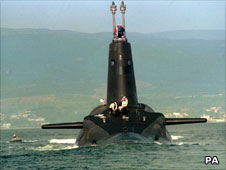 On Thursday, when President Obama chairs a meeting of the UN Security Council, Gordon Brown will tell that meeting that he is considering cutting the number of submarines which carry Britain's Trident nuclear missiles.
All this, we are told, is part of the drive to renew the Non-Proliferation Treaty which, in theory if not always in practice, prevents those countries which don't have nuclear weapons from developing them.
It is also, of course, part of a drive to cut costs and to be seen to cut costs. Questions are already being asked about the affordability of renewing Trident and ministers had made it clear that they were exploring whether three new submarines could do the job currently performed by four.
This would not, as you might expect, cut the cost by a quarter but could produce a significant saving.
Some close to the prime minister say that he has considered going even further - offering to review or delay plans to renew Trident if the big nuclear powers agree major cuts in their arsenals.
In a speech on 17 March, he hinted at just such a policy when he said: "As soon as it becomes useful for our arsenal to be included in a broader negotiation, Britain stands ready to participate and to act."
Anything which could be presented as an offer to give up Britain's programme entirely would be political dynamite.
On the one hand it would cheer many voters who regard nuclear weapons as either immoral or unnecessary and unaffordable in the modern age.
On the other, it would risk re-opening the painful wounds which were opened in the 1980s by Labour's embrace of unilateralism.
It is clear that the prime minister is not now ready to take such a step. The official line coming from Downing Street is that the existence of Britain's independent programme remains "non-negotiable".
Update, 11:00, 23 September 2009: I mistakenly wrote that Gordon Brown wanted to "replace" the NPT when I should have written to "renew" it. Put it down to jetlag!
The Treaty is undergoing a five-year review. The PM wants to strengthen verification and inspection rules, introduce serious penalties for those withdrawing from the NPT, and make nuclear security an essential part of what he calls a "global bargain" between nuclear and non-nuclear states.


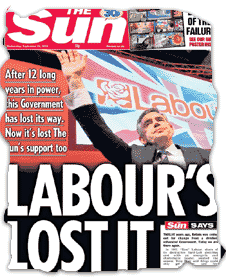 The paper has timed its big political switch - away from backing Labour to backing the Tories - for maximum impact both in terms of gaining attention for the paper and of taking the gloss off Mr Brown's big day.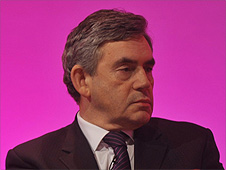
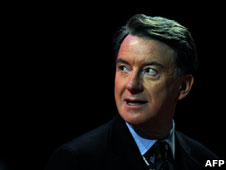
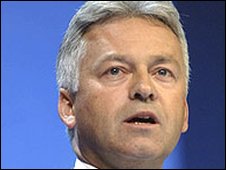 Mr Duncan agreed to meet the man who dug up the garden of his constituency home in protest at his expenses claims for gardening bills. Unfortunately for the garrulous Mr Duncan, the protester was wearing a secret camera and recorded the Tory MP's candid opinions about the plight of MPs.
 I'm
I'm