

Questions, questions
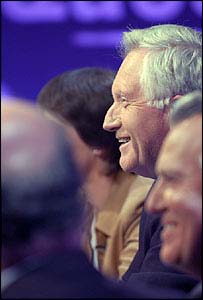 I found myself in the BBC's Blackstaff studios tonight watching the taping of the BBC Question Time programme. An edition of the programme from Belfast is always a bit of a challenge for David Dimbleby (though, of course, nothing ever looks like a challenge for this most polished of broadcasters), for a couple of obvious reasons.
First (and quite understandably), the network audience is clearly not as fascinated by Northern Irish politics as people are here. The producers deal with that challenge by picking mostly "national" rather than "local" questions for discussion.
Then comes the second problem: Whatever the question -- no matter how seemingly unrelated that question may seem -- local panellists and the studio audience in Belfast will steer the debate back to our traditional political tit-for-tat. Ask a question about Tony Blair apologising for Britain's role in the transatlantic slave trade, and within minutes the discussion will return to Northern Irish politics. Ask about those Russian "murky" murders and whether they look like a throw-back to the bad old days of the Soviet regime, and we'll soon be talking about the bad old days of Northern Ireland's troubles.
This dynamic was in evidence again in tonight's programme. We barely made it through a single question on any topic without returning to the Northern Ireland political issues. Our local political questions are extremely important and need serious consideration; but other global and national issues are also important in their own right and deserve consideration without rhetorical side-tracking. Watching the usual dynamic unfold during the programme, I wondered if we, in Northern Ireland, are not a nation of political alcoholics, returning to the same favourite tipple with predictable regularity. Is it time for a detox?
Before I end this rant, let me pick up on one thing David Trimble said tonight. When asked if it was right that Tony Blair should say sorry for slavery, he told the audience that calls for an apology were "stupid". Those calling for an apology forget that Britain was the country that ended the slave trade. It's undoubtedly true that Britain took the lead in dismantling the slave trade -- and abolitionists such as William Wilberforce deserve to be better known today than they are. But isn't it also undeniable that Britain was dismantling a slave trade that it, more than any other country, helped to create in the first place?
 I doubt any of Pope Benedict's advisers will give him
  The Guardian's lead story today is headlined: "
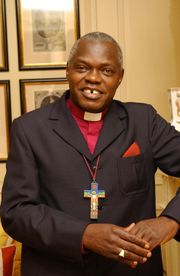 The Archbishop of York has waded into the debate about BA and the wearing of cross necklaces. Dr John Sentamu says BA's policy is "
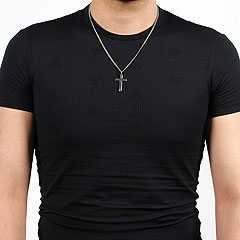 Check in your cross if you work for British Airways. A BA worker has just
  In today's Church Leaders Special, the Presbyterian Moderator, Dr David Clarke, had no difficulty telling listeners that he was a "theistic evolutionist" and that he believed the first chapters of Genesis to be a poetic celebration of God's sovereignty in creation rather than a pre-scientific account of the world's origins. I mention that because we'll have a chance to examine creationism in much more detail in two weeks time, when I present a Creation Wars Special on Sunday Sequence.
  Is
Is  An update on the story of Mirza Tahir Hussain, the Briton jailed 18 years ago after being convicted of murder, and facing execution in Pakistan. The circumstances of his conviction remain, to say the least, unclear.
 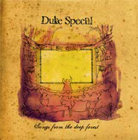 Duke Special's new album "Songs from the Deep Forest".
 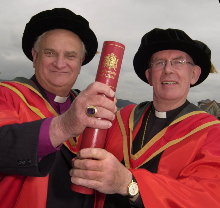 Next Sunday, my guests on
  That's a pretty bold headline, which appeared recently at the top of a
 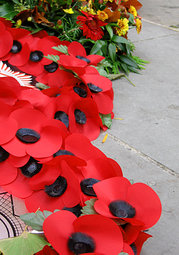 The Channel Four newsreader Jon Snow has raised his voice against "poppy fascism" -- an undue pressure, as he sees it, placed on broadcasters to make them wear the symbol of the UK's Remembrance Day commemorations. In a Channel Four
 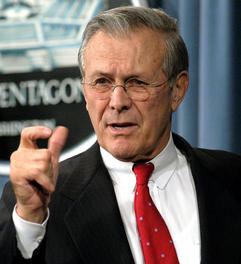 So farewell then,
 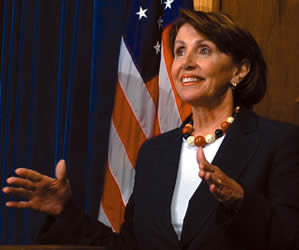 That's
 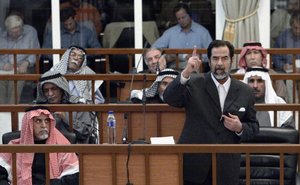 The Foreign Secretary, Margaret Beckett, says it is "right" that Saddam should face "Iraqi justice" for his "appalling" offences against the population. From this, I take it, that she is welcoming the death sentence handed down to Saddam yesterday. William Hague also welcomed the death sentence in this case.
  Since we're talking about bad news stories for US Republicans ahead of tomorrow's congressional mid-term elections, have a look at
 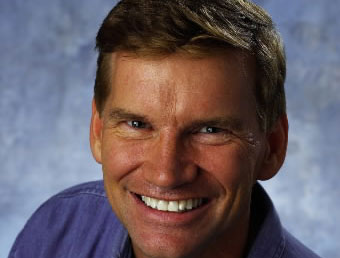 Ted Haggard isn't well known in Britain and Ireland. And until this week he wasn't exactly a household name in the United States either. Time magazine recently named him one of the 25 most influential evangelicals in America -- founder and senior pastor of the nation's most powerful megachurch, president of the 30 million-member National Association of Evangelicals, the largest evangelical group in America, and, according to Harper’s, “No pastor in America holds more sway over the political direction of evangelicalism than does Pastor Ted.”
