

Are the fare increases a nail in the travelcard coffin?
Post categories: City Hall, Politics, Transport for London
 |12:14 UK time, Friday, 22 October 2010
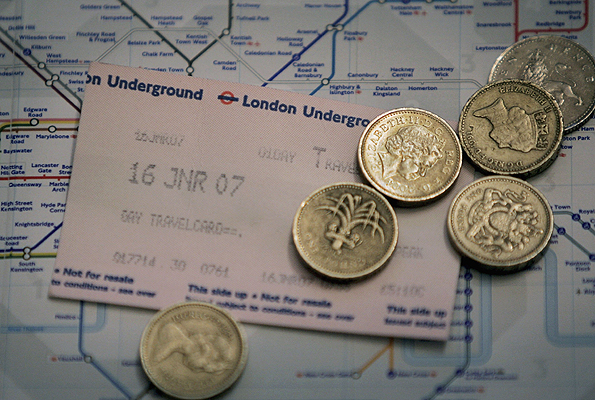
What most transport commentators thought was a story about the Comprehensive Spending Review (CSR) being a good deal for London in protecting the Tube upgrades and Crossrail quickly went down another route.
The combined CSR / fares announcement on Wednesday still rankles with some.
Late yesterday the Freight Transport Association also waded in with accusations of "underhand" tactics from Transport for London (TfL) who it accuses of burying bad news over the expected congestion charge rise.
TfL deny it and maintain its strategy was to give as much information as possible on the rises and provide a fuller picture of how the cuts would affect Londoners.
It does concede omitting exact details over the rises on Travelcards - "an oversight" - and they published the full list of new fares here yesterday morning (AFTER the fares announcement).
Incidentally, that is six more pages than the handouts we were given before the announcement.
The accusations of burying ticket rises yesterday was covered by a number of bloggers and here by my colleague Political Editor Tim Donovan on BBC London.
Arguably, the most pertinent comment of all was from London TravelWatch.
Sources told me they thought the fares announcement and the omissions was "pretty sneaky". They were already looking through the repercussions to fare payers and were publicising them early on Wednesday.
Anyway putting that to one side. TravelWatch say they think the days of the Travelcard are numbered. The suspicion is that they intend to drive people to Oyster PAYG, and possibly get rid of day Travelcards in the future.
These were London TravelWatch's headline briefings:
- Particularly worse hit: infrequent users, outer London (avoiding zone 1), those who use one day Travelcards. Through ticketing is more expensive and bus users see other steep rises
- Current 2-6 day Travelcard abolished. You will now have to buy a Zone 1-6 (£9 to £15 in the peak, £5.10 to £8 off peak, 66% and 55% rise respectively).
- Two-zone weekly, monthly and annual Travelcards excluding zone 1 go up by 25%. (so, a Zone 2 and 3 or 3 and 4)
The upshot is that Travelcards go up by average 6-7%, and the Zone 1-3 and 1-5 day Travelcards have been abolished.
This increases costs from £8.60 to £10 per day or 16% (1-3) or £12.60 to £15 or 19% (1-5).
Cash fares on LU/LOROL/DLR for a 2-5 go up from £3.50 to £5 or 42%.
Single zone outside Zone 1 stays at £1.30 off peak, but at peak times goes to £1.40.
Please let me know your thoughts.
TfL say these changes will only affect a small number of users? Is that the case? There are thousands of different ticket types so there are bound to be winners and losers... Examples would be helpful.
Did the Boris effect make any difference?
I asked the Mayor at the Press Conference on Wednesday about the cuts passed onto Transport for London by the Department for Transport.
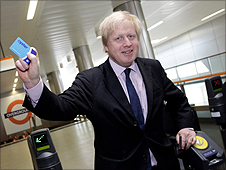
The DfT's budget was cut by 21%. And, surprise surprise, TfL's levy from the DfT was cut by exactly 21%.
So I asked Boris Johnson about this and he said, sorry, he thought my figures were wrong and the budget cut was 2%.
The microphone had gone by then and in the hurly burly I couldn't follow him up on it and I was hung out to dry a bit.... but that's not important, it's definitely 21% or £2.2bn. The implication being - the rhetoric about Tube upgrades and Crossrail didn't make any difference.
The Mayor did approach me afterwards rather concerned about my question. He then pulled Peter Hendy into it with whom I'd already spoken about this.
Transport for London's line is that if it wasn't for the Mayor lobbying then the cuts would have been HIGHER than 21%.
So it seems that a Conservative Mayor, who is popular in the Conservative Party, can only maintain the cuts being passed down from Central Government.
There was some suggestion that the Crossrail budget is separate to that 21% cut. But we'll see if that's the case...
UPDATE: 3.30pm
I've been speaking to the Department for Transport for clarification.
It's overall cut was 15% on average - 21% from its resource funding budget and 11% from capital investment i.e. infrastructure projects.
They cut TfL's levy by 28%. That's exactly the same as was cut from other local goverments.
However, for the first time they stripped out the cost of the Tube upgrade (roughly £890m a year) meaning TfL's contribution from the Dft was cut by just 21% and not the 28% everywhere else. They believed it was an infrastructure upgrade of national importance and should be ring-fenced.
Letters have been exchanged between the Secretary of State for Transport and the Mayor of London ring-fencing that £890m annual budget for the Tube upgrades only. So the difference between what other local governments got and London is £890million a year.


Comments
Sign in or register to comment.