Error: Too many requests have been made during a short time period so you have been blocked.

BBC BLOGS - View from the Trent

Archives for December 2010

2011 - the year of economic revival for the East Midlands?
John Hess|11:37 UK time, Monday, 27 December 2010

Comments

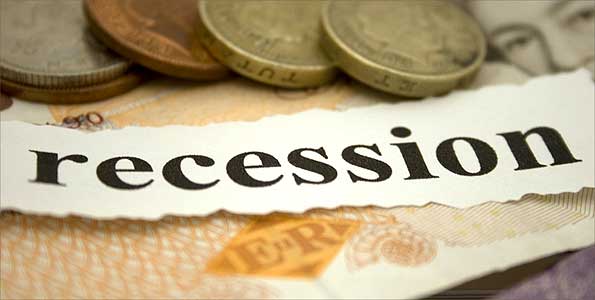
Money with recession strapline

Could the East Midlands' economy be on track for a revival following the recession?

So what could 2011 have in store for the economic and political prospects for the East Midlands? I've detected some very contrasting moods.

Cuts to public sector funding - and their impact on jobs and services - will rarely be out of the headlines in the New Year. But the latest business survey from the Derbyshire and Nottinghamshire Chamber of Commerce offers some surprising early optimism for 2011.

"It's tough out there. But growth in employment is still there," says John Dowson, the Chamber's head of policy.

"We are looking at about 20% of businesses wanting to increase their workforce while only 10% - and that includes some of the public sector - are looking at reduce their workforce," he told me.

That offers some hope for the many public sector workers, like Caroline Diss, who face losing their jobs in 2011.

Office worker

Council workers fear for their jobs

Caroline is a single mother of two from Gedling in the Nottingham suburbs. For 21 years, she's worked at the city's office of Connexions - a public sector organisation that gives careers advice to young people. Connexions faces big funding cuts and Caroline's job is now on the line.

"I'm facing a degree of uncertainty I've never experienced. Some of my colleagues feel the same way. It's unprecedented," she says.

Caroline is furious that services and public sector jobs are being cut. The Coalition government constantly reminds us that the context to the cuts is the need to combat the national deficit and revive the economy.

"Who actually got us into this situation and the mess in the first place? I feel very strongly about this. It's not about people having overspent, it's about the huge debt and loans that were encouraged by the banks. They are to blame."

One of our senior Conservatives points the finger elsewhere. David Parsons is the leader of Leicestershire County Council. His council is looking at losing 1,000 jobs over the next four years.

"My hope for the New Year is that we get out of the dreadful economic mess we were left by the previous Labour government, and preserve as many of the services we can."

"I don't want to make any person compulsorily redundant but that may well happen. We are working very hard to retrain people.

"We have been handed down targets by national government and that's the problem. We have to face that. It's the economic reality," he adds.

Councillor Parsons is one of the most influential figures in local government. Some of his ideas to share backroom services with other councils are being pioneered by Leicestershire with Labour-run Nottingham City.

"Our staff are our number one asset and we are working very, very hard with staff and the trade unions to minimise the impact."

So will that be welcomed by the public sector unions? Peter Savage of UNISON in the East Midlands wants some fresh thinking to avoid massive job cuts.

"There is an alternative. We want councils to go back and look at their figures. They could dip into their cash reserves, spread the cuts over a longer term and look at more imaginative ways of delivering services," he told me.

"We have to remember that for every public sector job that goes, there's the equivalent job losses in the private sector."

UNISON is bracing itself for East Midland councils to start announcing a new wave of job losses early in 2011. Up to 5,000 redundancies are on the cards.

So can a reviving private sector help to cushion the blow? John Dowson of the Chamber of Commerce suggests where the future jobs will come from.

"The growth is going to be in carbon deduction technology, bio-science, green innovation but also in business services as well," he told me.

"The future will be about your transferable skills and what retraining potential you're got to meet the demands of the new economy."

"It's about your skills, attitude and whether you can retrain and adapt to new environments and think differently," he adds.

Fresh thinking and the ability to adapt always make for good New Year's resolutions.

Spending cuts force top cops to quit, says Labour

John Hess|15:47 UK time, Thursday, 16 December 2010

Comments

Policeman in Nottinghamshire

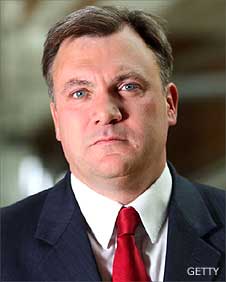
Ed Balls is back on the beat. The Shadow Home Secretary has been in Nottinghamshire to highlight police budget cuts. If he looked slightly lost, no one should blame him because all the talk has been about the A19.

This is fast becoming the political direction of travel for some chief constables and the politicians running the county police authorities of England. The A19 is not to be confused with the dual-carriage just north of Doncaster, but a little known pension regulation that allows police officers to retire after 30 years service... if that's what they want. Many prefer and are often encouraged to stay on.

Ed Balls

It's now being used to cut staff. Nottinghamshire is one of those constabularies that's on the road to A19 job losses. Next year, up to 86 of the most experienced officers will have no option but to retire. Over the next three to four years, the Nottinghamshire Police Authority now estimates that almost 350 staff will be forced to go on completing 30 years service.

The A19 pension regulation has become a handy alternative to compulsory redundancy, says the Nottinghamshire Police Federation. It represents many of the force's 1,800 officers.

"It is absolutely ludicrous," says Mick Taylor, the Federation's county chairman.

"This means some of our most experienced and specialist officers will have to leave. It doesn't make sense. Many officers are furious."

These measures have been forced on police authorities because of the government's budget squeeze; 5.1% cuts next year, followed by a 6.7 cut in 2012/13. Nottinghamshire estimates that'll mean finding savings of £36m.

Its Chief Constable Julia Hodgson says: "These are hugely significant decisions for everyone connected with Nottinghamshire Police and I recognise the impact they will have."

Neighbouring Leicestershire is looking at savings totalling £35m but has so far resisted driving down the A19 route. Derbyshire is also resisting the A19 option.

Ed Balls believes the real level of cuts will be much higher because of the impact of inflation and other rising costs.

"People should be in no doubt that these deep cuts will mean thousands fewer police officers and it'll hit the front line," he says.

And his colleague, the Gedling MP Vernon Coaker, says the situation in Nottinghamshire highlights the need for a government rethink.

"Some of our most experienced police officers will have to go... detectives, fraud officers... and not because it's in the interests of the police but because of a budget cut."

Mr Coaker, a police minister in the last Labour government, has this message for the current Home Secretary Theresa May: call in the police budgets and renegotiate a new deal with the Treasury.

There's little chance of that happening. There's a better chance of finding gold at the end of the A19.

Geoff Hoon anger over Standards Committee rebuke

John Hess|13:09 UK time, Friday, 10 December 2010

Comments

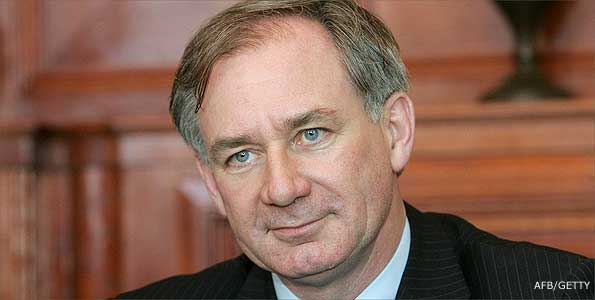
Geoff Hoon

It's not the way any senior politician wants to see their parliamentary career end. But the frayed reputation of the former Ashfield MP and Cabinet Minister Geoff Hoon has been well and truly trampled on by a powerful committee of MPs.

He's held some of the most powerful roles in government - in the Foreign Office as Europe Minister, Secretary of State in the Ministry of Defence and the Department for Transport . Now Geoff Hoon has been judged to have brought Parliament into disrepute and told to apologise to MPs.

To add to his dishonour, the Committee on Standards and Privileges has ordered him to hand back his personal security pass that allows former MPs access to parliament. In effect, he is banned from the Palace of Westminster for five years.

The Committee's Commissioner began an investigation into Mr Hoon's conduct last March, just weeks before Gordon Brown would call the General Election.

The former Defence Secretary had been the victim of an undercover TV sting by the Channel Four programme, Dispatches. He had been invited to a swish central London location to talk about career options once he stood down as a MP after the election.

He thought he was attending a potential job interview, and admits he "overstated or exaggerated" how he would translate his political contacts and international knowledge to a future employee. The would-be international head hunter was fictitious.


He was secretly filmed saying he wanted "something that, bluntly makes money"... £3,000 a day was his suggested rate.

The former Defence Secretary also told the undercover reporter he had met officials working on the government's Defence Review and offered to brief. The Committee's Commissioner - who carried out the investigation - highlighted this in particular as breaching the parliamentary code of conduct.

When I spoke to Geoff Hoon, he was deeply upset by this:

"I categorically deny that I would ever divulge confidential Ministry of Defence information. I'm very, very shocked by the Commissioner's findings. I really feel there was no opportunity for me to get a fair hearing. It's as though the Commissioner had already made up his mind. I am very disappointed."

And in a letter he sent to the Commissioner a few weeks ago, he added:" The Commissioner's interpretation is not consistent with the agreed facts. There were no briefings by officials about the Defence Review and in those circumstances, I would not have suggested that there were."

Yet the committee's report said: "In our view, Mr Hoon was giving a clear impression that he was offering to brief clients about the strategic defence review on the basis of a confidential briefing he had received from MoD officials."

"Whether Mr Hoon intended to give that impression, only he can say," the report added.

"But looking at the exchanges between Mr Hoon and the interviewer, we find it difficult to accept that he did not know that he was giving that impression."

Reputations in politics can be very fragile. Mr Hoon told me he accepts that he now faces an "uphill task" to repair his name... despite a generation spent in public service.

Eric Pickles warned that cuts will cause social problems

John Hess|10:44 UK time, Friday, 3 December 2010

Comments

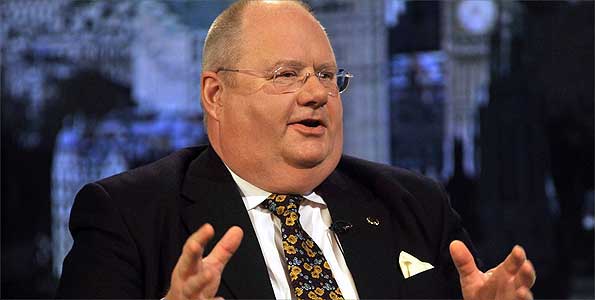
Eric Pickles

There are some worried faces among the leadership at Nottingham City Council. It's been doing some serious number crunching on the likely impact of the government's changes to the annual cash funding it gives to our town halls. Services and jobs are at stake, says the city's Labour Leader Councillor Jon Collins.

The Local Government Secretary Eric Pickles is due to make his announcement fairly soon; it's already been delayed. But councils have a pretty strong clue that the so-called "area-based grants", the funding formula used by Whitehall to allocate cash support, is to be changed.

Jon Collins believes the aim is not only to cut budgets but also to shift resources from some of the big cities to the shire counties. That alone will have an impact.

"Funding to help young people out of drugs. That's gone. The Connexions scheme to help young people find work and apprenticeships. That's gone. Funding to tackle teenage pregnancies. That's gone. These cuts will hit some of the most vulnerable people in our big cities," he says.

Finance experts have already calculated that the city's annual budget of £272m faces an 18% cut next year - that's £58m, almost as much as the city's schools' budget. The council has 6,800 employees (11,000 when you include schools staff).

The Coalition has talked of budget reductions of around 25-30% over the course of this parliament. But it's the scale of the cuts next year... so-called front-loading... that is causing particular alarm.

I've seen a confidential list of 37 different council funded projects in Nottingham that face being chopped or seriously cut back. They range from concessionary bus fares to schemes to tackle anti-social behaviour.

The council's Deputy Leader Graham Chapman highlights what he calls "cuts by stealth", which he warns will cause social problems.

The Coalition's proposals for a "Pupil Premium" is aimed at targeting additional funding at vulnerable communities with low academic achievements. But the message from Nottingham is that the "Pupil Premium is flawed because of the way the funding is worked out.

Young teenager

Some public sector figures think young people will be hit hard by cuts

"Some of our poorest schools will lose money out of it and some of the better off schools in the counties will gain. We've calculated we'll lose four or five million on that. And that's because the formula will be based on children who receive free school meals.

"The government should stick with the deprivation index. That's a much more accurate measurement for distributing funding to the most needy areas," he says.

"A lot of our young people are going to be hit very, very hard. If you have a lot of young people without any income, without any work or training schemes, there will be the type of social problems, which I thought we had already dealt with. I am very concerned about that."

Eric Pickles has already urged councils to dip into their reserves to mitigate the effects of the recession and the budgets cuts.

That's not cutting any ice among Nottingham's Labour leadership.

More from this blog...

BBC © 2014The BBC is not responsible for the content of external sites. Read more.

This page is best viewed in an up-to-date web browser with style sheets (CSS) enabled. While you will be able to view the content of this page in your current browser, you will not be able to get the full visual experience. Please consider upgrading your browser software or enabling style sheets (CSS) if you are able to do so.