


Did the web Kill the Bill?
 Here's a question: "Did social media kill the bailout bill"? We want you to help us try and answer this on Saturday's broadcast when we'll tell the story of the online anti-bailout movement. Please email us or leave a comment on this post with your ideas. Below are some early thoughts:
Congress "overwhelmed". Look at this screen grab from a popular Directory of Congressional contact information. 
100 people a minute were attempting to contact Congress over the bailout. The House website itself was "overwhelmed" by the traffic.
Spontaneous or orchestrated?. Whether the calls and emails were mostly a reflection of spontaneous public sentiment or an orchestrated campaign is harder judge. Harder still to calculate the impact of the web. There are dedicated anti-bailout sites like Stopthehousingbailout.com and No Blank Checks for Wall Steet. This quote from the man behind one site (via the Wall Street Journal) is illuminating
"We're going to phone and fax every member of Congress who voted against this to thank them. ... Everyone who voted to pass this bill, we're going to actively organize to oust them."
Prominent bloggers may have energized anti-bailout sentiment. Conservative blogger Michelle Malkin's post, "All aboard the bailout bandwagon? Hell, no!" was the 9th most linked to blog post on Monday according to BlogPulse The blog urged people to call senators about the bill
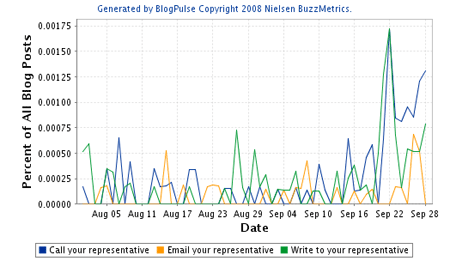
Yet looking at this Blogpulse trend and while it shows that an increasing number of other bloggers were urging their readers to, "call-email-write to your representative", the absolute numbers were low.
These are just early thoughts. There are many questions - we're hoping you'll help us find some of the answers.
UPDATE: The bill has passed second go round. Having looked further into this a highly orchestrated campaign seems unlikely though blogs may have encouraged people to contact their congressmen. There's more in the podcast - we'll post more on the blog in the next couple of days.
 Email us
 Our Twitter
 Join our Facebook group

 Listen to iPM
 Technorati
 Google
 Ice Rocket
