Archives for February 2008

Social Networks and the Press

Post categories:

Chris Vallance|19:27 UK time, Tuesday, 26 February 2008

Comments

Increasingly journalists rely upon social networking sites for content when a major story breaks. But what are the principles that should govern the journalistic use of content gathered from personal profiles on Bebo, Facebook Myspace etc? My colleague Robin Hamman has been taking a look at the issues on his personal blog here and for the PM programme so have I.

Personal social network profiles or images taken from those profiles have been a factor in the reporting of the killing of Meredith Kercher, the scandal surrounding Derek Conway MP and even the biography of Bilawal Bhutto. Now with the suspected suicides in Bridgend we learn, via local MP's and AM's, of concern about the use of content from social media in that case. In reference to social network images used of some of the young people who died, Carwyn Jones AM said, "It does raise questions of the sensitivity of publishing those photographs for the world to see". Local MP, Madeleine Moon told PM she had even received complaints (which she stressed she could not substantiate) of journalists pretending to be on-line friends of local young people in order to obtain quotes.

Not linked to any specific case, the general issue of journalists use of social network content is something the Press Complaints Commission is currently looking at, as they embark on a major process of consultation. In the interview below their Director Tim Toulmin talks about what steps the PCC is taking to look at the issue and to clarify where the boundaries should lie governing the activities of the press in this area.


Add IPM Radio4's channel to your page

In the interview Toulmin indicates the matter is one of degree: journalists do have a rights to use publicly accessible content and the public have responsibilities when they post it, but there is value in establishing boundaries which can guide the press in the ethical use of this content.

We might add to the above one other consideration to the ethical and professional ones outlined in the case. The British Journal of Photography looks at the copyright issues, and concludes that publication of images on social networks does not automatically grant rights to republish photographs. A test case may indeed render some of the ethical questions over the use of images redundant if the owners of images assert their image-rights.

A closing caveat: as blogger Jeff Jarvis was at pains to point out in an unbroadcast interview, social media offer many new opportunities for collaborative journalism which bring the public and the press closer together, as well as new versions of what are essentially old journalistic problems of privacy and press intrusion. On iPM we hope we've also shown that collaborative journalism through social media can be pretty productive. The web is a wonderful tool for journalists, it is up to us, collectively, to use it an ethical manner.

N.B. Steve Herrmann of BBC NewsOnline has published our own guidance here
Digital Geography

Post categories:

Chris Vallance|09:27 UK time, Wednesday, 20 February 2008

Comments

mapimage.jpg
I'm at the Digital Geography in a Web2.0 World conference. I'm looking at a slide showing the geographic distribution of people called "Batty". I leave you to guess which part of the UK is Batty-est.

The conference is presented by UCL's CASA Centre for Advanced Spatial Analysis. The map of names has attracted attention in the press. We're currently being shown a global map of surname distribution: following how names move over time is one way of tracking demographic changes.

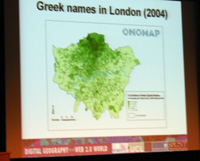
For example the next slide we're being shown illustrates a map of Greek names in London. This is interesting because these are ethnic/national groups not captured by the census.

UPDATE: Andrew Hudson-Smith gave a visually stunning presentation on what the CASA Centre was doing with virtual geography in games and second life. I had a brief chat with him afterwards. Here's what he had to say for himself


Add IPM Radio4's channel to your page

He also maintains an excellent blog (to which I'm now a subscriber) at Digital Urban

Rough Notes: 19th Feb

Chris Vallance|16:44 UK time, Tuesday, 19 February 2008

Comments

notepadsmall.jpg
You'll see that iPM is back in April, in the meantime I've been working on reports for PM and other bits of the network. I hope that you'll see this as an opportunity to suggest stories you'd like me to have a look at particularly if they have a tech/web/social media aspect. All ideas are very welcome drop me an email ipm {@} bbc.co.uk, or leave a comment in the blog.

Received an email about amateur photographers having problems taking photos in public because people wrongly believe it is an invasion of privacy/illegal. Is this a problem you've experienced? Be interested in learning if it's a more widespread issue.

With the difficulties faced by Wikileaks I'm wondering if whistleblowing on the web is getting harder. It used to be thought that the web was a paradise for leaking information, but is that still true?

I'm looking at whether access to the internet on mobile phones is spoiling pub quizzes. I'll be talking to a colleague who is a very serious quizzer, and another who has developed the unGoogleable quiz. Do you have a story of cheating in quizzes using the web. Drop me a line.

Apart from that all other plans are at a very early stage of development so please do send in your suggestions.

View our list of del.icio.us links to see other websites catching our attention:

Changes to our comments system

Jennifer Tracey|09:51 UK time, Tuesday, 19 February 2008

Comments

We’re moving across to a new comments system today that will hopefully be more stable than the old one. It’s proved to be reliable in handling all the traffic from the BBC's message boards like the Archers and communities such as 606. There may be some teething problems, so if you're having trouble commenting drop us an email us ipm [at] bbc.co.uk - thanks.

The new system has some differences, the main ones being that you’ll have to register with the BBC's Single Sign On system before you can post, and that the comments will be ordered with the latest comments at the top.

There’s help and FAQ pages for the new comments system but the Communities team at the BBC have written up some likely questions below.

How do I add a comment?
First you have to register to use the blog. Follow the 'create your membership' link, and click on the link in a verification email. Once registered, you simply fill in the box at the bottom of the page and submit your comment. Your first few comments will be checked by our moderators before they appear on the blog, but after that they’ll appear straight away.

Why am I having problems registering?
The most common problem when registering is entering the wrong email address or the verification email from the BBC ending up in your spam or junk mail folder. If you've checked these and you still can't post, contact the BBC Central Communities Team.

Why do we need to register before we can post a comment?
Registering helps protect the boards against spam and other abuse. Registering also allows you to track your comments, and once you've posted a few times your comments will appear on the site straight away, instead of having to wait for the moderators to check them first.

I already post on Have Your Say or The Messageboards - do I need a new account?
No, you can use your existing account. You’ll be prompted to accept the terms and conditions of the site before you post but that only takes a click.

What’s the difference between my member name and my nickname?
When you register for bbc.co.uk membership you will be asked to create a 'member name'. This acts as both your sign-in name and your default nickname. Member names must be unique so you might not get the one you want.
After registering, you can create a new 'nickname'. Your nickname is the name that appears above your messages. Nicknames don't need to be unique so you can have any name you want. We advise you to change your nickname at least once, as it increases the security of your account.

If you would like a different nickname, you can change it to anything you like, as long as it doesn't break the House Rules and still carry on using the same account.

Do I have to enter my password every time I comment?
No, you can tick the 'remember me' box when you sign into the site and your details will be remembered unless you sign out or delete the cookies from your computer. Don't do this on a shared computer in a library or office though, or other people may be able to access your account.

How do I complain about a comment?
If you see something that you believe breaks the House Rules of the blog, please alert the moderators by clicking on the 'complain about this post' link. The moderators will examine the comment you complained about to see if it breaks the house rules and take appropriate action.

The iPM blog is post-moderated so all comments will be checked by the moderators within a short time of them appearing on the site.

Please don't use the 'complain about this post' button if you disagree with someone else's views - you can post your own comments explaining why your view is different.

Read more about moderation

Why has my comment disappeared?
Please be patient - your comment is being checked by the moderators.


  • If there’s no problem with your comment it should reappear shortly. But please bear in mind the moderators will sometimes have to refer to other BBC staff or even the lawyers to check whether a post is ok.

  • Your first few posts will not appear on the blog immediately. This is because all comments by new members are pre-moderated, which means they need to be checked by a moderator before they appear. This may take a while (because the moderators read thousands of postings a day), so please come back later to see your comment on the blog and check the responses. After you have used the new system for a while, you become a trusted user and your posts appear immediately - as long as they don't break the House Rules.

  • If your message breaks our House Rules it will be removed permanently and you will be sent an email explaining why, along with a copy of your message.

Why do I have to wait before posting again?
There’s a three minute delay (sometimes called 'speedbumping') that forces you to wait between comments on the board - this is to discourage chat from derailing discussions and to cut down on short or one-word comments and spam. Although it can sometimes be frustrating, it's really not that long, so please be patient. The timer starts from when you submitted your last post and includes any time spent writing the next one, so if you want to fill the time, write a longer post.

Other questions
If you have a question about the new software that hasn't been answered above or in The Messageboards FAQs, please contact the BBC Central Communities Team via their feedback form.

Black, Gay and Arab: African bloggers and homosexuality

Post categories:

Chris Vallance|19:12 UK time, Monday, 18 February 2008

Comments

Andrew Heavens who blogs and reports from Khartoum has written a great piece about blogs by gay African writers. He starts with the Blackgayarab blog run by a Sudanese man living in the middle east, but encompasses a tour of the continent via blogs. A list of websites mentioned in the piece is available on Andew's excellent blog. In the audio below Andrew talks about what he learned in researching the piece, starting with Blackgayarab:


Add IPM Radio4's channel to your page

Botnets: your computer in the hands of organised crime

Post categories:

Chris Vallance|10:37 UK time, Monday, 18 February 2008

Comments

Botnets are arguably the pre-eminent source of internet crime, vast networks of hi-jacked "zombie" computers that rival some of the largest supercomputers in their aggregate power. Used to distribute spam, run phishing scams, attack websites, and host illegal content the truly frightening aspect of bot crime is that the footsoldiers used by the criminal gangs are the subverted PC's of ordinary folk like you and me.

Law enforcement agencies and cyber security experts are currently locked in an arms race with the criminals running the bot-networks. In this interview Steve Santorelli of Team Cymru (I like to think of them as a cybersecurity A-team - but a security thinktank might be more apt) talks about how the threat from botnet is evolving, how peer-to-peer botnets, very hard to take-down, are emerging and what we as individual computer users can and should do to stay safe on-line. The good news there is a bit of common sense about what you download, using firewall and anti-virus applications and regularly updating your computer's software can go a long way towards making sure you aren't inadvertently co-opted into a vast criminal network.


I'll be doing a piece on Botnets on PM today. I'd be interesting from anyone who's been a victim of this kind of attack. Send me a note to ipm [at] bbc.co.uk

UPDATE: Here's an interview with Shawn Henry, Deputy Assistant Director Cyber Division of the FBI who speaks about their fight against Botnets.


Add IPM Radio4's channel to your page

UPDATE II: For a British perspective on the issue I also spoke to Det.Constable Robert Burls of the Metropolitan Police's Computer Crime Unit about what British police were doing to fight botnets:


Add IPM Radio4's channel to your page

Times they are a-changin....on Tuesday 19 Feb

Jennifer Tracey|16:57 UK time, Friday, 15 February 2008

Comments

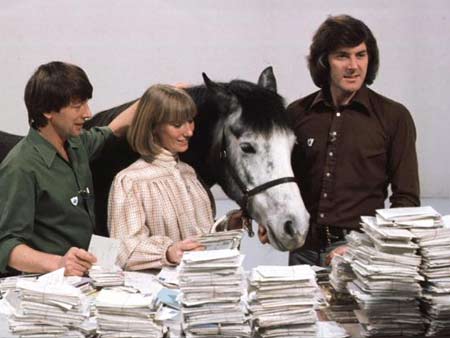
John Noakes, Lesley Judd and Peter Purves with Rags the pony, Blue Peter 1975

We really appreciate all the comments and feedback we receive about iPM, but we know that leaving comments on this blog is sometimes problematic - in particular the 502 error messages being thrown back and the page timing out without confirmation that your comment has been sent. So firstly, our apologies - and secondly, we’re changing our comments system on Tuesday 19 February to put an end (we hope) to any problems you may have had.

If you’re familiar with the PM Blog - it will work in the same way. It does mean you'll have to register before you can leave a comment, but once you’ve signed up, you can leave comments across the BBC blog network and messageboards.

If you’ve already signed up to the PM Blog or the Today programme or other BBC messageboards - you can use the same username and password.

There are help and FAQ pages for the comments system and we’ll add an explainer post with a permanent link in the right hand column when the system goes live which covers the main things you need to know. If you’ve got any queries, email us ipm [at] bbc.co.uk
Thanks
Jen

The Beagle Project

Post categories:

Chris Vallance|17:03 UK time, Tuesday, 12 February 2008

Comments

Happy Darwin Day. And to mark the 199th birthday of the great scientist we're taking a look at the Beagle Project a blog led campaign to raise funds to rebuild HMS Beagle and retrace Darwin's historic voyage. I've a piece on PM which has already stirred up controversy in which I talk to Peter McGrath and Karen James of The Beagle Project (and there's a longer interview with Peter here). And as a blog exclusive I spoken with Randal Keynes great-great grandson of Charles Darwin, and someone with a continuing interest in the Galapagos and The Voyage of The Beagle


As well as the Beagle Project, I've greatly enjoyed visiting the blog of Darwin and Captain FitzRoy's journals. Today for example Captain FitzRoy wrote: This night we had dry beautiful weather, the leaves and sticks on the ground crackling under our feet as we walked, while at the ship, only sixty miles distant, rain poured down incessantly.

ISP's to police piracy?

Post categories:

Chris Vallance|12:27 UK time, Tuesday, 12 February 2008

Comments

The Times leads today with news that "Internet Service Providers (ISP's) will be legally required to take action against users who access pirated material". The source is a leak of a Green Paper the Times has seen. From what's been reported of the proposals this seems to be the realisation of issues raised in the interview granted to us last year by Lord Triesman (then the minister with responsibility for intellectual property) You can listen to that interview and Cory Doctorow's rebuttal here

Piracy is obviously of great concern to content creators in film, music, games and books. In film, some recent US research suggests piracy is a problem the industry hasn't really figured out how to deal with yet. To get an overview of the recording industry's point of view you could listen to my earlier interview with the IFPI about Pirate Bay here.

The paper reports that plans include a "three strikes and you're out" scheme of sanctions: people identified as downloading content illegally will receive a warning first, suspension of net access second and termination of connection third. How the ISP's will track illegal downloading is unclear. The Internet Service Providers Association have said that data protection laws prevent them from looking at the content of information sent over their networks. And even if you did monitor data traffic, it's a puzzle how you would differentiate a legitimate download from an illegitimate. Would podcasters, film makers and bands who wish to allow people to share their content have to include some kind of digital watermark to avoid having their listeners identified as copyright thieves? What if a podcast has paid for an PRS podcast license? Could a digital watermark differentiate a legitmately purchased mp3 from an illegitimately downloaded one?

Mike Butcher writing in TechCrunch UK forsees serious problems: "Trying to legislate for billions of DRM-free files flying through the Net, attempting to work out which ones have been paid for and which are “filed-shared” is a recipe for legislative chaos. For instance, what happens if a college kid wants to send his mum the MP3s his band has been working on? How does the ISP work out this is non-DRM’d, non-copyrighted music? They email her a warning? She gets annoyed, cancels the ISP contract? Do Turkeys want to vote for Christmas? Will the courts be filled with crazy cases between ISPs and record companies? You bet."

Whatever the unresolved issues with this proposal it's easy to sympathise with "big budget" content creators. Five years ago I met with executives dealing with this issue at one of the big Hollywood studios. At the time bandwidth speeds meant downloading films was a minority sport, but they could clearly see the writing on the wall. How do you fund a 300million blockbuster if films are freely exchanged on-line? Years later no-one yet seems to have an answer.

News of 5th Cable break probably false

Post categories:

Chris Vallance|18:08 UK time, Wednesday, 6 February 2008

Comments

Internet services were disrupted in large parts of the Middle East and India following damage to undersea cables. Initial reports were of two cables being damaged, then a third, but when a forth cable experienced problems conspiracy theories began to fly: had terrorism extended to the depths of the sea? Was the US trying to cut of Iran's supply of data? Now there are reports of a 5th cable being affected. But Stephan Beckert, Research Director of TeleGeography thinks reports of a 5th break are erroneous and are probably based on a misunderstanding. He also says that reports of internet loss in Iran have been overstated. He explains this, and why he thinks accidents are still the most likely explanation for the cable breaks in the interview below:


And if four cables seems like a lot, well more have broken in the recent past:

In December 2006, seven of the eight Internet cables connected to Taiwan were damaged by an earthquake. Internet communications in much of Asia were disrupted for weeks.

BBC © 2014The BBC is not responsible for the content of external sites. Read more.

This page is best viewed in an up-to-date web browser with style sheets (CSS) enabled. While you will be able to view the content of this page in your current browser, you will not be able to get the full visual experience. Please consider upgrading your browser software or enabling style sheets (CSS) if you are able to do so.