
Friday Fun. Why the news needs Science Correspondents
Because otherwise you might get a presenter who says stuff like this.
With thanks to reddit.

Because otherwise you might get a presenter who says stuff like this.
With thanks to reddit.
 Earlier in the year we set up a webcam to follow the peregrine falcon family that nest on Fort Dunlop here in Birmingham. The aim to learn more about these birds as they spread into urban spaces.
In the end our falcon mum was totally clueless about raising a family and despite laying two eggs things ended badly.
Well now we've had a tip-off that although they abandoned the nest at Fort Dunlop our falcons went on to raise at least two and possibly three chicks nearby.
Next year we hope they'll perform for our cameras. To make sure you don't miss anything sign up for tweets from BBCFalcons on Twitter and we'll keep you posted.
So today I've been at Aston University talking to scientists about their work on cachexia. That's the name for the drastic weight loss experienced by half of cancer patients.
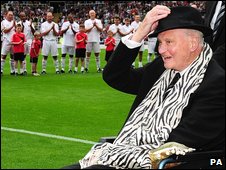 Even if you don't know someone who has been affected by cancer you will recognise the symptoms of cachexia. It is the most visible sign that people in the public eye like Sir Bobby Robson or Patrick Swayze are affected by the disease.
According to Professor Mike Tisdale the amount of weight patients lose and the speed they lose it is a pretty good guide to the length of time they can expect to live. For this reason he told me you won't find a set of bathroom scales in a hospice.
The good news is that the scientists at Aston have found a way to stop cachexia, at least in the lab. And an American drug company has given them the money to develop things further.
But the question I'm always asked (and indeed I always ask scientists) is how long will it take to turn promising scientific research into a drug for use in the real world?
Professor Tisdale explained that next they must conduct toxicology tests on the drug. First in the lab and then in human subjects. Then finally you can start clinical trials to see what sort of dose will be effective in cancer patients.
Of course you also have to recruit cancer patients for your trials which can be difficult.
In this case Professor Tisdale is guessing the whole process might take four years. But it could well be longer. So will this new research ever actually make it out of the lab?
Well Professor Tisdale and his team are confident and he has a formidable track record. He was part of the team of researchers at Aston who discovered brain tumour drug Methazolastone. That was way back in the 1980's and this year it achieved $1 billion in sales.
Update: Since I wrote this Sir Bobby Robson has passed away. You can find out more about his life and donate to his cancer charity here.
Jump to more content from this blog
 I'm David Gregory, BBC Science Correspondent for the West Midlands. My first law states: "Science is the answer." There is no second law. Feel free to drop me a line: david.gregory@bbc.co.uk.
 For the latest updates across BBC blogs,
visit the Blogs homepage.
You can stay up to date with Gregory's First Law via these feeds.
Gregory's First Law Feed(ATOM)
If you aren't sure what RSS is you'll find our beginner's guide to RSS useful.
Get the latest news, sport, weather, travel and features from your local area.

BBC © 2014The BBC is not responsible for the content of external sites. Read more.
This page is best viewed in an up-to-date web browser with style sheets (CSS) enabled. While you will be able to view the content of this page in your current browser, you will not be able to get the full visual experience. Please consider upgrading your browser software or enabling style sheets (CSS) if you are able to do so.
