

"We will never compromise our commitment to meet our fiscal rules"
On most other days, the fact that house prices are now down nearly 15% on a year ago (according to Nationwide's latest report) would be front page news. But the headlines are still dominated by the Ross-Brand debacle at the BBC.
The row, now something of a national obsession, has also obscured Chancellor Darling's administering of the last rites to the Gordon Brown fiscal rules. Last night, in a speech which left unanswered many important questions about government debt strategy, Mr Darling declared the old fiscal rules were no longer appropriate but didn't quite tell us what would replace them.
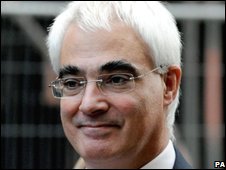 As Peter Riddell points out in The Times today, the Chancellor's lecture
glosses over the real debate: should the Government announce further tax and spending measures to boost the economy above what is happening anyway? Or should the main emphasis be on cutting interest rates?
Perhaps we'll get some answers in the pre-Budget Report, now expected mid-November, which of course we'll carry live in a Daily Politics special.
The opposition is now emphasising that Mr Brown never mentioned during the past 11 years that his much-trumpeted fiscal rules were only for the good years. Indeed, shadow chancellor George Osborne, now back to regular duty after his short life on the ocean waves with a Russian oligarch, has uncovered a Brown quote which emphasises that they were meant to be always and forever:
At all times - now and in the future - we will never compromise our commitment to meet our fiscal rules and disciplines.
We'll be looking at the political and economic implications of falling house prices at a time when unemployment is rising, consumer confidence is falling and home repossessions are soaring. Taken together, it is hardly surprising nobody is expecting much of a recovery soon.
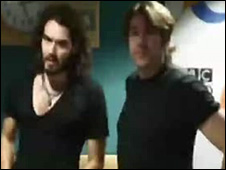 We'll also bring you the latest on the ongoing Brand-Ross row at the BBC. Russell Brand has resigned from his Radio 2 show, but Jonathan Ross has a lot more to lose: we'll probably find out today if the BBC regards his apology as enough.
The politicians are still wading in, treating the BBC as a national punchbag - critics say the whole issue could have been quickly closed down if BBC executives had acted more swiftly and decisively. Justice Secretary Jack Straw, always ready with a populist soundbite, is effectively calling for Mr Ross to be sacked. But should politicians be so vocal? Have they nothing better to do? Are they filling a vacuum created by BBC management's flat-footed response? We'll discuss all of the above today.
 We'll also be showing the last in our poll to find My Favo(u)rite President, with a profile of the incumbent George W. Bush. Hollywood director Oliver Stone has been setting forth his opinion in our latest film and we'll be talking to one of his fans, Charlie Woolf. Our polls close when the Americans go to the ballot boxes for that less important vote across the pond, so get over here and vote! vote! vote!.
 In support of comedy, we'll be picking some of the best comic sketches from the US campaign so far. And today, for the whole show, we'll be talking to the American comedian, Reginald D Hunter.
That's all on the Daily Politics at Noon on BBC2. If you don't tune in we'll get Russell Brand to call your answering machine! Let us know what you think about politics and the show using the comments box below.


Comments
Sign in or register to comment.