BBC Internet Blog

Archives for May 2008

bbc.co.uk Service Licence: Initial Feedback & Early Round-Up

Post categories:

Jem StoneJem Stone|13:38 UK time, Thursday, 29 May 2008

Update: Nick Reynolds has posted with more reactions here.

Obviously, the document we've been scouring most round our way today is the review of bbc.co.uk by the BBC Trust. I expect there to be further posts from my colleagues reacting to this in the next day or so. I'm only just getting through what seems to be at least a dozen lengthy PDFs of consultation, review and recommendations. The early press coverage, from what I can tell, has focused on only a small amount of what the Trust had to say about the site. So - if your printers can bear it - it's worth ploughing your way through it.

You can read the document in full, the terms of reference, and supporting evidence on the BBC Trust site.

Documents summarising the considerable amount of consultation with "institutional stakeholders", the BBC's Audience Councils and the BBC's submission itself are also published in full.

As ever, the fullest press coverage (three stories in as many hours earlier today) has been at The Guardian, which even extended to a gallery of past homepages. There's also a lengthy piece in Paid Content.

Blog coverage and Twitter comments are only starting to trickle in. Emily Bell and Patricia Hodgson went head-to-head on Today this morning but the audio for this will vanish into the ether in a few hours. [Update: the audio is now availabele here as an mp3]


Read this doc on Scribd: BBC Trust review of BBC.co.uk

Update: The BBC issued a statement in response to the report which is published over at the Press Office site.

Jem Stone is the Portfolio Exec, Social Media in the BBC's internet group.

Online Subtitles

Post categories:

Andrew Strachan|16:01 UK time, Friday, 23 May 2008

I'm Andrew Strachan and I'm responsible, within the Usability & Accessibility team, for the delivery of access services for the BBC iPlayer.

bbc subtitles logoSince joining the BBC in 2000 - as a hearing-impaired graduate myself - I've taken a personal interest in the research and development of a top quality subtitling service for our online content, through subtitling trials on both bbc.co.uk (Dec 2005 and Jan-Mar 2007) and the iMP Content Trial (Oct 2005-Mar 2006).

The principal objective behind this work is to make sure that the sensory impaired community is always included, and has the opportunity of an accessible and enjoyable video experience on bbc.co.uk.

I'd like to thank the users who have participated in those trials for their invaluable feedback which has helped us to shape the access services for iPlayer.

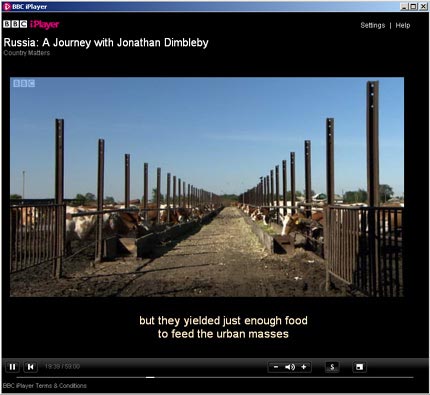
Subtitles are now widely available for many downloadable programmes on iPlayer: look out for "include optional subtitles" within the programme information page, and please see the iPlayer accessibility help site for more information on how to get the best subtitling experience.

iplayer_subtitles_russia.jpg

Currently we have been able to provide subtitles for downloadable, non-live "pre-recorded" programmes, through the development of a facility to repurpose pre-recorded broadcast subtitles (EBU-STL) files into the subtitling formats for different online media players. This development has been complicated because each media player currently has its own proprietary format for timed-text, such as Windows Media Player SAMI format, Real Player RealText format, and QuickTime Text format. Through our subtitling trials, we have gained experience in ensuring that we can deliver the same quality of subtitling output as for TV on each different media player, and the iPlayer download subtitles are the latest result of this work.

Unfortunately, some of you have experienced problems with the incorrect labelling of some programmes as having subtitles when they have not. We have identified this as bug in our current labelling system, which only happens when a programme is a repeat which does not have subtitles. We are in the process of fixing this and expect to have this fix go live in the next iPlayer release. We'll let you know when this happens.

Our next step is to ensure that subtitles can be delivered for the BBC Embedded Media Player (EMP), the new player which is being rolled out across bbc.co.uk to replace our old diversity of media players with a consistent, quality player.

The process of delivering subtitles for the Adobe Flash-based EMP has been made much simpler by the EMP team's choice to use the Timed Text open standard subtitling format from the W3C. This significant development will allow us to deliver one subtitle format for Flash video which can be made accessible on many different browsers and operating systems (including Apple Mac).

That's to come. In the meantime, we hope that you enjoy the subtitling service for iPlayer downloads.

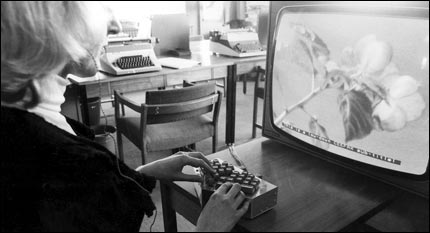
vintage subtitlng machine for Ceefax

Ceefax subtitling being prepared using a Palantype keyboard

Andrew Strachan is a Content Producer for BBC Future Media & Technology.

Interesting Stuff 2008-05-23

Post categories:

Nick ReynoldsNick Reynolds|11:35 UK time, Friday, 23 May 2008

"Downloading Top Gear Legally: Why I Joined the BBC" was the title of a presentation given by Anthony Rose at the Institution of Engineering & Technology on Tuesday of this week. There's video here.

There are lots of BBC gadgets on iGoogle and an iGoogle version of the BBC's Radio Player has just been added.

The BBC will be collaberating on a demo of Super High Vision (a system that combines combines 7680x4320 pixel images with 22.2 channel immersive audio) at IBC 2008 according to Screen Africa.com.

"Do not ghettoise": the BBC's Jonathan Hassell quoted in notes on a recent seminar on "Wrapping Up Inclusive New Media Design".

BBC Backstage is "Live from the Thinking Digital Conference". Ian Forrester is putting videos on blip tv and there's also some buzzword bingo.

And just to let you know that Alan and myself will both be on leave next week. The blog will be in the hands of Jem Stone.

Nick Reynolds is editor, BBC Internet blog.

Interesting Stuff 2008-05-22

Post categories:

Nick ReynoldsNick Reynolds|10:16 UK time, Thursday, 22 May 2008

Ashley Highfield was part of a panel discussion on "The Future of Online Video" at Google Zeitgeist earlier this week. A video of the discussion has now been posted on YouTube:

"Boys and girls stay in to play on BBC's virtual island Adventure Rock": a feature in The Times.

"BBC's Today Programme shutters message board" claims The Register.

Multimedia codecs are highly proprietary and suffer from serious patent-encumbrance issues that largely preclude open source implementations. Car manufacturers will still have to license those codecs from third parties in order to support the audio and video formats that are widely used by consumers. Major players in the automotive industry could potentially combat this issue by encouraging the content industry to move towards unencumbered codecs like BBC's Dirac

[I think I understand this one -Ed] from an ars technica article about computers in cars ("Intel wants to pimp your ride with prodigious penguin power").

"BBC iPlayer use grew 22% in April" from Digital Spy. Broadcast magazine has a list of the top twenty most watched iPlayer programmes in April.

And there's lots of blogs talking about the BBC's Sound Index and a discussion on the Backstage mailing list.

Nick Reynolds is editor, BBC Internet blog.

Interesting Stuff 2008-05-21

Post categories:

Alan Connor|14:41 UK time, Wednesday, 21 May 2008

sound_index_lozenge.PNGMike Butcher follows up yesterday's post on TechCrunch UK about BBC Switch's Sound Index with a call to free the data:

So what what needs to happen now is that the BBC needs to release some of this data, perhaps on a platform, so that UK startups like Songkick can incorporate it into their service.


Jemima Kiss has a piece in The Guardian about take-up of BBC iPlayer:

Research published yesterday by video technology firm Redback Networks confirmed the UK's appetite for "time-shifted" video content, with 57% of the UK's web users watching at least 10 hours of on-demand or pre-recorded TV each week.


bloom_banner.png

Aled Parry has an entry in his Tumblelog about the sustainability site BBC Bloom, ending with the perennial question:

I'm fascinated with the BBC new online strategy, gone have the days of text only / 100% accessible websites? (but why is it in 'beta'?)

--although Bloom does, of course, have a vanilla HTML version that should be fully accessible.


Charlie Beckett of POLIS ("a joint initiative from LSE and the London College of Communication") writes about BBC News discussing its mistakes on our sister blog The Editors:

The way the BBC responded with a bit of humility and openess to their sins suggests they have learnt this lesson. Judging by the viewer feedback, it's appreciated


alan_sugar.jpgAnd, as they say, finally, The Daily Mail reports on a solicitor who apparently faces a £4,900 mobile bill after going "off contract" by downloading audio/visual content:

She wrongly assumed that the tariff included downloading programmes while abroad. Her internet provider actually charges £4.25 per megabyte for the service.
It means a show like The Apprentice - which requires a 600 megabyte file to download - would cost £2,550.

[PaceSteve Farr, this Interesting Stuff post is maintaining the naming convention previously used, but this is under discussion.]

Alan Connor is co-editor, BBC Internet Blog.

From Barley To Barlesque

Post categories:

Mat HampsonMat Hampson|19:00 UK time, Tuesday, 20 May 2008

Feature from Private Eye's Birtspeak

Hi - I'm Mat Hampson, the lead developer on a BBC project called Barlesque. (I know, I know: odd name. More about that later.)

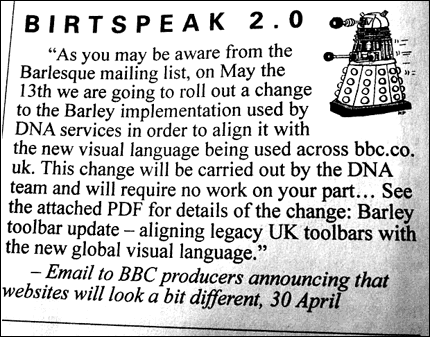
This week, we've found the project featured in Private Eye's Birtspeak 2.0 column [Shurely shome mishtake - ed] which, in case you're not familiar with it, is the regular column where Private Eye casts its satirical spotlight on a jargon-filled missive or announcement from the BBC.

Having read the Eye for years, being on the receiving end has been fun. Aside from impressing our mums by appearing in the national press, it's also demonstrated again how a paragraph that makes perfect sense to those of us making the product can look like gobbledegook to everyone else. Anyway, we thought it might be useful to offer up a translation, and perhaps explain a little bit about Barlesque along the way.

First, the email snippet in question:

As you may be aware from the Barlesque mailing list, on May the 13th we are going to roll out a change to the Barley implementation used by DNA services in order to align it with the new global visual language being used across bbc.co.uk. This change will be carried out by the DNA team and will require no work on your part... See the attached PDF for details of the change ['Barley toolbar update - aligning legacy UK toolbars with the new visual language standard'].

All clear? Well, we think so...

explore the bbcBarlesque is bbc.co.uk's new web page layout system. Without getting too technical and boring everyone to death (I'll save that for a post in our forthcoming developer blog), that means the masthead at the top, the footer at the bottom and some of the underlying setup of every new page appearing on the site, for example on the new Doctor Who site.
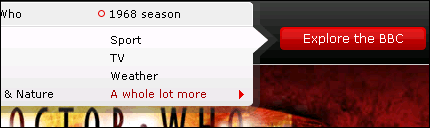
explore the bbc expanded

Barlesque replaces a system called Barley* (hence is Barley-esque - aha), which was designed and built just after the millennium and is used on hundreds of sites, including this one. Barley was a great product for its time, but it uses some really outdated technology. (IE3 support? Table layouts? Nowadays that's comparable to using wattle and daub to build a house.)

bbc_toolbar_progression.png

Another thing Barley does is use technological restriction to enforce consistency of design [Still with us? - Ed]: the page content is nestled inside a big HTML table with a limited set of widths, the navigation has a particular structure to its HTML, and so on. One of the main lessons learned since (as taught to me by Paul Hammond, its original lead developer) is that if you try to restrict designs like this, they will find new and unintended ways round your roadblocks - "Nature finds a way" as Jurassic Park so nearly says.

And that's exactly what happened to Barley: In updating it last week (to make it more visually consistent with Barlesque), we've counted literally dozens of variants and half-copies of Barley that sites have been forced to make over the years (including one on our DNA platform** to which the Birtspeak column refers).

This causes a huge maintenance headache for us techies, so when the UXD (User Experience and Design) team devised a new "visual language" for bbc.co.uk (as discussed when the News and Sport redesign launched), we set out to build Barlesque to be as simple and flexible as possible in its implementation.

We launched the first version two months ago, and, while we're still improving it, it already includes:


  • Valid, semanticXHTML and CSS - so it contains less code and is more accessible than its predecessor.

  • Support for many languages, useful behind the scenes technical tools and visual customisations. (Teal-coloured navigation? No problem. White footer? Sure.) That said, it also has...

  • A shallow learning curve for developers, since it works off-the-shelf, with none of the display configuration set up.

  • Easy implementation for Indies (the source of many of the Barley variants) since it only requires one line adding to the Apache configuration to get going.

  • Finally, the ability to deliver other pan-bbc.co.uk systems, such as user authentication, and surveys, which in turn makes them easier to implement and maintain too.

Bundle this all together, and we think that Barlesque effectively removes the need for sites to make their own copies of the layout system. That means greater technical and visual consistency, quicker updates, and best of all, frees up precious developer time to work on more exciting things!

At least, that's the plan - watch this space.

*And as for Barley, that was named after a character from Charlie Brooker's NSFW spoof listings magazine TV Go Home, which gave rise to a Channel 4 sitcom called... Nathan Barley.

**DNA is the system we use to power our messageboards and several of the BBC's other community-based sites like H2G2; the names DNA and H2G2 are derived from a British writer and one of his creations.

Mat Hampson is Senior Client Side Developer, BBC FM&T Intrernet Group.

Kermode Uncut Video Blog

Post categories:

Nick CohenNick Cohen|13:39 UK time, Tuesday, 20 May 2008

mark_kermode.jpgA number of bloggers have picked up on our recently launched video blog by film critic Mark Kernode, so I thought I'd just follow up on a couple of points raised and ask you all what you think about the project.

For those who haven't seen it yet, Kermode Uncut is our first attempt at doing a true video blog (or "vlog", if you must). For the BBC, this is partly about experimenting with a powerful new (to us) format and partly about giving Mark a blogging outlet that best suits his style.

As he himself puts it:

I've opted to film a regular blog rather than write because a) it's more exciting and b) let's face it, it's easier for me. I'll be filing these video blogs in my usual grumpy fashion, so don't expect a lot of smiling, or good natured bonhomie. But it's my way of letting off steam, and if you enjoy it too then that's an added bonus.

Simon Dickson at Puffbox (thanks for your generous comments, Simon) rightly points out that it's Mark himself that makes this format work. It feels to me that you definitely need someone with Mark's combination of personality and natural ease in front of the camera to make the video-led approach to blogging work. It won't be right for everyone, by any means.

Ryan Morrison at Up Your Ego raises the question of whether it will be possible to update the video content very regularly. The answer is: yes, absolutely! Mark will be posting a new video at least once a week - the idea being that if you come back on a weekly basis, you'll always get something new. (FYI: the plan is to publish in time for Friday lunchtime - you heard it here first...)

It's obviously new territory for us, so we'd be very keen to hear any further comments or feedback.

See also: our own Dan Taylor talks about the project on his personal blog.

Nick Cohen is a Multiplatform Commissioning Executive.

Interesting Stuff 2008-05-20

Post categories:

Alan Connor|11:17 UK time, Tuesday, 20 May 2008

At the Ofcom PSB Review blog, Peter Phillips gives a report on the Westminster Media Forum's seminar on public service broadcasting:

Direct funding, indirect benefits like access to spectrum, and levies on industry can and do already work as ways of funding public service broadcasting around the world.


profanity_foi.pngRichard Pope used MySociety's new Freedom Of Information request service What Do They Know? to ask for

1) a copy of the BBC's profanity list which rates the degree of offense of swear words and derogatory terms and is used to inform the BBC's editorial decisions.

2) the list of words banned from the BBC's online communities and forums.

--but did not get the list of cuss words he'd hoped for.


George Ornboblogs at Shape Shed about Jonathan Hassell's recent presentation at the University Of East London on making websites more accessible for users with intellectual disabilities.


sound_index_banner.png

Michael Arringtonblogs at TechCrunch UK on BBC Switch's Sound Index (currently topped by Coldplay).


olinda175.pngFinally, more on Olinda. Aside from many responses in many foreign languages that are beyond the understanding of Internet Blog, Tristan Ferne of this parish asks whether this social radio is "spime". Mark Hopkins at Mashable calls Olinda a "Lego mindstorm looking device" and Conner Flynn at SlipperyBrick agrees. Ryan Jarrett likes everything except the "wipe-clean spaces for writing your friends' names or sticking in a picture"; Tim Regan says "it bothers me a lot that Last FM misses all my BBC iPlayer listening... Enter Olinda" and DaveX at Startling Moniker opines:

as an American, the whole BBC thing is a bit mystifying to me- but the Olinda is surely one of the more interesting, positive aspects that come from having such a powerful public broadcaster. Let's be real, the best thing PBS ever offered was a tote bag.

Alan Connor is co-editor, BBC Internet Blog.

Interesting Stuff 2008-05-19

Post categories:

Alan Connor|15:49 UK time, Monday, 19 May 2008

BBC Chairman Michael Lyons tells Media Guardian his thoughts about bbc.co.uk as the online service licence review approaches:

We reach some pretty stiff conclusions about how that service needs to be managed more efficiently in the future

Tech news blog Quick Online Tips discusses "The BBC Effect" - that is, what happens to your traffic when you're featured on Click.

There's more on those broadcasters' homepages which are seemingly "inspired" by the BBC's - the Beeb's Ryan Morrison has an animation comparing the homepages from Hungary's RTL, Croatia's HRT and the BBC and at the New Nivas Blog, there's a round-up of more responses and some NSFW language as Seven agrees with a colleague:

This is the embarrassment of the decade for the Croatian web community.

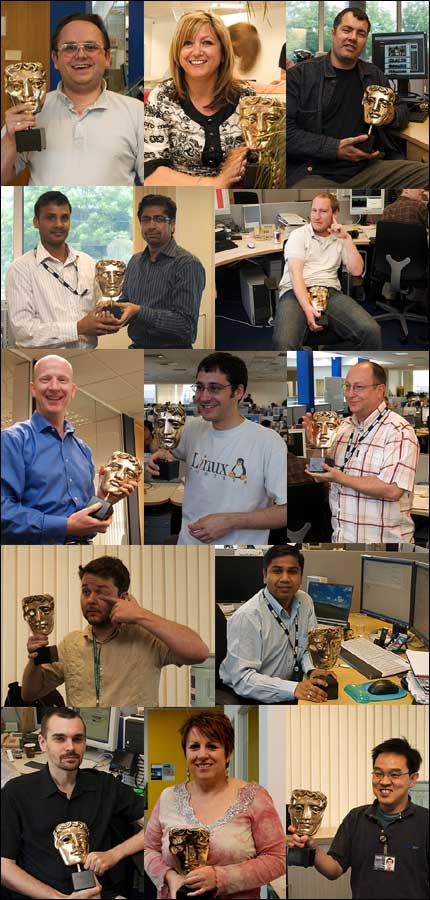
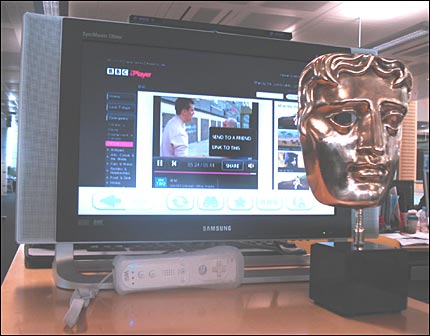
Finally, over at Flickr, Matthew Thompson has posted images of the day the BAFTA won by BBC iPlayer took a trip to the Internet Operations team in Maidenhead.

iplayer_bafta_maidenhead.jpg

You can see all the photos in this Flickr set.

Alan Connor is co-editor, BBC Internet Blog.

Interesting Stuff 16.05.2008

Post categories:

Nick ReynoldsNick Reynolds|12:02 UK time, Friday, 16 May 2008
"Croatian state broadcaster nicks BBC web site design" from The Inquirer.

"We're very new to this... It is still bedding in and we don't know how that will take shape." The BBC's Pete Clifton quoted in The Guardian about BBC.com.

Box UK has been writing a series of blog posts about their work coming out of the BBC's Innovation Labs.

microformatsBBC Radio Labs blog needs your help with microformats and accessibility.

If you crave technical and coding details, check out two discussions going on the BBC Backstage Mailing list: one about streaming and one about the BBC's blogs platform.

Nick Reynolds is editor, BBC Internet blog

Boating Glory

Post categories:

Richard Sambrook|10:14 UK time, Thursday, 15 May 2008
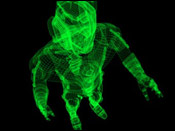
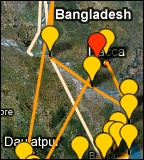
bangladesh_boat.pngI'm delighted to see the Bangladesh Boat Project amongst the BBC World Service prizewinners at the Sony awards. This fantastic journey won the newly-created Multiplatform Radio Award. Here, my colleague Ben Sutherland, who was onboard the boat itself, will describe its success in more detail.


Read more and comment
at the BBC News Editors Blog.

Richard Sambrook is director, Global News.

Interesting Stuff 14.05.08

Post categories:

Nick ReynoldsNick Reynolds|11:15 UK time, Wednesday, 14 May 2008
adiposeThere's been a flurry of blog posts, (including the Open Rights Group) and some press stories about Doctor Who knitting patterns.

BBC Worldwide (the commercial arm of the BBC) is quoted in this BBC news story. There's also a comment from BBC Worldwide on the Open Rights Group blog today.

The BBC iPlayer was mentioned in yesterday's Home of Commons Public Accounts Committee report. (From Media Guardian)

And while we're on the subject:

"The BBC, for its part, will insist that the kind of obsessive geekery that leads to iPlayer cracking is very much at the margins of iPlayer use and they are right" says Jemima Kiss in the Guardian.

The BBC's Olinda project is mentioned in this thoughful blog post from Tim Zen's Blog Of Sparseness.

"The killer argument for Freesat, and the one that makes it intellectually respectable, is the high definition (HD) offering" claims Raymond Snoddy in The Independent.

Nick Reynolds is editor, BBC Internet Blog.

XTech: BBC Presentations

Post categories:

Nick ReynoldsNick Reynolds|10:46 UK time, Wednesday, 14 May 2008

Tom Scott has already written a round-up of this year's XTech. But if you are hungry for more, over on BBC Radio Labs he's gone into detail about his particular presentation "Helping machines play with programmes".

This is part of the ongoing work on the BBC's /programmes pages. Here's an introduction from Sophie Walpole from last year.

Here's Tom's presentation:

News image


Below is Brendan Quinn and Ben Smith's XTech presntation on BBC Tech Refresh and Identity ("Here's one we made earlier"):


BBC Backstage's Ian Forrester has published a selection of videos from XTech at cubicgarden.blip.tv.

Nick Reynolds is editor, BBC Internet Blog.

Pic Of The Day: Archive

Post categories:

Alan Connor|14:44 UK time, Tuesday, 13 May 2008
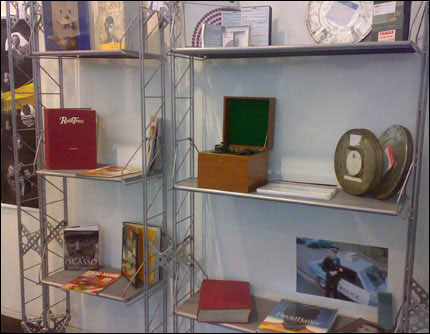
information and archives open day

Next door in the Media Centre, BBC Information & Archives is holding an open day.

Which bits of the brief of the BBC Internet Blog does this concern? The answer is: pretty much everything. From the Digital Media Initiative, through /programmes and the legacy of our website to the forthcoming online service licence review, the work of I&A is only going to become more and more important - especially as material held in canisters and ledgers like those above is digitised. And approaches like the Creative Archive point the way for archive use outside as well as inside the BBC.

This is the day in I&A's own words:

You'll walk away understanding how I&A , working with Future Media, developed the Open Archive, how vital they are assisting with the programme making process and the small task of digitising the few thousand hours of material in the archive!... and there wont be a speck of dust in sight.

[...]

Dusty old archives??? not a chance!

These guidelines put it more stiffly:

Why we keep BBC media content:
  • Research value - as a source of information
  • Re-use value - repeats, re-versioning and re-use of extracts (including use by Worldwide)
  • Legal requirement
  • Business requirement (core records)
  • Historical/heritage requirement
  • Charter requirement

There are more pictures of the exhibition (including a Dalek) in our Flickr account.

Alan Connor is co-editor, BBC Internet Blog.

Pic Of The Day: iPlayer Bafta

Post categories:

Alan Connor|16:45 UK time, Monday, 12 May 2008
bafta_iplayer.jpg

Forgive the self-backslap.

The building is today dotted with the masks awarded by Bafta, which have an appealing glint in the May sunshine. As you may have already heard, the BBC iPlayer won in the category Interactive Innovation - Service / Platform against stiff competition from Bebo Open Media Platform, KateModern and Channel 4's Big Art Mob. Three of these satisfyingly heavy gongs were picked up by Anthony Rose, Ian Hunter and Internet Controller Tony Ageh.

Kudos also, in two senses of the word, to Spooks, winner of Interactive Innovation - Content.


Alan Connor is co-editor, BBC Internet Blog.

Higher Quality Podcasts

Post categories:

Chris KimberChris Kimber|12:36 UK time, Monday, 12 May 2008

Yes, literally.

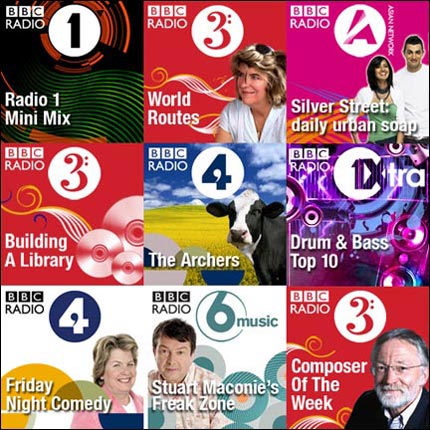
We have recently increased the sound quality of our music and drama podcasts from 64kbps to 128kbps.

When we launched the podcast service in 2007, we had only speech-based podcasts, and we felt that 64kbps mono was a nice compromise between sound quality and download time/bandwidth usage. Following deals with the royalties collection organisations in the UK (PPL and PRS/MCPS Alliance), we started to offer podcasts containing short clips (30secs) of clean music [more detail at Radio Labs] - you can browse these at the podcast directory.

higher_quality_podcasts.jpg

We've now had a rethink about what these music-based podcasts sound like (and some of our drama and comedy podcasts which contain background music), and have decided that 128kbps stereo would better suit this type of content. So you can now enjoy the Radio 1 Mini Mix, 1Xtra Drum and Bass Top 10 and Stuart Maconie's Freak Zone - or any of the 32 music podcasts - in decent-sounding stereo. The same goes for The Archers, Silver Street and Friday Night Comedy from Radio 4.

I'd be interested to know what people think of this - has it made a difference?

That's not all. We have also introduced a number of new podcasts taken from Radio 3 output since the initial launch. So you can now subscribe to CD Review - Building a Library, Composer Of The Week and World Routes, all available - among other Radio 3 podcasts - here.

We've just conducted a review of our podcasts which included audience research, an internal quality review, and an external (and therefore possibly more objective) review of both editorial and technical standards. In the main, the results were positive, and where they weren't, we are working hard to improve things - particularly around inconsistent audio levels. The good news is that this will soon mean more choice for podcast lovers, as the total number we offer is likely to rise.

In case you're wondering, we are currently serving about 16 million downloads per month across the entire range. This is fairly impressive, but I can't help thinking that figure is just going to go up as more and more people discover the joy of having high-quality audio snacks on their MP3 player or phone.

Here's my personal list of favourite BBC podcasts:

  • Mark Kermode & Simon Mayo's Film Reviews
  • Adam & Joe
  • Zane Lowe's Hottest Records
  • iPM
  • Jazz Library
  • 1Xtra Hip Hop Top 10
  • Jonathan Ross

What are your favourites?

Chris Kimber is Managing Editor, BBC Audio & Music Interactive. Photo of Chris by Ian Fenn.

XTech 2008

Post categories:

Tom Scott|12:07 UK time, Monday, 12 May 2008
xtech2008logo.pngLast week, Dublin saw a gathering of software engineers, information architects and technologists to discuss The Web On The Move at the annual XTech conference.

For years we have been developing and promoting open data standards, enabling data portability. Recent developments have led to web-wide programming APIs and virtualization. It's no longer just our data on the move, it's our applications and even our servers too.

A few of us were there to talk about our development of the programme ontology, the upcoming BBC technology refresh and the new Identity framework, and APML and the attention economy.

xtech_brendan_quinn.jpg

Image of Brendan Quinn by Gavin Bell

As you might expect, there's a real sense that we are at a tipping point - a sense that the technologies are starting to enable a new set of opportunities. But this isn't just wishful thinking - there are more companies adopting the underlying technologies which enable data sharing and portability.

openid_logo.pngAs David Recordon of Six Apart noted in Wednesday morning's plenary, open software and hardware have become hip and have given small groups of developers the chance to build interesting web apps - and, more importantly, the chance to get them adopted. This is a new wave of web companies which expose their data via APIs and consume others' APIs. And what is interesting about these companies is that they are converging on common standards - in particular, OAuth and OpenID.

oauth_logo.pngOAuth is a way to share abstract information. It allows you to authorise third party applications and rights over specific features in other applications.

So, for example, you can authorise Dopplr (a service that lets you share travel plans with your friends) to find other Dopplr users within your GMail email account without having to give Dopplr your email address and password. (Giving your password to other people or services is, by the way, a really bad idea.)

And speaking of OAuth, it was great to hear Kellan announce that from June 1st, Flickr will be supporting OAuth alongside the existing Flickr Authentication API. I think that this is really going to be the year we see large-scale adoption of OAuth, which is a good thing: after all, there really is nothing not to like.

xmpp.pngThe other technology that has quite a buzz about it is XMPP, a messaging and presence protocol. Wednesday afternoon saw Matt, Rabble and Seth stand in for Blaine to run a panel session answering questions about XMPP.

Parts of the web are becoming more and more about real-time conversation - see the rise of Twitter and the recent release of instant messaging in Facebook and presence services like Fire Eagle and Plazes. http isn't a great solution to deliver this kind of real-time data. It's not great because it's very inefficient - to keep up to date, a client application needs to poll the server every few seconds to check whether there's an update and the server needs to deal with this request, even if there is no update. But it needs to work this way round, because http can't push or broadcast information. XMPP can, because it can notify all of the clients that have subscribed to the XMPP server of the update.

Here at the BBC, Matt Wood has been playing around with XMPP, exposing EPG data via XMPP:

At the start of every radio broadcast I'm publishing metadata about that show to its station's node, wrapped in an Atom Entry. For your Linked Data entertainment it's also serialised as Turtle RDF conforming to the Programmes Ontology.

xtech08_rattle.jpg

Image: "Rob Lee on Using socially authored content to provide new routes through existing content archives" by Ian Forrester

A final thought: it's also nice to hear about organisations that are exposing their data in machine-readable formats. In addition to our own work on exposing BBC programme metadata as XML, YAML, JSON and RDF, Jeni Tennison from the UK's Stationary Office presented their work to add RDFa to the London Gazette.

BBC HD TV: Feedback

Post categories:

Seetha KumarSeetha Kumar|11:02 UK time, Monday, 12 May 2008

logo_bbc_hd.pngI'm delighted that my post has struck a chord. You raised a range of issues: listings, simulcasting, more programmes and more HD channels, but there was a common theme. More is wanted and that, for me, is encouraging.

JdNthLdnN9 and trevorjharris want to know whether Top Gear and Formula One will make it on to BBC HD.

top_gear_polar_adventure.jpg

We showed Top Gear's Polar Challenge in HD; let me know if you caught it. And of course, I'd love to show the series. Who wouldn't? Our team has discussed this and we're talking to Top Gear to understand the specific production challenges. Regarding F1, we hope that this will be available in HD as soon as possible within our new contract, but this depends on demand from other international broadcasters as well as from us.

HD production technology has moved on a long way, but it's frustrating that there still aren't small and inexpensive lightweight HD cameras available. HD, as you may know, involves changes at every level of the production and broadcast chain and, unfortunately, not every stage is developing at the same rate, which can slow the pace. Andy's post gives some insight into some of the challenges we faced and continually face.

Moving a range of ambitious and innovative programmes to HD unearths different issues. Our team has built up knowledge and expertise and we do what we can to find solutions. The myths do not help and debunking them is a must, followed by training and sharing lessons learned.

We have come a long way. This is why we get asked to talk to colleagues across Europe about what we've achieved and how we went about it. On the continent, lack of HD content is a very big issue and our range of titles draws a respectful intake of breath.

cgi_cyberman_classic.jpgDoctor Who is a production that dcacooper talks about. Here, the issue is CGI. It is currently expensive, complicated and time-consuming. We'll get back to you as and when the picture changes.

Michaelporter is right: our listings on the website show just two days' worth. This, I promise, is temporary: we're working on publishing the seven day schedule. We're moving from a legacy to a new system and I expect it to be all sorted by the end of May, at which point I hope you'll let me know what you think. We're talking to the listings magazines and will send on your thoughts to the Radio Times. We met them recently and I know that viewer feedback is important to them.

"Start small and build strong" is my motto, so perhaps next time, I can talk about why we have one BBC HD channel, and not the four that Ianptv wanted.

Seetha Kumar is Head of HDTV, BBC Vision.

Radio 1's Big Weekend

Post categories:

Ben Chapman|16:00 UK time, Friday, 9 May 2008

Well, the sun is out and that's a good start when it comes to festivals... particularly free festivals.

Radio 1 is counting down to its biggest event of the year - indeed, the biggest free festival in Europe.

I currently feel as though I am at in the epicentre of the storm - although apparently everyone at Radio 1 feels like that.

I'm feeling it particularly keenly. It's my first big gig in this job and the team I am surrounded by is made of seasoned professionals. I am the Interactive Editor for 1Xtra and Radio 1. The team has a track record of delivering innovation around this event across digital platforms - each year we aim to build on the last, and last year's Big Weekend is up for a Sony, so no pressure(!)

The 2007 event was packed full of innovation - an ARG (Augmented Reality Game) produced by Hugh Garry, which saw Radio 1 create a secret game within its broadcast content, across the web and the real world that lured audiences into a game which culminated at the event.

This year Huey has pushed ARG in a different direction offering a consolation prize on the "email we hate to send" telling people that they have not got tickets. It's called Band In Your Hand and uses technology developed by T-Immersion - it has to be seen to be believed.

[Update 2245: Hugh Garry has written about Band In The Hand in detail at the BBC Radio Labs blog.]

Radio 1 and 1Xtra focus on what our audience expect to hear and see in digital spaces. We've had the opportunity to partner with Microsoft to use their Deep Zoom technology (formerly known as Sea Dragon) - it will let us manage the massive amount of images from the weekend and allow our audience to zoom in and out of them all and really zoom in on the detail.

I feel like we are scratching the surface this year. Deep Zoom feels a bit like Google Earth in its application and the mind boggles when you start to mash the two - images with great data sets, tied to video/ audio / maps/ filters - lots of great ideas are bubbling up around festivals and elements of our programming at Radio 1.

1bigweekend.pngThe festival presents us with a massive amount of digital opportunities. We exploit everything we can using all available technology. Anything to get the right content to the right audience at the right time.

Press red on Freeview and we offer you more choices of music performance than last year with multiscreen, go online and watch the performances and experiences of our DJs or... don't come to our site and we'll find ways to give content via your preferred social networks.

Your mobile will offer Twitter feeds, audio downloads, photos, blogs... actually, you know what? I'd better get back to it.

Ben Chapman is Interactive Editor, Radio 1. BBC Audio & Music.

BBCi On Freesat

Post categories:

Andrew BowdenAndrew Bowden|06:30 UK time, Friday, 9 May 2008

So you've got to get as much of the BBCi service completed as possible...
...it needs to be ready for an unknown date in Spring 2008...
...the hardware it needs to run on is just in the specification stage...
...and it's a highly important project that lots of people are watching.

Well, the job of helping to launch the BBC's interactive TV services on the new Freesat platform wasn't sold to me in quite those terms eight months ago (although I think the term "exciting challenge" was used somewhere...).

But those words do sum up the reality of building BBCi on the first new digital TV platform in seven years.

As Senior Producer, working within the FM&T TV Platforms team, I realised the scale of the task in hand, but with the stirring words of Managing Editor, John Denton, ringing in my ears (maybe it was John who said "exciting challenge"?), the team got on with facing the many challenges ahead.

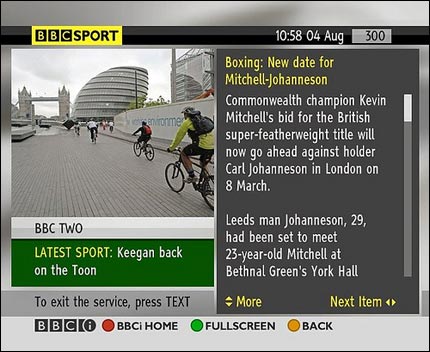
One of the biggest was improving the user experience. BBCi has grown a lot since it first became available to OnDigital users nine years ago. The full service covers a range of text- and video-based services - from reading the news headlines for your area through to choosing your court at Wimbledon - and it now reaches 11 million viewers a week. With Freesat offering HD and more and more people buying big screen TVs, we needed to make sure the new service looked its best.

freesat_bbci_sport.jpg

Not surprisingly, we weren't able to build everything for Freesat in the little time we had available. If you own a Freesat set-top box and press red on a BBC channel you will notice that things are a little cut down. The service consists of News, Sport, Entertainment, Business and Community News. The Weather service will be available mid-May.

An enormous amount of work has gone on behind the scenes just to get the basic service working.

Read the rest of this entry

Subtitles & Signing Advances On BBC iPlayer

Post categories:

Jonathan Hassell|12:19 UK time, Thursday, 8 May 2008

Yesterday, BBC Director General Mark Thompson and the RNID held a reception at the House of Commons to celebrate 100% subtitling of programmes across the main BBC TV channels.

So, today's a good day for me to post an update to my previous blog post, looking at the progress we have made on providing subtitles and signed content for BBC iPlayer.

So what's changed?

Firstly, subtitles are now available for many iPlayer programme downloads, making iPlayer one of the only IPTV services in the world to include subtitles.

It is now easy to find these programmes - look out for "Include optional subtitles" on iPlayer programme information pages and "Subtitles available" in the iPlayer Download Manager. And to get the best subtitles experience, you may need to update your version of the iPlayer Download Manager - see here for more details.

So why is this not 100%?

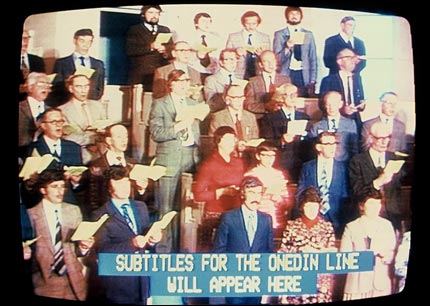
Vintage Ceefax screenshot of subtitles. Taken with conventional stills camera mounted in front of TV screen. Scans from transparency. Taken between 1978 and 1983.

It's a technology thing. We're currently concentrating on the delivery of subtitles for pre-recorded TV output, and have the technology and production processes in place to make this work. Our priority is to ensure that we deliver the correct subtitles for each downloadable programme as well as delivering the best viewing experience for the audience.

Going forwards, next on the roadmap is adding subtitles to iPlayer streams, which is something we're working hard on and hope to have ready some time in June or July.

After that we'll be looking at the possibility of making subtitles available for iPlayer on other platforms, such as the Wii or iPhone. We'll also be looking at the possibility of providing subtitles for those programmes which use live subtitles or those time-sensitive programmes which tend to change minutes before transmission. That's a whole new challenge.

I'll let you know how we fare.

Moving on to signing: in March, we added a dedicated Sign Zone area to iPlayer, allowing one-click access to all signed programmes. This means iPlayer has enabled the BBC to provide what many of our British Sign Language users have regularly asked us for - access to a directory of recent BBC signed programmes, and the ability to watch those programmes at a time which is convenient to them. The content is available in both streamed and download forms. It's even available on the iPhone.

We hope that the BSL community welcomes this move, and is now able to better access the BBC's Signed programmes.

We'd love to hear your feedback on subtitles or signed programmes on iPlayer, so please send any comments through to the BBC Usability & Accessibility Team.

Jonathan Hassell is Acting Head of Audience Experience & Usability, BBC Future Media & Technology.

Olinda: A New Radio

Post categories:

Tristan Ferne|17:10 UK time, Wednesday, 7 May 2008

olinda

Olinda is a new radio that has been built for BBC Audio & Music Interactive. It includes innovative features like modularity and social networking in a physical device. But we normally build websites and other digital media - so why would we want to build a new radio? To actually have a device in the physical world? These are the three reasons I give...

Read more and comment at BBC Radio Labs blog.

Tristan Ferne is Senior Development Producer, R&D, FM&T for BBC Audio & Music Interactive.

How To Start An HD Channel From Scratch

Post categories:

Andy QuestedAndy Quested|12:04 UK time, Wednesday, 7 May 2008

It's been a mad mad time for High Definition TV over the last two years!

At the start of May 2006, there was no UK HD and by the World Cup two months later, BSkyB and BBC HD channels were up and running. Now there are 18 HD channels in the UK, with Freesat offering two free-to-air HD Channels with no need for a subscription.

Now I think the time is right to talk about the history of the BBC HD channel (technically, that is) by winding back to 2005 and sharing some of the stories of the unsung heroes who put together the technology. For anyone who wants to know more about the nuts and bolts of the HD standards have a look at the EBU document Tech 329E. I can recommend it as bedtime reading!

hd_setup.png

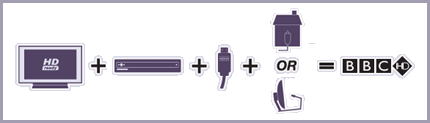
At the end of 2005, the BBC had just announced its intention to run an HD trial on the three broadcast platforms which was an interesting technical challenge to say the least. Sky was working on its HD satellite set-top box and Virgin had its V+ box option, but for digital terrestrial we had to start from scratch. DTT spectrum is very tight and a national trial was out of the question, but we did manage to negotiate permission to use one of the channels reserved for use after analogue switchoff in the London area from the Crystal Palace transmitter. The BBC HD channel was allowed to use channel 31 that sits between the C4 and BBC2 analogue services. It had to use relatively low power and it was monitored carefully to make sure there was no interference.

So, now we had the ability to transmit HD - but what was going to receive it?

Read the rest of this entry

Interesting Stuff 07.05.08

Post categories:

Nick ReynoldsNick Reynolds|08:35 UK time, Wednesday, 7 May 2008

Watch Fiona Bruce as an action hero in a promo for BBC HD TV at MediaGuardian.

fiona_bruce_hd.jpg

"Freesat - Will it Fly or Flop?" from dot.life.

"Freesat Launch: brilliant for everyone" from UKFreeTV.

"There's no question that, particularly amongst young audiences, traditional forms of media are being fundamentally challenged by the internet" says Simon Nelson in The Times ("Are students killing television?").

Up Your Ego is "An iPlayer Virgin".

"I've seen the BBC and Reuters using Twitter to extract news" claims Jeff Jarvis.

Erik Huggers seems interested in James Cridland's Eee.

Nick Reynolds is Editor, BBC Internet Blog.

BBC HDTV

Post categories:

Seetha KumarSeetha Kumar|08:59 UK time, Tuesday, 6 May 2008

Update 2008-05-12: Seetha replies to comments in this post.

I am the Head of High Definition TV for the BBC, and this is the first of what I hope will be an occasional series of blog posts.

logo_bbc_hd.pngEver since the service was launched, first as a trial and then as a fledgling channel on 1st December 2007, my team and I have been getting feedback from emails, letters and occasionally blogs and other internet discussions. The feedback from them has been helpful. (Of course, it occasionally helps that I am a glass-half-full kind of person!)

From the start, BBC HD's schedule and its programme hours were hot topics. Why are some programmes in HD and why are others not? Why is one programme simulcast when others are timeshifted?

Read the rest of this entry

Google Summer Of Code

Post categories:

Michael Sparks|14:02 UK time, Friday, 2 May 2008

Hello! I work in BBC Research and have something I find quite exciting to tell you about BBC Research and open source.

For the third year in a row, I'm very pleased to announce that BBC Research is participating in Google's Summer Of Code[GSOC] open source mentoring programme.

For those who don't know what that is, here's a short summary:

googlesummerofcode2.pngGoogle encourages students to work on projects that they propose, over the summer, on the condition that students make the resulting work available as open source and that the work must be useful. They pay the students $4500.

Google also invites organisations and groups that run open source projects to apply to be mentor organisations. In practice, this means - among other things - that they agree to post project ideas, to accept project ideas and rank them and ultimately to mentor the students, acting as the check and balance so that the work the student produces essentially meets that useful tag.

Students from around the world then apply, talk to the mentor organisations, write up proposals, and put them in, and hope that they get a chance to work on their project. This year over 7,000 students applied, over 1,100 students have been accepted and BBC Research is just one of 175 mentor organisations.

Read the rest of this entry

Interesting Stuff 02.05.2008

Post categories:

Nick ReynoldsNick Reynolds|01:06 UK time, Friday, 2 May 2008

"Portable Identity and the BBC" from SecurityRatty [Correction 1243 - the original blog post comes from Stuart King at Computer Weekly].

"The BBC's Digital Media Initiative is perhaps the biggest change project on Little's agenda." From an article in IT Week about the BBC's Chief Information Officer, Keith Little.

"One in seven visits to online radio websites are to BBC Radio One" according to Hitwise.

"BBC iPlayer on Xbox Media Centre" from BBC Backstage.

The BBC's Dan Taylor blogs about tv character blogs. Dan's also created a crowd of BBC Twitterers.

And finally, some people are passionately opposed to the BBC iPlayer's use of Microsoft Windows on its download service. So I was intrigued by this thread on the iPlayer message board. "smppms"'s anti-Windows arguments are comprehensively scrutinised by "The_Phazer".

Nick Reynolds is editor, BBC Internet Blog.

OPML Feed Of Podcasts

Post categories:

Alan OgilvieAlan Ogilvie|12:26 UK time, Thursday, 1 May 2008

3music_podcasts.pngHi all!

I work in BBC Audio & Music's Distribution Technologies team, where we look after lots of things relating to how our output is delivered via the different technologies. I look after the IP delivery area, which includes streaming strategy, capacity and infrastructure and looking after IP device manufacturers (eg WiFi Radios). One of the things we have for these manufacturers is an aggregation feed of all our podcasts.

(Read more and comment at BBC Radio Labs Blog.)

Alan Ogilvie is producer, Distribution Technolgies, FM&T for BBC Audio & Music Interactive.

More from this blog...

BBC © 2014The BBC is not responsible for the content of external sites. Read more.

This page is best viewed in an up-to-date web browser with style sheets (CSS) enabled. While you will be able to view the content of this page in your current browser, you will not be able to get the full visual experience. Please consider upgrading your browser software or enabling style sheets (CSS) if you are able to do so.