

Responses to the first Backstage Podcast
Post categories: blog
 |13:31 UK time, Wednesday, 14 February 2007
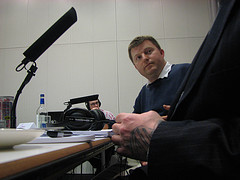
Following out first podcast, there has been quite a lot of views expressed. Some very heated, some just saying thanks, here's some of the best.
Cory Doctorow for BoingBoingThe podcast is both heartening and frustrating. The BBC had so much promise a few years ago, back when it was talking about delivering real, world-class public value to license payers by doing the hard work of clearing the footage in the archive and letting the public remix it. Now that vision has been reduced to a sham -- the BBC iPlayer, a steaming pile of DRM that restricts you to being a mere consumer of BBC programming, downloading it to your PC for a mere seven days.
For a minute there, the BBC seemed like it would enable a creative nation. Now it's joining the jerks in Hollywood who think that media exists to be passively swallowed by a legion of glassy eyed zombie audience members.
You can hear the disappointment in the visionaries at the BBC, the betrayal at being sold out by management. The BBC is forcing Britons to buy an American operating system -- Windows -- in order to watch British programming, made in Britain. The free and open GNU/Linux -- whose kernel is maintained in Britain -- can't be used for British TV, because of DRM.
Ben MetcalfeI think it’s great that the BBC was able to bring this debate into the public, and in fine BBC balanced round-table tradition it offers representatives from the BBC, the commercial broadcast sector and proponents of free distribution.
I hope there will be more of these, opening up what’s going on inside the organization’s future media dept. Not only does it begin to allow cluetrainy conversation to occur across the decision making process, but it seems like the appropriate thing for a license fee funded organization to be doing.
upyouregoThe group make some VERY interesting points, including a more detailed discussion (with real world examples) of how the BBC doesn’t actually own all the rights to ANYTHING and the nightmare involved in finding out who does - this gives an interesting explanation of why iPlayer content can’t be DRM free.
Adam's thoughts on lifeThe other problem is that the BBC wouldn't be allowed to stick its content out un-DRMd even if it wanted to. That's what this whole Trust thing has been about. As Ofcom's Market Impact Assessment highlighted, the BBC entering this market affects other TV channels' business models regarding selling downloads, as well as third party companies such as iTunes.
Superfly MediaThis is a fine example of how complicated rights matters are in the new media world. It will be some time before put to bed the old notions of rights and true consumption habits of users and embrace what is ahead.
Digital CitizenIf you pay for BBC programming, they’ll probably listen to you. You can help make the BBC the beacon of DRM-free, platform-agnostic programming it can be.
This has been the cause of vigorous debate in the UK, but the BBC sees it as an choice between doing nothing or doing something—and they have decided to do something. The BBC Trust, the group set up at the beginning of this year under the Corporation's new charter, is responsible for signing off on the plans. Although it generally approves of the direction that the BBC is headed, it did raise a question about DRM.
Nate Anderson for Ars Technica. Ars Technica also has a web based forum with lots of comments and debate.
Euan Semple points to Cory's BoingBoing post and attracts quite a few comments.
Bob HYes, the BBC is publicly funded and should share it's content, but think how much of it's content is made by independents. The independents want to resell their content to other countries and markets, so they don't want it given away for free.
Michael Walshwhat the BBC doesn't recognise is that it isn't a problem for the licence fee payer but for the BBC itself. You are basically handing over control of a part of the broadcast chain to an outside interest, who may be more concerned with the technological enforcement effort rather than the media experience (i.e. SKY took their on-demand service off the Internet when fairuse4wm cracked Microsoft's DRM).
The Podcast was the number one story on Tailrank yesterday with my own blog post second to that. Techmeme also spotted the podcast via Ars Technica.
There’s two things I got out of this: First of all, I’d really love to work for the BBC’s R&D Labs (either that, or Google). Michael Sparks (I think) mentions a number of very cool sounding things that they’ve been.. err… researching and developing, and it sounds like it could be a fantastic opportunity to put all those crazy ideas I’ve had to the test.
Secondly, the podcast reveals that there’s a very complex legal environment around digital distribution of BBC content, particularly as it relates to access control and things like that.
Personally I don’t see the issue here. Microsoft paid for and built the software with the help of the BBC team. Microsoft licensed it to the BBC. Microsoft added in their own DRM. Why it doesn’t have RSS only God knows.
Sam Sethi at Vecosys
Those brilliant chaps at backstage have been exceptionally brave/clever and put out a podcast exploring the myriad issues around the use of DRM on BBC content delivered over the web. The luminaries engaged in this admittedly long 'cast include Tom Loosemore, Miles Metcalf and many others.
Broadcasting rights in the UK work more like a rental than purchase system. Your licence fee pays for the BBC to rent the rights to a programme for say 3 showings and 7 days on demand - after that the Beeb would have to pay again to show it on TV or on demand again.


Comments