

Can you smell a storm brewing?
Post categories: atmosphere
 |11:25 UK time, Wednesday, 4 May 2011
d ~ 319'027'200 km: day 124
The layer of air that we live in is dynamic, constantly moving around, heating up or cooling down, and transporting water and heat around the planet. All of this happens because the sun doesn't heat the Earth evenly (you get less solar energy at the poles than at the equator). The tilt of the Earth means that the heating pattern changes throughout the year, and this is why we have seasons. Our word for what the local air is doing right now is "weather", and it's an incredibly important aspect of our environment. Considering that we spend our lives wading around in this ocean of air, it's not surprising that almost all our senses are affected when it changes.
We take for granted that we can see clouds, hear rain and feel warm winds, but it turns out that our noses are also a good tool for monitoring the weather. So what is it that we can smell?
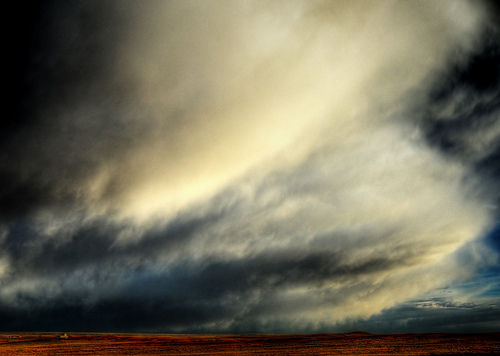
First of all, it turns out that the local air pressure and humidity can affect how well you can smell at all. Surprisingly, this has only recently been studied properly, but your sense of smell is sharper when the pressure is higher and when it's more humid. You know those fresh spring mornings that just smell "clean"? Actually, it's just that the cold dry air means that you are not really smelling much at all. All the icky smells are still there, but you are happily oblivious. Ignorance is bliss when it comes to spring mornings. The flip side of this is that you can tell when it's humid (and therefore when it might rain) because the smell of everything becomes more intense.
The smell that most people associate with the weather is a really strong earthy smell that you get just before and during summer showers. The smell is a chemical called geosmin (literally "Earth smell"), and it's found in a particular type of soil bacteria called actinomycetes. These bacteria produce spores when they're dried out, and when it rains, these spores are kicked up so that they become airborne. Storm showers are often associated with localized strong winds, so these winds can blow this smell to you before the rain actually arrives. It's like a bacterial weather forecast, even if the message only arrives a few minutes before the rain itself. This is also why the earthy smell isn't as strong in cities - you may notice more intense general smells (because it's humid), but there's less geosmin around.
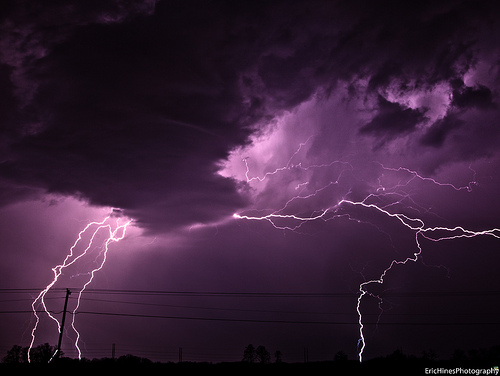
Lightning also has a smell associated with it. The electrical breakdown of air helps ozone to form, and this has a distinctive metallic smell. Ozone is a molecule made up of three oxygen atoms (normal oxygen molecules only have two oxygen atoms), and it's very reactive so it doesn't last long.
And of course, what you can smell may tell you where the wind is coming from. For example, the smell of the sea tells you that the air has come from the coast. So next time you're out and about, sniff the air. You'll be directly sensing the type of air that you're living in on that particular day, and there may be some clues to the larger-scale weather patterns passing through your local area.
 Kate Humble:
 Helen Czerski:
 Stephen Marsh:
 Aira Idris:


Comments Post your comment