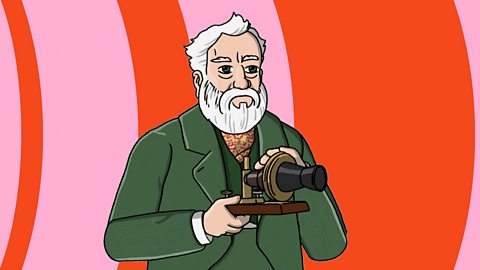
Scotland became home to many new industries in Victorian times. Find out what working in these industries was like for men, women and children.
Find out about work in a jute factory in Victorian Dundee.
SUPERVISOR:
1870, Dundee.
Right! Gather round for the New Start briefing!
Listen carefully or you won’t hear over all the machines.
Welcome tae the Jute Mill!
I’m the supervisor an’ whit I say, goes.
Gents, afraid we don’t have any positions for yeh.
It’s the law’s fault, not ours — we have to pay yeh more than women and bairns!
So you cost too much. Sorry!
Now, due tae aw the factory reforms, it’s illegal for us tae employ any bairns under the age o’ nine.
Who’s under nine here?
Right — yeh can STAY, but keep it tae yourself, ya ken?
If any inspectors ask, you’re NINE.
How old are yeh??
CHILD:
Errr… Nine…
CHILD:
I dinnae ken whit Jute is…
SUPERVISOR:
Child, d’ya ken yeh live in DUNDEE, the Jute capital o’ the WORLD?
Last year the city imported 143 THOUSAND tonnes of Jute!
This city’s nicknamed ‘Juteopolis’, for goodness sake!
CHILD:
Aye but… what IS it?
SUPERVISOR:
It’s a plant grown in India!
We ship it over here to process it intae rope, sacks, curtains, carpets — all sorts!
Look, follow me an’ I’ll show yeh.
Over there is where the raw Jute arrives.
CHILD:
Why don’t they jist turn it into rope over in India?
Why send it over here?
SUPERVISOR:
Are yeh TRYIN’ tae dae us oot of a job, yeh wee numpty?
If they make it in India, we’ll be oot of a job!
We’re ‘Juteopolis’ ‘cause we got aw that whale oil.
Jute is tae tough to use wi’out softening wi’ oil first, and we’ve got a thriving whaling industry right here in Dundee.
An’ lots o’ textiles knowhow, too.
That’s where the batchers work.
If you end up a batcher, you’ll be twistin’ the bundles by hand.
Then yeh’ll put ‘em through the softener machine and spray wi’ a mixture of oil an’ water.
There’s a whole ton o’ jobs that happen right across the factory.
Yeh could be cardin the jute intae fibres, or spinnin’ the fibres intae thread, or weavin’ the thread intae cloth.
Over there is the finishing department.
That’s where the cloth is trimmed and ‘calendered’,which means it’s smoothed out through some heavy rollers.
So, you’ll be given one o’ these many jobs tae do.
You’ll be workin’ 10 hour shifts an’ you’ll git a one hour lunch break.
CHILD:
So there’s NAE chance that the Indian Jute industry could take oor jobs?
SUPERVISOR:
Well… aye, there’s a wee risk… so we’ll need tae keep your wages low tae begin with.
So we can compete wi’ India’s low prices.
If yeh’ve a problem wi’ that o’course, you’ll have tae gae tae India tae find a job!
But I wouldn’t worry aboot it folks.
Dundee will ALWAYS be the capital o’ Jute!
Now git tae work!
NARRATOR:
Jute production began to decline at the end of the Victorian era.
The last Jute factory in Dundee closed in 1998.
From farms to factories
In the Victorian era, Scotland experienced Industrial Revolution
Urbanisation meant many people moved from the countryside to towns for jobs in the new mills, factories, or shipyards.
Most families were poor and had to send children to work from the age of 5 - small hands were useful for cleaning machinery!
There was no sick pay or help if you had an accident or illness - you would simply be replaced.
Before the 10 hour Factory Act in 1847, you could work up to 19 hours a day.
Work was dangerous, and caused illness like mill fever - in 1863 life expectancy was just 33 for a man.

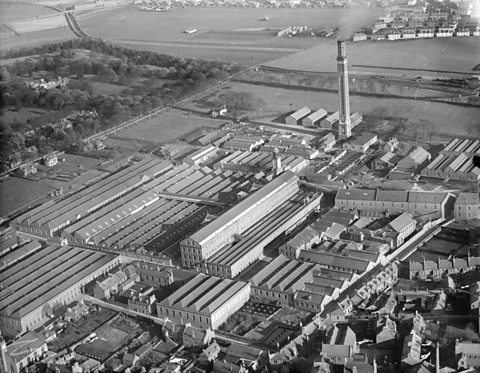
Dundee - Juteopolis
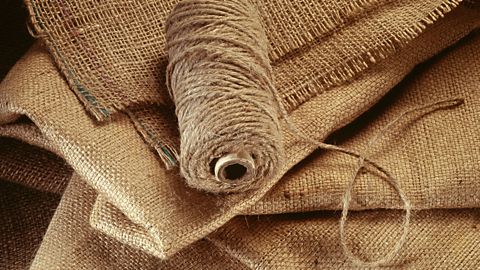
Jute was a plant imported from India. New mechanical machines turned it into a strong thread used for rope or bags.
Dundee was uniquely ready for this new industry because it already had textile mills, ship yards, and a whaling trade which produced the whale oil needed to soften the rough jute fibers.
Jute became very popular worldwide, and Dundee was where it was all made!
The men that ran the mills - known as Jute Barons - became very rich, with their workers poor and low paid.
Eventually, the mill owners set up factories in India because it was more profitable to make jute where it was grown. This meant the end of the jute mills in Dundee, with production stopping in the 1970s.
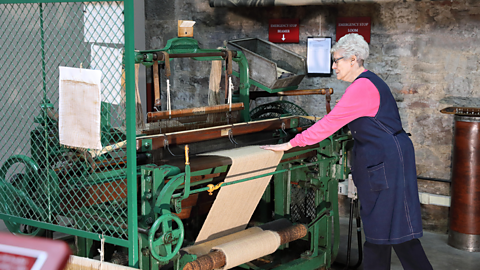
Image caption, The Verdant Works in Dundee is an old jute mill which now runs as a museum. You can learn about the industry and see the machines used back in Victorian times.

1 of 3
'The women's town'
Textile work was traditionally done by woman and 70% of the jute workers were women.
Jute Barons also preferred to employ women and children because they could pay them less than men.
Unemployed men were called ‘kettle bilers’ (kettle boilers) because they had to look after the babies and cook the meals.
Jute mills were very unpleasant places - the 'stour'(clouds of dust) went in your eyes, mouth and nose and people went deaf because of the loud machinery.
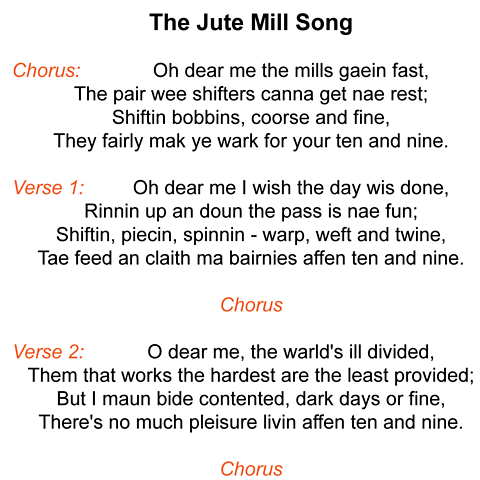
Workers made up hand signals and songs to communicate with each other, like the one below.
A jute mill workers song, words by activist Mary Brooksbank
More on Victorians
Find out more by working through a topic
- count18 of 19

- count19 of 19
- count1 of 19

- count2 of 19