Movement and interactions
Motion - AQA Synergy
The movement of objects can be described using motion graphs and numerical values. These are both used to help in the design of faster and more efficient vehicles.

Newton's laws - AQA Synergy
Forces cause changes in the motion of an object. Newton’s Laws help us to understand and analyse those changes. Unbalanced forces cause changes in speed, shape or direction.
Circuits - AQA Synergy
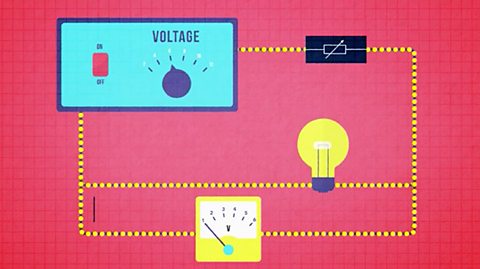
Electrical current transfers energy around circuits. There are two types of current: direct and alternating.
Mains electricity - AQA Synergy
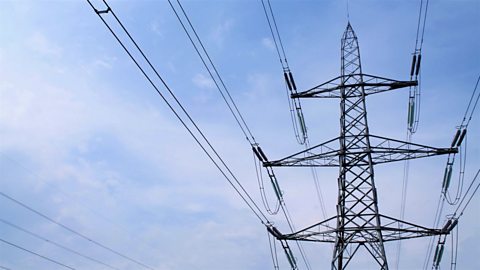
Electricity can flow either as direct or alternating current, and is used in homes to power electrical appliances. The National Grid distributes electricity throughout the country.
Acids and alkalis - AQA Synergy
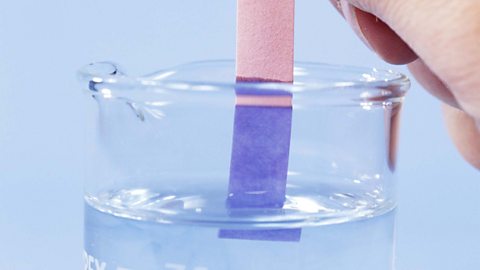
Indicators are used to determine whether a solution is acidic or alkaline. Acids react in neutralisation reactions to produce salts.
Rates of reaction - AQA Synergy
The greater the frequency of successful collisions between reactant particles, the greater the reaction rate. Temperature, concentration, pressure, particle size and the use of catalysts all affect reaction rate.
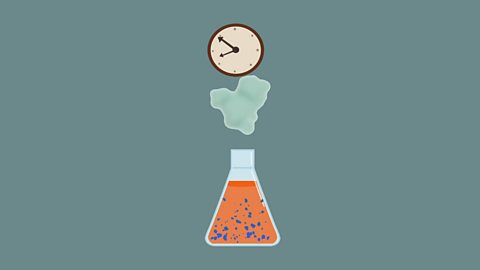
Energy, rates and reactions - AQA Synergy
Energy changes can be represented using energy profiles. Catalysts (including enzymes) speed up chemical reactions. Energy changes can be calculated from bond energies.
Equilibria - AQA Synergy
Some chemical reactions can be reversed. Reversible reactions can reach a dynamic equilibrium. Changing the conditions can change the amount of product made.
Electrons and chemical reactions - AQA Synergy
The reactivity series shows metals in order of reactivity. The reactivity of a metal is related to its tendency to form positive ions. Electrolysis can be used to split ionic compounds and to extract metals.
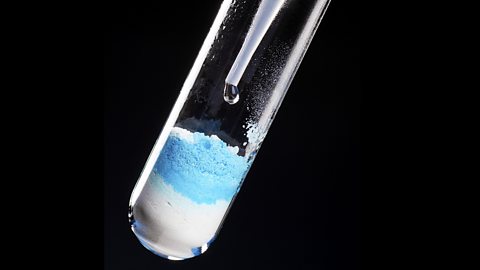
Sample exam questions - movement and interactions - AQA Synergy
Understanding how to approach exam questions helps to boost exam performance. Question types will include multiple choice, structured, mathematical and practical questions.

Links
- External linkExternal link
- SubscriptionSubscription
- External linkExternal link
- External linkExternal link
- SubscriptionSubscription
- External linkExternal link
- External linkExternal link
- SubscriptionSubscription
