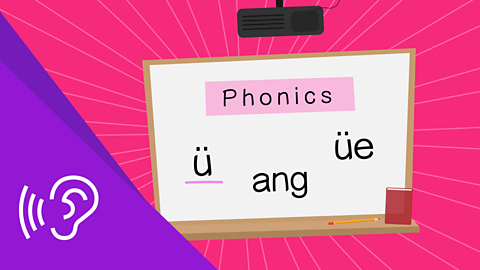
Pinyin was invented to help people learn the pronunciation of Mandarin characters.
For many Mandarin sounds, once the pronunciation of their initials and finals is known, the pronunciation of the full word can be figured out by combining the two with their tone.
For example, the Mandarin for mountain can be broken down as the initial (sh), the final (an) and the first tone (-) to make Check your connection, refresh the page and try again.shān.
The following sounds do not follow this general rule - they should be read as a whole, rather than separated into their initial and final.
Zhi
The ‘zhi’ sound in Mandarin is like an extension of the 'j' sound in 'jerk', eg:
Check your connection, refresh the page and try again.zhĪ (to know)
Check your connection, refresh the page and try again.zhÍ (straight)
Check your connection, refresh the page and try again.zhǐ (paper)
Check your connection, refresh the page and try again.zhì (intelligence)
Zhi
Chi
The ‘chi’ sound in Mandarin is like an extension of the 'ch' sound in 'church', eg:
Check your connection, refresh the page and try again.chĪ (to eat)
Check your connection, refresh the page and try again.chÍ (late)
Check your connection, refresh the page and try again.chǐ (a ruler)
Check your connection, refresh the page and try again.chì (wing)
Chi
Shi
The ‘shi’ sound in Mandarin is like an extension of the 'sh' sound in 'shirt', eg:
Check your connection, refresh the page and try again.shĪ (poem)
Check your connection, refresh the page and try again.shÍ (ten)
Check your connection, refresh the page and try again.shǐ (history)
Check your connection, refresh the page and try again.shì (yes, is or are)
Shi
Ri
The 'ri' sound in Mandarin is pronounced like the ending of of the 'zhi', chi' and 'shi' sounds, like an 'rrrr' noise with the tip of the tongue on the roof of the mouth, eg:
- Check your connection, refresh the page and try again.rì (sun or day)
Ri
Did you know?
The 'zh-', 'ch-', 'sh-' and 'r-' sounds are called retroflexes.
This means that you make them by curling the tip of your tongue back to touch the middle of the roof of your mouth.
When they are followed just by an 'i' in pinyin, the 'i' is not really sounded but becomes like an extension of the initial sound.
Zi
The ‘zi’ sound in Mandarin is similar to ‘ds’ in ‘suds’, eg:
Check your connection, refresh the page and try again.zī wèi (taste)
Check your connection, refresh the page and try again.zǐ (son or child)
Check your connection, refresh the page and try again.zì (word)
Zi
Ci
The ‘ci’ sound in Mandarin is similar to the ‘ts’ in ‘cats’, eg:
Check your connection, refresh the page and try again.cÍ (word)
Check your connection, refresh the page and try again.cǐ (this)
Check your connection, refresh the page and try again.cì (times)
Ci
Si
The 'si' sound in Mandarin is similar to the 'ss' in 'hiss' with an 'r' at the end, eg:
Check your connection, refresh the page and try again.sī kǎo (to think)
Check your connection, refresh the page and try again.sì (four)
Si
Yi
The ‘yi’ sound is similar to the ‘ee’ in ‘cheese’, eg:
Check your connection, refresh the page and try again.yĪ (one)
Check your connection, refresh the page and try again.ā yí (aunt)
Check your connection, refresh the page and try again.yǏ zi (chair)
Check your connection, refresh the page and try again.róng yì (easy)
Yi
Yu
The ‘yu’ sound is like 'eew' said with rounded lips, eg:
Check your connection, refresh the page and try again.yú (fish)
Check your connection, refresh the page and try again.yǔ (rain)
Check your connection, refresh the page and try again.yù (jade)
Yu
Ye
The ‘ye’ sound is similar to a light pronunciation of ‘air’, eg:
Check your connection, refresh the page and try again.yé ye (grandfather)
Check your connection, refresh the page and try again.yě (as well)
Check your connection, refresh the page and try again.yè (night)
Ye
Yue
Ü is pronounced by rounding your lips and saying the 'ee' in 'see' without moving your lips.
‘Yue’ is similar to the pronuniciation of Ü but with the sound of the word 'air' on the end, eg:
Check your connection, refresh the page and try again.yuē huì (date)
Check your connection, refresh the page and try again.yuè (month)
Yue
Yuan
The ‘yuan’ sound is similar to a combination of ‘you’ and ‘an’, eg:
Check your connection, refresh the page and try again.gōng yuán (park)
Check your connection, refresh the page and try again.yuàn (hope)
Yuan
Yin
The ‘yin’ sound is similar to the ‘ean’ in ‘bean’, eg:
Check your connection, refresh the page and try again.yīn wèi (because)
Check your connection, refresh the page and try again.yín sè (silver)
Check your connection, refresh the page and try again.yǐn (drink)
Yin
Yun
The ‘yun’ sound is similar to the ‘oon’ in ‘moon’, eg:
Check your connection, refresh the page and try again.yún (cloud)
Check your connection, refresh the page and try again.yǔn xǔ (allow)
Check your connection, refresh the page and try again.yùn dǒu (iron)
Yun
Ying
The ‘ying’ sound is similar to the ‘ing’ in ‘thing’, eg:
Check your connection, refresh the page and try again.yīng (eagle)
Check your connection, refresh the page and try again.yíng (win)
Check your connection, refresh the page and try again.yǐng zi (shadow)
Ying
Wu
The ‘wu’ sound is similar to the ‘oo’ in ‘room’, eg:
Check your connection, refresh the page and try again.wū yā (crow)
Check your connection, refresh the page and try again.wú (none)
Check your connection, refresh the page and try again.wǔ (five)
Check your connection, refresh the page and try again.wù (fog)
Wu
Race Across the Continents game - new update! game
Help this team of adventurers race their way to victory. Explore the globe in this exciting game update to discover new audio voiced by Ade Adepitan and fun animations. Challenge yourself with brand-new achievements and become a high-flyer!

More on Phonics
Find out more by working through a topic
- count2 of 3
- count3 of 3