Working out how to best support your child at school is easier said than done.
You might be grappling with concepts you’ve never heard of, like number bonds, subitising and partitioning.
Like many Early Years concepts, they're simpler than they sound.
We spoke to Early Years educator, Jamel Campbell, to find out how you can confidently support your child with maths and help them develop into budding mathematicians.
Here are some of his top tips:
1. Let your child lead and learn as they play
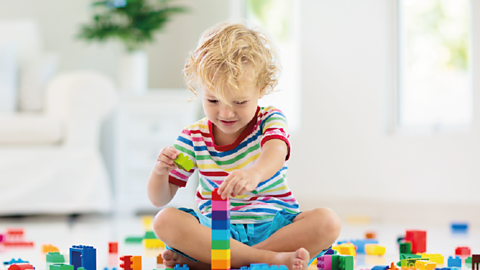
Jamel explains that “it’s really important to meet kids in their flow, especially when it comes to maths. If they’re busy playing with dolls or blocks, figure out how you can incorporate maths into it.” Children are naturally curious and learn best when they play so, as Jamel says, don’t be afraid to take a step back and let their interests take the lead.
“Get them involved. They’ll feel like they’re in control of the activity. If they feel like they have a stake in it, they’re far more likely to enjoy it and retain the information.” You can ask them questions about what they’re doing and encourage them to find shapes, numbers and patterns using games and toys.

2. Understand what they're learning
Jamel says “You don’t have to be a maths whizz to help your child master maths. Sometimes parents are worried they might teach their children the wrong methods but there are many different ways to get to grips with maths and often introducing your child to a range of methods is really helpful.”
Early years concepts are also often much simpler than they sound; for instance, once you recognise that ‘number bonds’ just means two parts make a whole, you can start to build up your own confidence and effectively support your child’s learning.
If you’re feeling overwhelmed, you’re not alone. Jamel agrees, “It can be really scary! But everything that teachers have access to, parents can get their hands on as well - and most of it is free. It’s all about empowering yourself as a guide for your child.”

3. Be positive and have fun
Try your best to use positive language - especially if maths wasn’t your favourite subject in school. “Be conscious that you can pass on fears to your children. You want to give them as much confidence as possible, not doubt.”
It’s easy to underestimate how much your children watch and model you, so it helps to stay calm and positive in order to nurture their enthusiasm and natural curiosity.
Older siblings are also a great, often untapped, resource. They will probably be a lot more familiar with the curriculum than you are, so rely on them to help out. Encourage family activities and games where siblings can bond, have fun and learn from one another.
4. Children learn everything at the same time
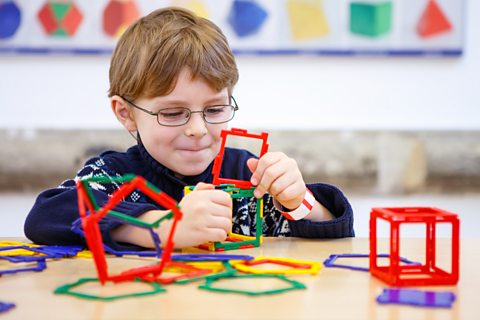
Everything is new for your child so they’re learning everywhere they go; whether it’s spotting patterns on animals or counting out steps as they dance – maths truly is all around us.
Jamel says that “at this age, learning is so holistic, so it’s never going to just be maths or literacy. They’re learning all the time and so much of it is about understanding and exploring what’s around them.”
So much of our understanding of shapes, measurements and number comes from gaining real world experiences and interacting with new places, people and objects.
Maths is just one small part of a network of skills and competencies children are learning, so they don’t need to compartmentalise activities into subjects or specific skills.
5. Activities you can try with your child
Find the amount
For Jamel’s favourite activity, all you need is a stack of ten paper plates (or sheets of paper). Lay out the plates and number them from 1 to 10 – you could even encourage your child to decorate them.
Then, it’s scavenger hunt time. Ask your child to find different amounts of objects around the house and match them to the number on each plate. Once you’ve got all your items organised, you can extend the activity with them and start exploring addition and subtraction, or number bonds.
Find objects outside
You can also play this game outside. Instead of plates, grab some containers. Assign a number to each one and ask your child to find the right amount of items; you could collect leaves, twigs or pine cones!
Not only are they getting outside and active, but they’re using the world around them to learn and develop important numeracy skills.

Spot numbers – and more!
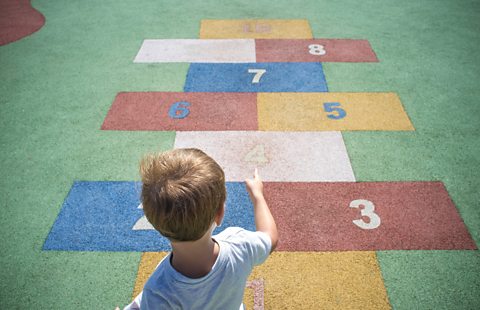
Jamel says “look out for numbers that are significant to them. That could be house numbers or numbers on public transport, anything to spark a conversation.” It encourages your child to be curious about the way maths pops up in everyday life.
You can even integrate counting into daily activities like setting the table: “Can you grab four forks and three spoons, please?” or ask your child to count out coins on your weekly shop. It’s all about finding fun and everyday opportunities to practice and explore the world of maths together.
Play Bud's Number Garden game! game
Practise recognising numbers, counting, ordering and sequencing numbers.
More on Parent support - Maths
Find out more by working through a topic
- count1 of 3
- count2 of 3