Talking about food in German
Essen is a great word to learn to talk about food in German.
Essen means 'to eat'. Das Essen means ‘food’. It also means ‘meal’.
And you get the words for lunch - das Mittagessen, and dinner - das Abendessen.
Essen is the verb ‘to eat’
Ich esse Salat - I eat salad.
And if you want to say you like to eat something, you add gern.
Ich esse gern Salat - I like to eat salad.
If you don’t like to eat something add nicht gern.
Ich esse nicht gern Fisch - I don’t like to eat fish.
And what about to drink? That’s trinken.
Ich trinke Saft - I drink juice.
Ich trinke gern Saft - I like to drink juice.
Zum Frühstück trinke ich gern Orangensaft - For breakfast I like to drink orange juice.
Guten Appetit!
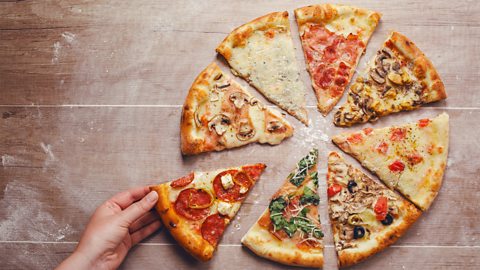
To talk about food and drink, use the verbs essen (to eat) and trinken (to drink):
- Ich esse Pizza - I eat pizza.
- Ich trinke Wasser - I drink water.
Look at the tables below. Can you see any food and drinks you like?
Food
| German | English |
|---|---|
| der Salat | salad |
| der Kuchen | cake |
| der Toast | toast |
| der Apfel | apple |
| die Pommes | chips |
| die Pizza | pizza |
| die Schokolade | chocolate |
| die Nudeln | pasta |
| die Marmelade | jam |
| das Brot | bread |
| das Obst | fruit |
| das Gemüse | vegetables |
| das Hähnchen | chicken |
| das Curry | curry |
| das Fleisch | meat |
Drinks
| German | English |
|---|---|
| das Cola | cola |
| das Wasser | water |
| der Orangensaft | orange juice |
| die Limonade | lemonade |
| der Kaffee | coffee |
| die Milch | milk |
| der Tee | tea |
Giving opinions on food and drink
To say you like something, add the adverb gern after the verb. Add nicht if you don’t like something.
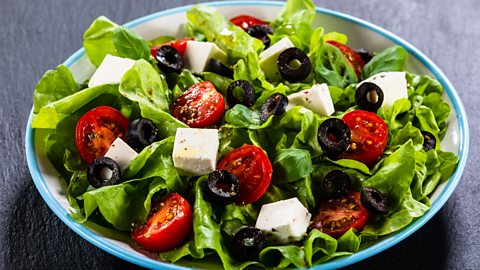
- Ich esse gern Salat - I like eating salad.
- Ich trinke nicht gern Wasser - I don’t like drinking water.
You can add more detail to your opinions by using denn (because) with adjectives.
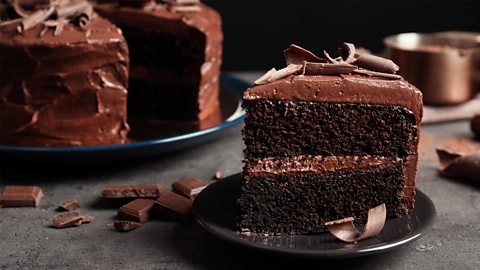
- Ich esse gern Kuchen, denn es ist lecker! - I like eating cake because it is tasty.
- Ich esse gern Curry, denn es ist scharf! - I like eating curry because it is spicy.
To ask someone about what food and drink they like, you can ask:
- Was isst du gern? - What do you like to eat?
- Was trinkst du gern? - What do you like to drink?
- Was isst du nicht gern? - What don’t you like to eat?
- Was trinkst du nicht gern? - What don’t you like to drink?
Talking about plural foods
When talking about a plural food or drink, change es ist (it is) to sie sind which means they are. Plural means more than one of something.
- Ich esse nicht gern Pommes, denn sie sind salzig - I don’t like eating chips because they aresalty.
- Ich esse gern Kekse, denn sie sind süß - I like eating biscuits because they are sweet.
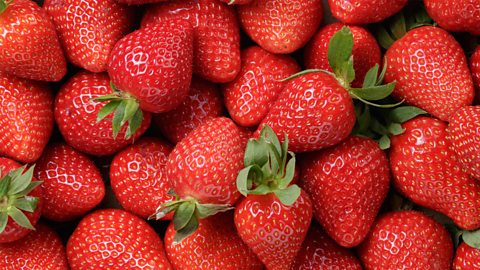
- Ich esse gern Erdbeeren, denn sie sind köstlich - I like eating strawberries because they are delicious.
Can you write your own opinion sentences using the adjectives below?
| German | English |
|---|---|
| denn | because |
| sehr | very |
| nicht | not |
| köstlich | delicious |
| lecker | tasty |
| gesund | healthy |
| ekelhaft | disgusting |
| erfrischend | refreshing |
| süß | sweet |
| scharf | spicy |
| salzig | salty |
Dietary requirements
Some people have special dietary requirements, meaning they can only eat certain foods. If you have any special dietary requirements, you may need the following phrases:
- Ich esse kein Fleisch, denn ich bin Vegetarier - I don’t eat meat because I am vegetarian.
- Ich trinke Sojamilch, denn ich bin Veganer - I drink soya milk because I am vegan.
- Ich esse keine Nüsse, denn ich habe eine Allergie - I don’t eat nuts because I have an allergy.
- Ich bin allergisch gegen Gluten - I am allergic to gluten.
- Ich habe Zöliakie - I have coeliac disease.
To talk about a female vegetarian or vegan, add -in to the end of Vegetarier and Veganer.
- Sie ist Vegetarierin - She is vegeterian.
- Sie ist Veganerin - She is vegan.
| German | English |
|---|---|
| das Halal-Fleisch | halal meat |
| die Milchprodukte | dairy |
| die Eier | eggs |
| die Nüsse | nuts |
| die Erdnüsse | peanuts |
| das Gluten | gluten |
| der Weizen | wheat |
| die Zöliakie | coeliac disease |
Talking about what you eat for different meals
Meals are an important part of talking about eating food. In German, the verb always has to be the second idea in a sentence. When talking or writing about meal times, place the verb straight after the meal phrase, like zum Frühstück (for breakfast) or zum Mittagessen (for lunch).
- Zum Frühstück esse ich Toast und Marmelade - For breakfast I eat toast and jam.
- Zum Mittagessen esse ich Pizza und ich trinke Wasser - For lunch I eat pizza and I drink water.
- Zum Abendessen esse ich gern Hähnchen und Gemüse, denn es ist lecker - For dinner I like eating chicken and vegetables because it is tasty.
| German | English |
|---|---|
| das Frühstück | breakfast |
| das Mittagessen | lunch |
| das Abendessen | evening meal/dinner |
Video
Watch the video then test your understanding in the short quiz!
What should we eat?
CHRISTINA: Momentmal.
ANNA: Was ist los?
CHRISTINA: Ich habe ein SMS bekommen. 'Ich bin ein bisschen spät dran. Ich komme erst um neunzehn Uhr nach Hause. Kannst du das Abendessen machen?' Das war meine Mutter. Sie kommt spät nach Hause. Ich muss das Abendessen machen. Was soll ich machen?
ANNA: Was isst du gern?
CHRISTINA: Ich mag italienisches Essen. Ich mag Steak und Pommes. Ich hasse Curry. Das ist zu scharf.
ANNA: Und deine Mutter? Was isst sie gern?
CHRISTINA: Sie isst kein Fleisch, denn sie ist Vegetarierin.
ANNA: Was isst sie eigentlich?
CHRISTINA: Sie mag Käse und Gemüse essen.
ANNA: Und du? Isst du gern Käse und Gemüse?
CHRISTINA: Ich esse gern Tomaten, Karotten aber Salat mag ich nicht.
ANNA: Also, du könntest Nudeln mit Tomatensoße oder Pizza machen. Was würdest du lieber essen?
CHRISTINA: Ich mag Pizza aber meine Mutter und ich lieben Nudeln.
ANNA: Also, zum Abendessen gibt es Nudeln mit Tomatensoße. Vielleicht noch ein bisschen Käse dazu. Lecker! Guten Appetit!
CHRISTINA: Super! Danke Dir! Tschüss
Translation
CHRISTINA: Hang on a moment
ANNA: What is it?
CHRISTINA: I have a text. 'I am a bit late. I won’t be home until 19:00. Can you make dinner?' That was my mother. She is coming home late. I have to prepare dinner. What should I make?
ANNA: What do you like?
CHRISTINA: I like Italian food. I like steak and chips. I hate curry. It’s too spicy.
ANNA: And your mother? What does she like?
CHRISTINA: She doesn’t eat meat, she is vegetarian.
ANNA: What does she actually eat?
CHRISTINA: She likes to eat salad and cheese.
ANNA: And you? Do you like cheese and salad?
CHRISTINA: I like eating tomatoes and carrots but I don’t like salad
ANNA: So. You could make pasta with tomato sauce, or pizza. What would you prefer?
CHRISTINA: I like pizza but my mother and I love pasta.
ANNA: So for dinner it’s pasta with tomato sauce, perhaps a bit of cheese. Delicious! Bon Appetit!
CHRISTINA:Great! Thank you, bye.
Quiz
Game - FestiLingo: German. game
Visit the festival and practise German language skills in this game

More on Topics
Find out more by working through a topic
- count1 of 9

- count4 of 9