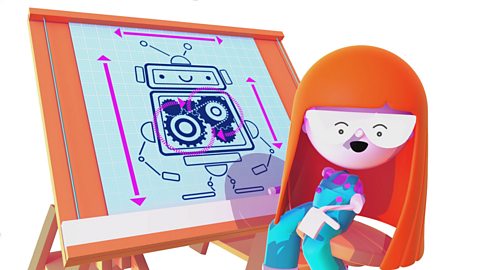
What is a design?
A design is a plan that helps people to make a product.
Designers always try to make their products the best they can be by learning, creating, testing and evaluating.
Evaluating means to look back and decide what is good or bad about a product.
Video: Design briefs
Aaron explains what a design brief is and why creating one can help you plan your design.
Look at all of these things. And think about all of the items you use at home and at school.
Your schoolbag, your toys, your clothes and even the meals you eat. All of them have been made by a person or a machine.
But before they are made, someone needs to design them. And to design something, you first need a design brief.
But what is this? A design brief is a plan, usually written on a piece of paper or a computer. It tells you what you need to design, who you need to design it for and how it will be used. Sometimes, it may include other information you need to think about, such as the item’s size and what materials you should use.
Let’s take a look at these two items: a pencil case and a pen pot. Both of these items do a similar job, but will have slightly different design briefs.
So let’s work through the design brief for each item.
What are we designing? An item to keep pens and pencils in.
Who are we designing it for? It’s for school children.
And how will it be used? To carry pens and pencils to school.
But, the design brief for the pen pot will be a little bit different.
What are we designing? It’s again, an item to keep pens and pencils in.
Who is it for? It’s still for school children.
How will it be used? This is where the brief is a little different, because it will be used to keep pens and pencils together on a desk in one place.
You may also have other information in the brief. Maybe the pencil case needs to be made out of wood or fabric, like cotton. Or maybe the pen pot needs to have three different parts for different pens.
Why don’t you design something, thinking about what it’s for, who it’s for and how it will be used.
How to start designing
Designers often start designing with the help of a design brief.
Sometimes this is given to them and sometimes designers make their own.
A design brief lists:
- what the product is.
- who the product is for.
- how the product will be used.
Different briefs have different amounts of detail in them. Some briefs contain other information to help designers develop and make their products.
Examples of a design brief
Sometimes a brief asks a designer to solve a particular problem. Sometimes a brief can be more open and creative.
Here are some examples of different products. Can you think what their design briefs might have been?
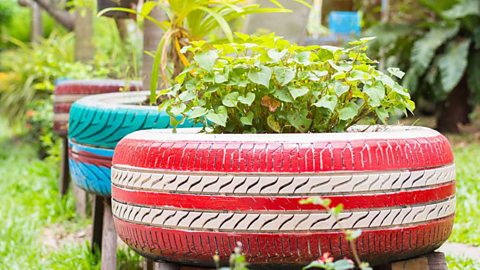
Image caption, Plant holders
The design brief for these plant holders might have been ‘create a good-looking structure for a gardener to put plants in and make it using recycled materials'.
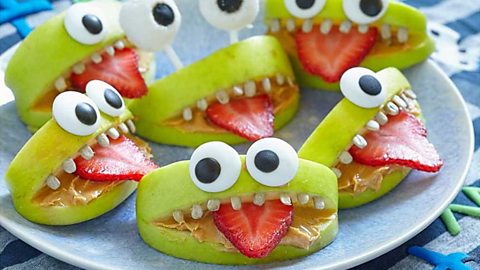
1 of 2

The design process
Designers use different ways to make sure their products are useful and well made.
First, designers research the design brief. They find out what the users might want and ways to solve any problems.
They then start to develop their creative ideas. They add more details, such as the product's size, cost and what it could be made from.
It is helpful to think of lots of different ideas, before choosing the best one.
Making drawings or models, lets designers understand how a product will work.
Activity
Follow along to help the three Billy Goats Gruff make a design brief.
Key words
| Evaluate | To look at something and decide what is good or bad about it. |
| Design brief | A document or plan that contains a short description of what to design, why and for whom. |
| Product | Something that is made to be bought or sold. Food, furniture and clothes are all examples of products. |
| Research | To find out about something. |
Quiz
See if you can match the design brief to the finished product.
Play BBC Bitesize games! game
Fun, interactive games for children aged 4-11, with maths, English, science, history and many more subjects.
More on Design
Find out more by working through a topic
- count2 of 3
- count3 of 3