What are the key facts about living in Belfast in 1910?
- In 1910 Belfast was a busy city with lots of jobs in shipbuilding and linen mills.
- Families lived in small houses, often sharing rooms with grandparents and siblings.
- Kids played games like kick-can and marbles at school, and when they started working, they could go to the cinema or music hall.
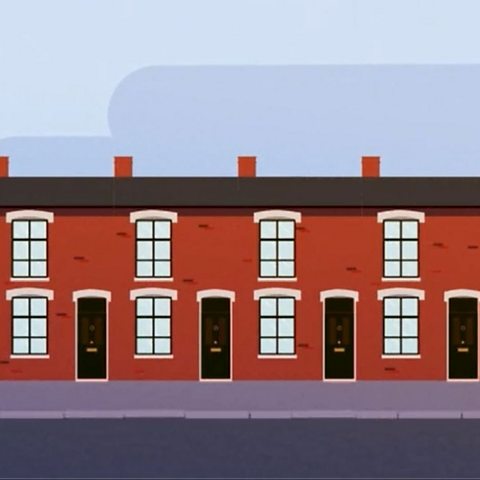
By 1910, construction of Titanic was well underway and Belfast had become a large, prosperous city. The biggest industries were linen and shipbuilding, which provided lots of jobs. Many people moved from more rural areas to work in the city.
The population grew rapidly with nearly 400,000 people living in Belfast in 1910. At the start of the 20th century, 35,000 people worked in the textile industry and around 15,000 people worked in Harland and Wolff. It was the largest shipyard in the world.
What industries did Belfast have?
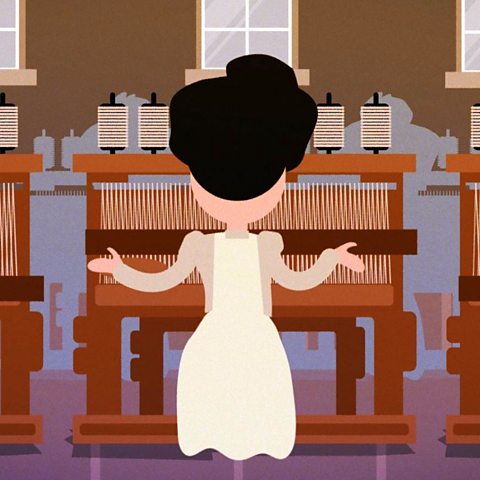
Mechanised looms and spinning wheels meant that Belfast became the leading centre of linen production in the world - the city was even given the nickname Linenopolis.
The linen mills mostly employed women, who were known as millies or shawlies because they often wore shawls.
Many men worked in the shipyard, however lots of other industries thrived in Belfast including rope-making, distilling and tobacco production.
Find out what people ate in Edwardian times by clicking below.
Watch the video below to find out what life was like for people in Belfast in 1910.
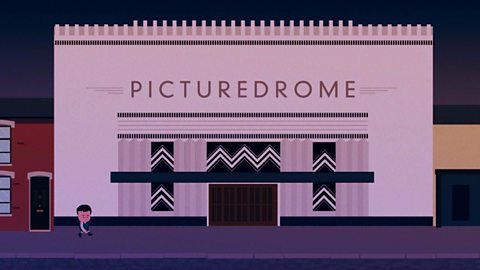
This is my house in my street. Seven of us live here, Mum, Dad, my two sisters. Gran, Grandad and me. We're lucky, Mum and Dad both work which means there's always food on the table and coal for the fire. That's my job when I get home from school, make sure the fire is stoked. My sisters get dinner ready, dust the house and clean the outhouse. I share my bedroom with Gran and Grandad. It's fine, but sometimes it can be difficult to sleep. We live near the shipyard where Dad works. 6 o’clock they start. You hear the workers coming down the street in the morning, laughing and joking. They say Titanic is going to be the greatest ship ever built. Mum has already gone by then. She works in the linen mills in a spinning room. They call the women that worked there ‘millies’. She says the work is tough. I'm thirteen years old now and leaving school next summer. Dad says he'll get me a job in the yard. I can be a catch boy and help the riveters. I'm nervous and I'll miss my friends, but I've learned everything I need to know from school. Don't need anymore reading, writing or arithmetic. And my sisters will be able to use their sewing and needlework when they work in the linen mills. I’ll miss kick can and marbles in the playground, but it's good to have a couple of bob in your pocket. I'll go to the Picturedrome on a Friday night or maybe the football match on a Saturday afternoon. Or maybe if I save enough money I'll take a trip on Titanic and go to America and live in New York, maybe.
What was everyday life in Belfast like?
Belfast had a mix of rich and poor households. While the rich lived in large detached houses in areas like the Malone Road, poorer people lived on narrow streets of terraced houses, mainly around the industrial areas.
These red-bricked houses were filled with large families including parents, grandparents and children, so there wouldn't have been much space to yourself!
Most children would have had to share a bedroom with their siblings or other family members and there wouldn't have been a bathroom, just an outhouse in the back yard.
Children would have played games like kick-can, marbles and football together at school and out on the streets in front of their houses. Once they started working, people would have been able to use their wages to go to the cinema or to a music hall.

Times tables 1-12!
Practise the times tables with our songs, videos and quizzes
More on Titanic
Find out more by working through a topic
- count3 of 4
- count4 of 4
- count1 of 4

