- It is important to plan your critical essay before you start writing.
- An essay has a clear structure with an introduction, paragraphs with evidence and a conclusion.
- Evidence, in the form of quotations and examples is the foundation of an effective essay and provides proof for your points.
Learn how to plan, structure and use evidence in your essays
TYPEWRITER BELL
SPEAKER 1: In an essay, the writer presents their own ideas or argument. Writing one can be hard work. But sticking to a clear structure can really help. Let’s look at how to write an essay.
SPEAKER 2: Okay, help me out. My essay title is "What makes Slim an important character in John Steinbeck’s Of Mice and Men?"
SPEAKER 1: Interesting. Writing an essay is a lot like building. Before laying a single brick, builders plan. Planning is important in an essay too. Researching, mind mapping, outlining can help you to stay on course when writing.
SPEAKER 2: Time to start writing?
SPEAKER 1: Yes. Start with a strong introduction. Like an entrance to a building, a good introduction is inviting so people will want to explore further. For your essay, state your main idea by responding to the question directly. Try to hook the reader in by stating what you will discuss in the main body of the essay.
SPEAKER 2: So, I could start by saying "In Of Mice and Men, the character of Slim is important because he provides a contrast with other characters on the ranch and offers an alternative way of achieving power and authority."
SPEAKER 1: Hmm. Very good. Once you’ve done that, the body of your essay should include supporting statements which help develop your main idea, like how walls support a building.
SPEAKER 2: One of my supporting statements is "Slim is described as masterful and princely. The author gives the impression that the other men on the ranch respect and look up to him."
SPEAKER 1: Nice. Now we need evidence. The foundation of any good essay.
SPEAKER 2: Oh, what kind of evidence?
SPEAKER 1: For a literary essay the best evidence will be taken from the text itself. Each supporting statement should be backed up by evidence and it should be relevant and clearly connected to the point you’re making.
SPEAKER 2: So, it would be good to quote specific places where Steinbeck calls Slim "masterful and princely."
SPEAKER 1: Exactly, and you should have several of these supporting statements, each backed up by evidence, in the main body of your essay.
SPEAKER 1: Now we just need to finish with a conclusion. Just like builders finish a building with a roof, every essay finishes with a conclusion. Here we restate the main idea, summarise supporting points and give the reader something to remember so they leave the essay thinking about it.
SPEAKER 2: Like they’ve just seen a great piece of theatre?
SPEAKER 1: Well, yeah. Now let’s hear the start to your conclusion.
SPEAKER 2: "As a skilled worker, often described in regal terms, Slim is a character who earns power and respect, rather than demands it. He is the real leader on the ranch."
SPEAKER 1: Great! So you’ve got an introduction. The entrance. Supporting statements and evidence. The walls and foundation. Conclusion? The roof.
BOTH: Job done!
Planning
It is important to plan before you start writing an essay.
The essay question or title should provide a clear focus for your plan. Exploring this will help you make decisions about what points are relevant to the essay. What are you being asked to consider?
Organise your thoughts. Researching, mind mapping and making notes will help sort and prioritise your ideas. If you are writing a critical essay, planning will help you decide which parts of the text to focus on and what points to make.
Introduction
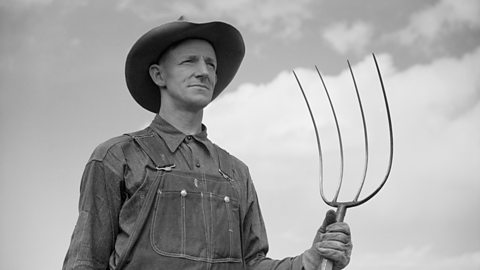
An introduction should focus directly on the essay question or title and aim to present your main idea, in your answer. In an essay titled ‘What makes Slim an important character in John Steinbeck’s Of Mice and Men?’ you could start with:
'Slim plays an important role in Steinbeck’s novella because he represents moral authority.'
The statement gives a clear answer to the essay question. The rest of your essay could justify that answer by looking at all the different ways that he seems to represent moral authority, and the impact that has at different points in the story.
An introduction briefly introduces your main ideas and arguments - that the rest of the essay will explore this in greater detail.
When writing an introduction to an essay avoid:
- using the phrase ‘In this essay I’m going to write about …’
- launching into a close analysis of the text
- straying away from the topic
Using evidence
Evidence is the foundation of an effective essay and provides proof for your points.
For an essay about a piece of literature, the best evidence will come from the text itself.
Back up each of your supporting statements with evidence. The evidence should be relevant and clearly connected to the point you’re making.
In a critical essay, evidence could take the form of:
Quotations from the text, for example, Steinbeck describes Slim’s ‘godlike eyes’, which suggests his power and authority on the ranch.
Examples from the text, for example, Slim’s reaction to the fight between Lennie and Curley shows his authority and natural leadership.
Paragraph structure
Think about how you are going to organise each paragraph.
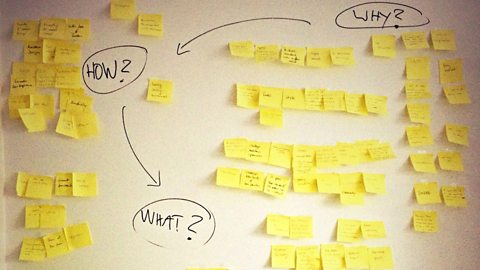
You might want to start with a topic sentence that summarises the main point of the paragraph. This sentence acts like a mini introduction for this paragraph of the essay:
'Because the other men on the ranch respect him, Slim is able to influence their actions.'
The rest of the paragraph should then develop this main point by providing more explanation, detail and evidence:
'After the fight between Curley and Lennie, Slim takes charge. ‘I think you got your han' caught in a machine,’ he persuades Curley, defusing the situation and preventing Lennie’s dismissal from the ranch.'
Conclusion
A conclusion is the final paragraph of your essay. It should tie all the loose ends of your argument together.
An effective conclusion may:
- restate your main idea
- directly link back to the essay title or question
- briefly summarise the key supporting points
- give readers something to remember - a final thoughtful idea or reflection
It’s useful to show the reader that you have reached your conclusion by using words or phrases such as:
- In conclusion
- To conclude
- Finally
- In summary
Remember
Thinking about what to include in a critical essay first will make it easier to structure and write the essay. Your essay will be much more convincing if you can offer evidence for each of your ideas.
Quiz
Are you ready to write an essay? Let's find out in this short quiz!
More on Critical essay writing
Find out more by working through a topic