A pattern is a series that is repeated more than one time. From the shape of a flower to the numbers on a clock, everywhere you look you will be able to find some sort of pattern, whether man made or natural. However, patterns can be much more than a set of shapes.
NARRATOR: Here we marvel at Mack the number machine in his natural habitat. Mack loves looking at new patterns.
[MACK MUMBLES INAUDIBLY]
NARRATOR: And patterns in maths are absolutely everywhere. Patterns can be found in number sequences.
Can you guess the pattern?
MACK: With this sequence we can see that each number has the number 4 added to it.
NARRATOR: What about this pattern? Can you guess the pattern?
MACK: In this sequence the number being added gets bigger by 1 every single time.
NARRATOR: The mathematical world and the patterns within it are truly-
MACK: FASCINATING!
NARRATOR: Take the Fibonacci sequence, for example. Can you see the pattern?
The next number is found by adding two previous numbers together.
The Fibonacci sequence produces an interesting pattern: one that visually relates to the types of spirals you find in the natural world.
Oh dear. It seems like Mack is spiralling out of control.
[MACK MAKES FLUSTERED NOISES]
Patterns are an essential and central part of maths. Think back to Primary 1 and 2 when you first started to learn to recognise and count numbers within 20. You were taught this through patterns and number stories.
For example, the story of 3 is:
3+0, 2+1, 1+2 and 0+3.
Patterns are also a great tool in helping you develop the key thinking skill of mathematical reasoning. This sounds like a bit of a mouthful, but it basically means your ability to think logically about a problem to work out the best steps and strategies to use to help solve it.
For example, when you were learning your 9 times tables, you may have noticed that the digits of any multiple of nine will add up to nine (or a multiple of nine), which is a really handy way of checking your answers:
9 x 3 = 27 (2 + 7 = 9).
Everyday examples of repeating patterns can be seen all around us

Image caption, Patterns can take the form of repeated shapes like in tessellation, where all of the shapes fit together in a pattern with no gaps or overlaps like this brick wall


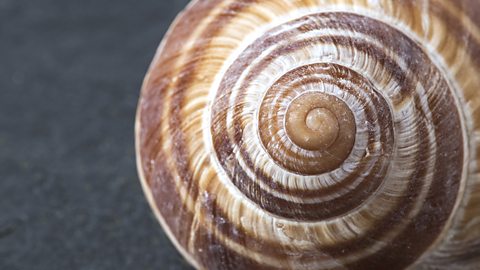
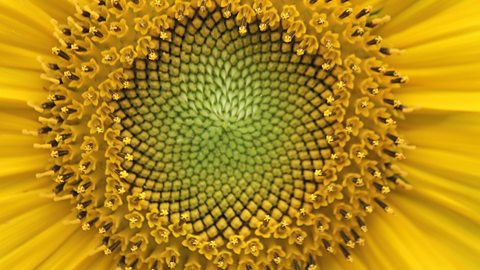
1 of 5
Using patterns to help solve maths problems
Identifying the rule for a repeated number pattern can help you solve sequences where numbers are missing, for example:
7, 14, 21, __, 35
By finding the relationship between neighbouring sets of numbers (adding 7 or multiples of 7), you can calculate the missing number, in this case 28.
This pattern will also allow you to confidently predict numbers as the sequence grows or shrinks. For example: What would the eleventh number be in this sequence? As we already have the first 5 numbers, and because we know the pattern is following the 7 times tables, the eleventh number can be calculated using the sum 7 x 11 = 77.
Try these activities to practise your number pattern skills
More on 2d shapes
Find out more by working through a topic
- count1 of 10
- count2 of 10
- count3 of 10
- count4 of 10

