Forces
Scalar and vector quantities - AQA
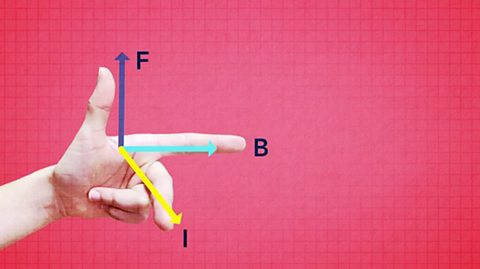
Scientists often make measurements. The physical quantities they measure fall into two categories: scalars and vectors. Scalar and vector quantities are treated differently in calculations.
Quiz: Scalar and vector quantities
This interactive quiz is suitable for GCSE physics students studying scalar quantities, vector quantities and calculations involving forces.

Contact and non-contact forces - AQA
Forces are responsible for all the interactions between particles and objects. They can be divided into two categories: contact forces and non-contact forces.

Quiz: Contact and non-contact forces
This interactive quiz is suitable for GCSE physics students studying contact forces and non-contact forces.

Gravity - AQA
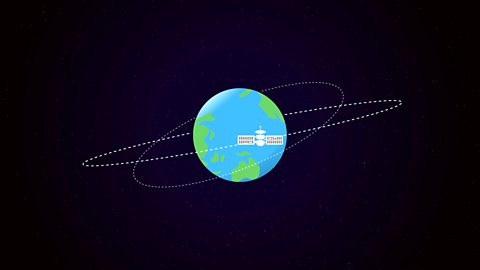
Gravity is one of the most important forces in the universe. An object with mass in a gravitational field experiences a force known as weight.
Quiz: Gravity
This interactive quiz is suitable for GCSE physics students studying gravitational fields, weight, mass, gravitational field strength, calculating work done and free body diagrams.

Forces and elasticity - AQA
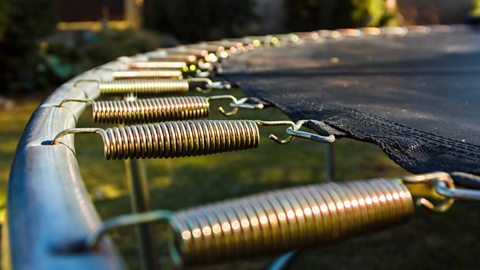
Forces are responsible for changing the motion of objects. If more than one force is present, the shape of an object can also be changed.
Quiz: Forces and elasticity
This interactive quiz is suitable for GCSE physics students studying change of shape, Hooke's law, energy stored in a spring and how forces affect the extension of a spring.

Moments, levers and gears - AQA
Turning forces are found in many everyday situations and are essential for machines to function. Levers and gears make use of these turning forces to provide an advantage.

Quiz: Moments, levers and gears
This interactive quiz is suitable for GCSE physics students studying moments, moments and balanced objects, levers and gears.

Pressure in fluids - AQA
Every living thing on Earth is in balance with the pressure of the air or water around it. Pressure helps blood to move around the body and allows organisms to breathe.

Quiz: Pressure in fluids
This interactive quiz is suitable for GCSE physics students studying calculating pressure, pressure in a liquid and atmospheric pressure.
Describing motion - AQA
The movement of objects can be described using motion graphs and numerical values. These are both used to help in the design of faster and more efficient vehicles.

Quiz: Describing motion
This interactive quiz is suitable for GCSE physics students studying motion in a straight line, velocity and acceleration, distance-time graphs, velocity-time graphs and velocity.

Forces, acceleration and Newton's Laws - AQA
Falling objects eventually reach terminal velocity - where their resultant force is zero. Stopping distances depend on speed, mass, road surface and reaction time.

Quiz: Forces, acceleration and Newton's Laws
This interactive quiz is suitable for GCSE physics students studying terminal velocity, Newton's first, second and third laws and braking.
Momentum - Higher - AQA
Momentum can be thought of as a combination of mass and velocity. Momentum helps explain some of the most important interactions in nature.

Quiz: Momentum - Higher
This interactive quiz is suitable for GCSE physics students studying momentum calculations, conservation of momentum and force and momentum.

Sample exam questions - forces - AQA
Understanding how to approach exam questions helps boost exam performance. Questions will include multiple choice, descriptions and explanations, using mathematical skills and extended writing.

Links
- External linkExternal link
- External linkExternal link
- External linkExternal link
- SubscriptionSubscription
- External linkExternal link
- SubscriptionSubscription
- External linkExternal link
