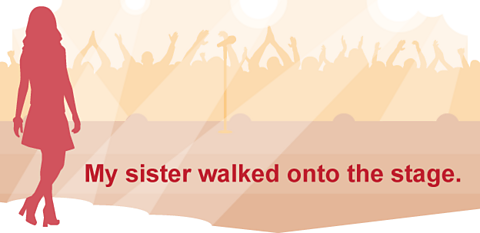
- A simple sentence is built from the minimum of a subject and a main verb.
- It can be very short in length (but doesn't have to be): 'The angry dog barks.'
- It puts across one simple idea: 'Rebecca sang.'
- There can be more than one word with the verb: ‘It was raining’.
In each of the examples there is just one main verb and one idea. This is the simplest type of sentence and is usually very easy to understand.
Reasons to use a simple sentence
Creating tension
There are several reasons for using simple sentences. For example, a series of short simple sentences used together may be used to create tension, as in this extract:
'We rounded the corner. He was there. We stood in awe at the sight.'
Easy to understand
Short simple sentences are frequently used to offer facts, so that they are easily understood by a reader. For example:
'Paris is the capital city of France.'
Short, simple sentences can make their meaning clear, easily. For that reason, they are often used in texts that are aimed at younger readers as well as in children’s rhymes:
Where are you going to, little brown mouse? Come for a feast in my logpile house.
–
Emphasis
Short, simple sentences can also create emphasis. If a short, simple sentence follows a series of longer, compound or complex sentences, it will stand out and create emphasis, as in this example:
We heard a gurgling sound that was sweet music in our ears, and, peering around, found a stream of fresh water almost at our feet. A moment later we were down on our knees drinking the pure ice-cold water in long draughts that put new life into us. It was a splendid moment.
–
This extract finishes with a short, simple sentence to emphasise how pleased the writer is when he and his team find life-giving water.
More on Sentence structure and types
Find out more by working through a topic
- count6 of 13
- count7 of 13
- count8 of 13
- count9 of 13